
理解全球公共卫生在生物多样性保护中不断变化的作用。
Understanding the changing role of global public health in biodiversity conservation.
机构信息
Alfred Deakin Institute, Deakin University, Building C, Level 1, Burwood, Victoria, 3125, Australia.
出版信息
Ambio. 2022 Mar;51(3):485-493. doi: 10.1007/s13280-021-01576-0. Epub 2021 Jun 11.
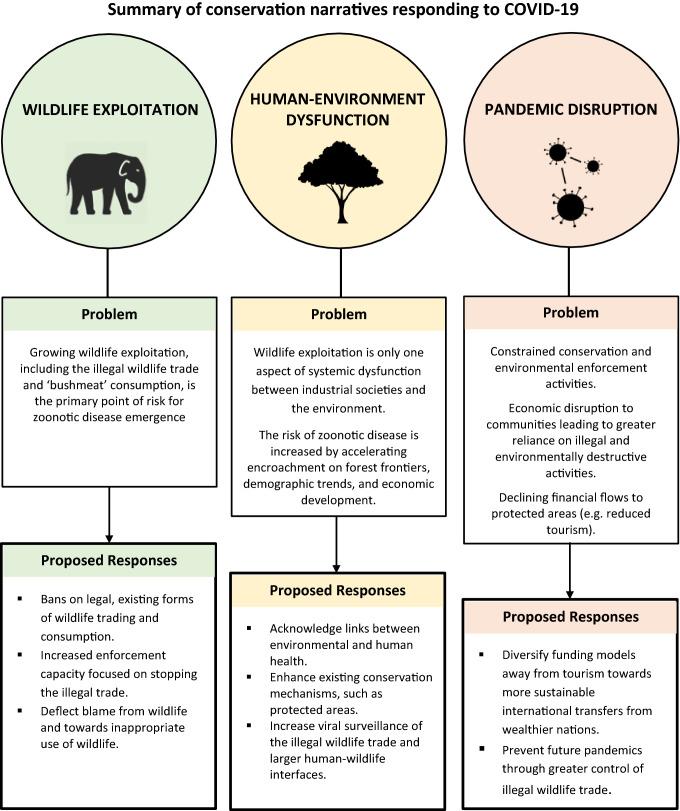
Zoonotic disease emergence has become a core concern of biodiversity conservation amid the ongoing impacts of the COVID-19 pandemic. Major international conservation groups now comprehensively center larger human-nature imbalances not only as problems of global public health but as a core challenge of the conservation movement, alongside habitat destruction, biodiversity loss and climate change. There is, however, little consideration of how new biosecurity concerns might alter conservation practice with unexpected and potential harmful impacts on human communities, particularly in developing nations with significant human-wildlife interfaces. Reviewing emerging policy positions from key conservation organizations, this article argues that the proposed responses to the COVID-19 pandemic hold the potential to (a) amplify existing people-park conflicts, and (b) generate new tensions by integrating global systems of viral surveillance into biodiversity conservation. I conclude that the close integration of biosecurity concerns into conservation policies requires greater acknowledgment of the unique challenges for human communities.
人畜共患病的出现已成为 COVID-19 大流行持续影响下生物多样性保护的核心关注点。主要的国际保护组织现在全面关注更大的人与自然失衡问题,不仅将其视为全球公共卫生问题,而且还将其视为保护运动的核心挑战,与栖息地破坏、生物多样性丧失和气候变化并列。然而,几乎没有考虑到新的生物安全问题可能会如何改变保护实践,对人类社区产生意想不到的潜在有害影响,特别是在与野生动物有重大接触的发展中国家。本文通过审查主要保护组织的新兴政策立场,认为拟议的应对 COVID-19 大流行的措施有可能 (a) 加剧现有的人与公园之间的冲突,以及 (b) 通过将全球病毒监测系统纳入生物多样性保护,产生新的紧张局势。我得出结论,将生物安全问题密切纳入保护政策需要更大程度地承认人类社区面临的独特挑战。
 Zotero 插件