
基于 16SrRNA 序列的两种野生鼢鼠物种间肠道微生物分解复杂碳水化合物的功能分化。
Functional differentiation related to decomposing complex carbohydrates of intestinal microbes between two wild zokor species based on 16SrRNA sequences.
机构信息
Key Laboratory of National Forestry and Grassland Administration on Management of Western Forest Bio-Disaster, Northwest Agriculture and Forestry University, Yangling, 712100, China.
出版信息
BMC Vet Res. 2021 Jun 11;17(1):216. doi: 10.1186/s12917-021-02911-z.
BACKGROUND
The intestinal microbes in mammals play a key role in host metabolism and adaptation. As a subterranean rodent, zokor digs tunnels for foraging and mating. These digging activities of zokors increase the energy expenditure relative to their aboveground counterparts. However, relatively little is known regarding intestinal microbes of zokor and how they make full use of limited food resources underground for high energy requirements.
RESULTS
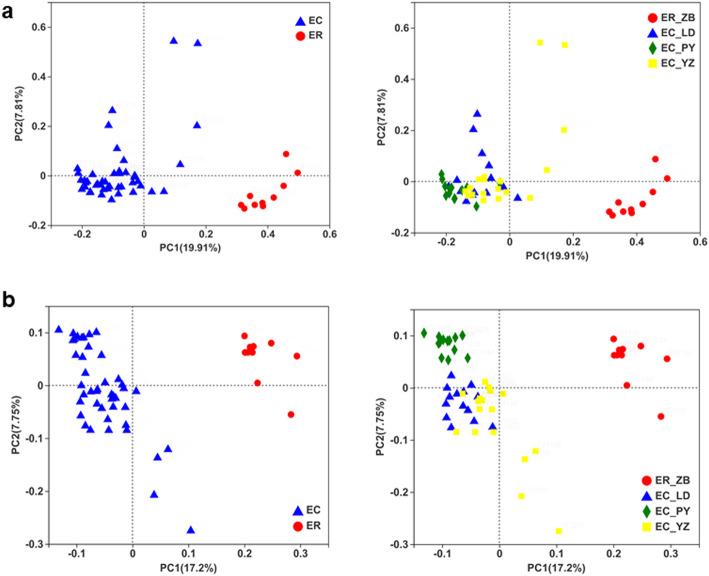
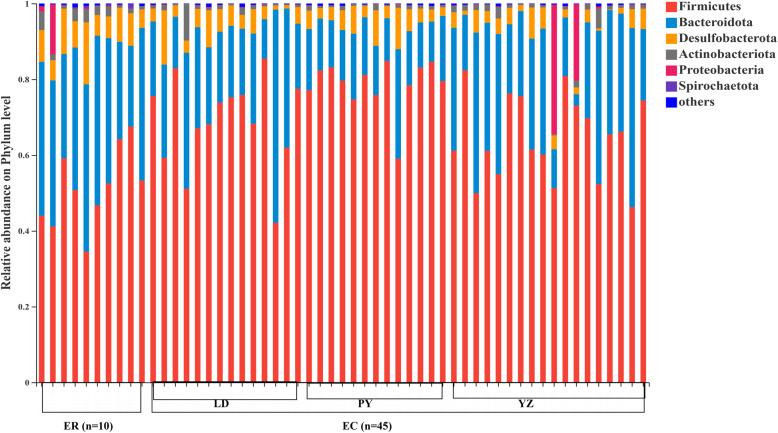
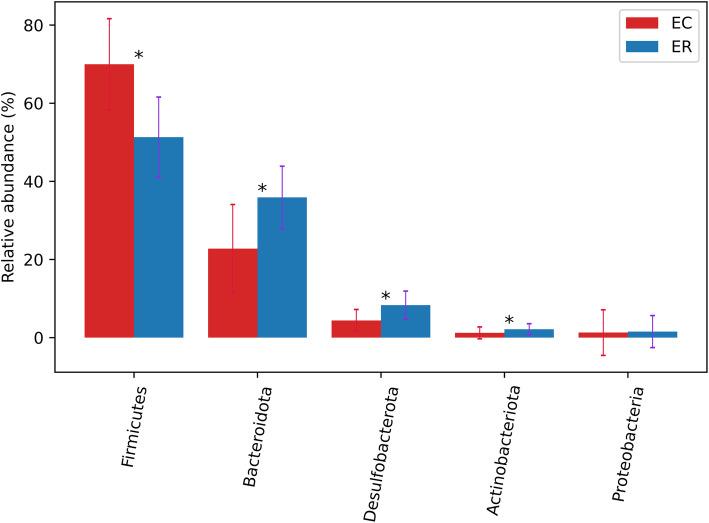
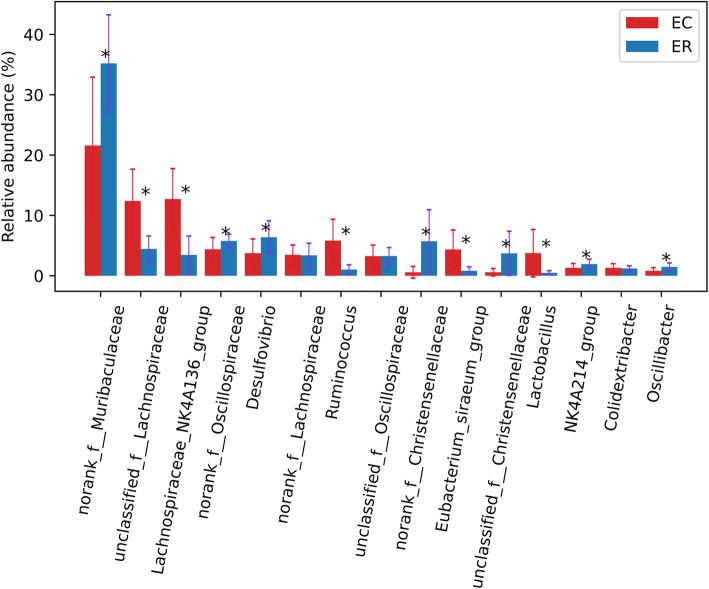
Eospalax cansus and Eospalax rothschildi had distinct intestinal microbes. Although the composition of intestinal microbes is similar in two species, the proportion of bacterium are distinctly different between them. At phylum level, 11 phyla were shared between two species. Firmicutes and Bacteroidota were two dominant microbes in both of two species, while Eospalax cansus have a significantly high proportion of Firmicutes/Bacteroidota than that of Eospalax rothschildi. At genus level, norank_f_Muribaculaceae were dominant microbes in both of two zokor species. The relative abundance of 12 genera were significantly different between two species. Some bacterium including unclassified_f__Lachnospiraceae, Lachnospiraceae_NK4A136_group, Ruminococcus and Eubacterium_siraeum_group associated with cellulose degradation were significantly enriched in Eospalax cansus. Although alpha diversity was with no significant differences between Eospalax cansus and Eospalax rothschildi, the intestinal microbes between them are significant distinct in PCoA analysis. We have found that trapping location affected the alpha diversity values, while sex and body measurements had no effect on alpha diversity values. PICRUSt metagenome predictions revealed significant enrichment of microbial genes involved in carbohydrate metabolism in Eospalax cansus rather than Eospalax rothschildi.
CONCLUSIONS
Our results demonstrate that Eospalax cansus harbor a stronger ability of fermentation for dietary plants than Eospalax rothschildi. The stronger ability of fermentation and degradation of cellulose of intestinal microbes of Eospalax cansus may be a long-time adaptation to limited food resources underground.
背景
哺乳动物的肠道微生物在宿主代谢和适应中起着关键作用。作为一种地下啮齿动物,鼹形田鼠为觅食和交配挖掘隧道。这些鼹形田鼠的挖掘活动相对于它们的地上同类会增加能量消耗。然而,对于鼹形田鼠的肠道微生物以及它们如何充分利用地下有限的食物资源来满足高能量需求,人们知之甚少。
结果
贺兰山鼢鼠和草原鼢鼠具有明显不同的肠道微生物。尽管两种物种的肠道微生物组成相似,但它们的细菌比例明显不同。在门水平上,两种物种共有 11 个门。厚壁菌门和拟杆菌门是两种主要的微生物,而贺兰山鼢鼠的厚壁菌门/拟杆菌门比例显著高于草原鼢鼠。在属水平上,未分类的毛螺菌科是两种鼹形田鼠的主要微生物。两种物种之间有 12 个属的相对丰度存在显著差异。一些细菌,包括未分类的毛螺菌科、毛螺菌科 NK4A136 群、瘤胃球菌属和真杆菌属与纤维素降解有关,在贺兰山鼢鼠中显著富集。尽管贺兰山鼢鼠和草原鼢鼠的 alpha 多样性没有显著差异,但在 PCoA 分析中,它们的肠道微生物存在显著差异。我们发现,捕捉地点影响 alpha 多样性值,而性别和身体测量值对 alpha 多样性值没有影响。 PICRUSt 宏基因组预测显示,贺兰山鼢鼠肠道微生物中参与碳水化合物代谢的微生物基因显著富集,而草原鼢鼠则没有。
结论
我们的结果表明,贺兰山鼢鼠比草原鼢鼠具有更强的发酵植物饲料的能力。贺兰山鼢鼠肠道微生物较强的发酵和纤维素降解能力可能是对地下有限食物资源的长期适应。

 Zotero 插件