
用于检测SPOP的免疫传感器的建立。
The establishment of an immunosensor for the detection of SPOP.
作者信息
Yue Song, Sun Kexin, Li Siyuan, Liu Yi, Zhu Qihao, Chen Yiyu, Yuan Dong, Wen Tao, Ge Mingjian, Yu Qiubo
机构信息
Institute of Life Science, Chongqing Medical University, 1 Yi Xue Yuan Road, Chongqing, 400016, People's Republic of China.
Department of Ophthalmology, Chongqing Key Laboratory of Ophthalmology, The First Affiliated Hospital of Chongqing Medical University, Chongqing Eye Institute, Chongqing, 400016, People's Republic of China.
出版信息
Sci Rep. 2021 Jun 15;11(1):12571. doi: 10.1038/s41598-021-91944-3.
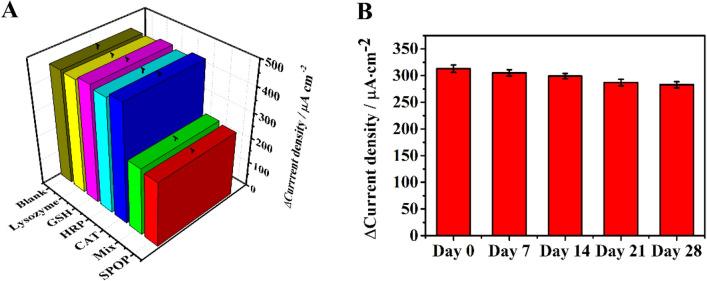
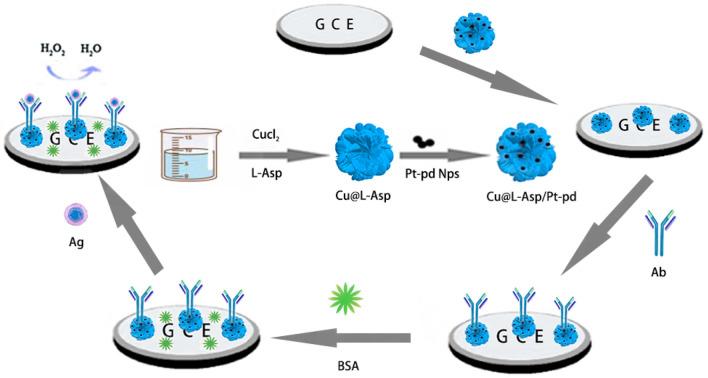
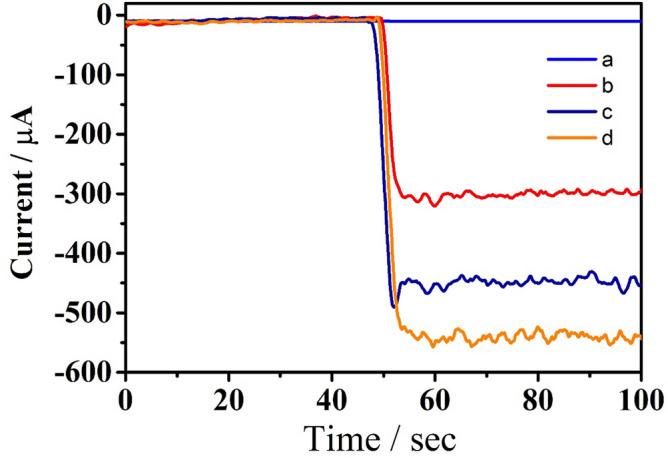
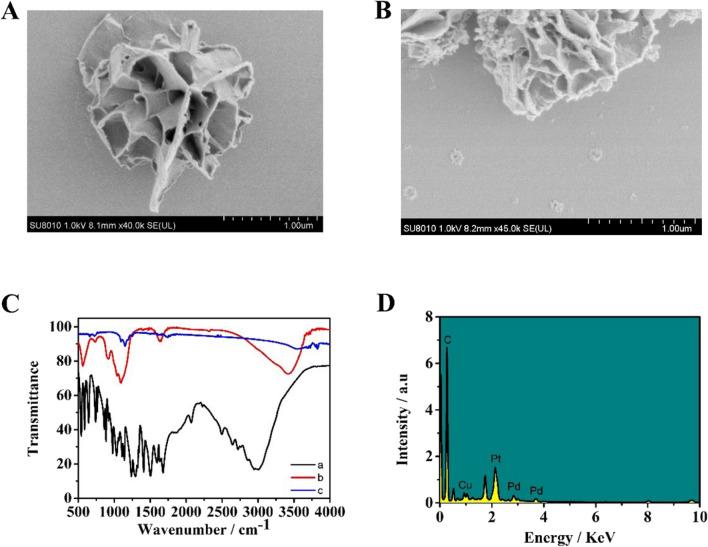
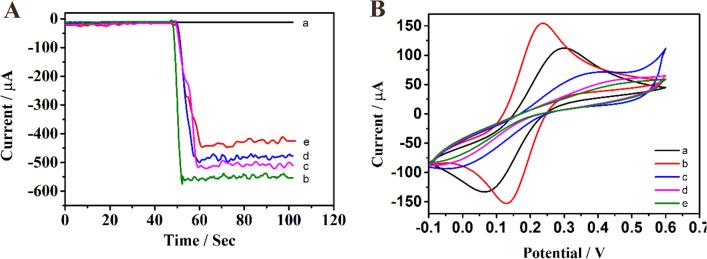
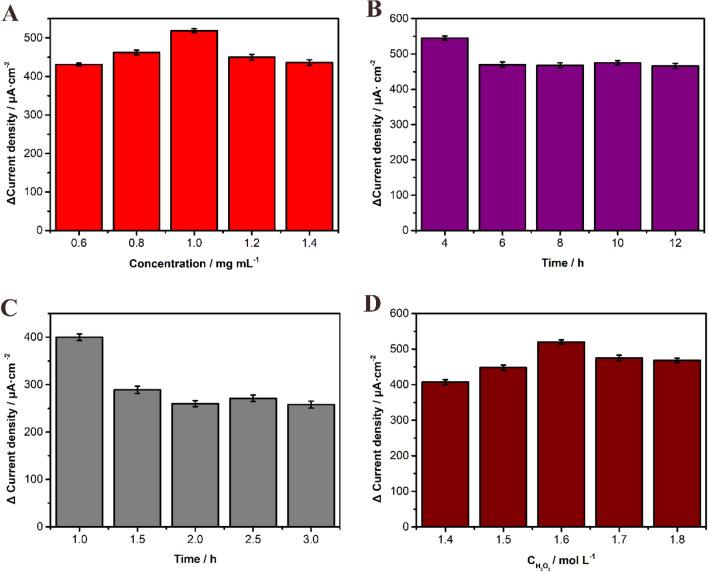
In this paper, we first synthesis three-dimensional jasmine-like Cu@L-aspartic acid(L-ASP) inorganic-organic hybrid nanoflowers to load palladium-platinum nanoparticles (Pd-Pt NPs) as the signal enhancer in order to quantify intracellular speckle-type POZ domain protein. Scanning electron microscope, fourier transform infrared, energy dispersive spectrometer, X-ray photoelectron spectroscopy analysis was used to characterize the newly synthesized materials. The newly formed Cu@L-Asp/Pd-PtNPs can catalyze the decomposition of hydrogen peroxide and exhibit excellent catalytic performance. When different concentration of speckle-type POZ domain protein is captured by speckle-type POZ domain protein antibody linked to the surface of Cu@L-Asp/Pd-Pt NPs, the current signal decreases with the increase concentration of speckle-type POZ domain protein. After optimization, the speckle-type POZ domain protein immunosensor exhibited a good linear response over a concentration range from 0.1-1 ng mL with a low detection limit of 19 fg mL. The proposed sensor demonstrates good stability within 28 days, acceptable reproducibility (RSD = 0.52%) and selectivity to the speckle-type POZ domain protein in the presence of possible interfering substances and has potential application for detecting other intracellular macromolecular substances.
在本文中,我们首先合成了三维茉莉花样的铜@L-天冬氨酸(L-ASP)无机-有机杂化纳米花来负载钯-铂纳米颗粒(Pd-Pt NPs)作为信号增强剂,以定量细胞内斑点型POZ结构域蛋白。使用扫描电子显微镜、傅里叶变换红外光谱、能量色散光谱仪、X射线光电子能谱分析对新合成的材料进行表征。新形成的Cu@L-Asp/Pd-Pt NPs能够催化过氧化氢的分解并表现出优异的催化性能。当与Cu@L-Asp/Pd-Pt NPs表面相连的斑点型POZ结构域蛋白抗体捕获不同浓度的斑点型POZ结构域蛋白时,电流信号随斑点型POZ结构域蛋白浓度的增加而降低。经过优化,斑点型POZ结构域蛋白免疫传感器在0.1 - 1 ng mL的浓度范围内表现出良好的线性响应,检测限低至19 fg mL。所提出的传感器在28天内表现出良好的稳定性、可接受的重现性(RSD = 0.52%),并且在可能存在干扰物质的情况下对斑点型POZ结构域蛋白具有选择性,具有检测其他细胞内大分子物质的潜在应用。

 Zotero 插件