
褪黑素的抑菌潜力:治疗地位和机制见解。
Bacteriostatic Potential of Melatonin: Therapeutic Standing and Mechanistic Insights.
机构信息
College of Veterinary Medicine, Southwest University, Chongqing, China.
Guangdong Laboratory of Lingnan Modern Agriculture, Guangdong Provincial Key Laboratory of Animal Nutrition Control, Institute of Subtropical Animal Nutrition and Feed, College of Animal Science, South China Agricultural University, Guangzhou, China.
出版信息
Front Immunol. 2021 May 31;12:683879. doi: 10.3389/fimmu.2021.683879. eCollection 2021.
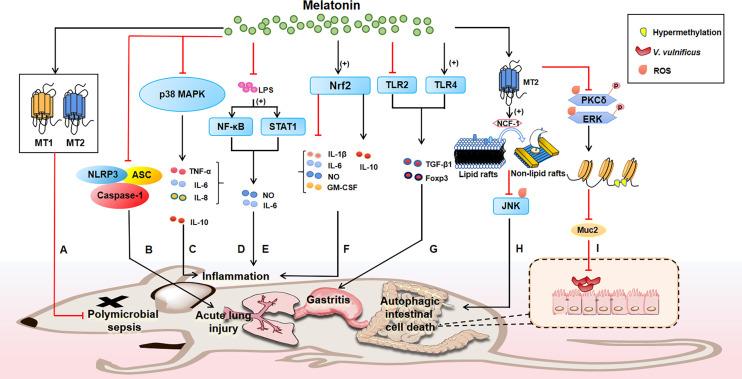
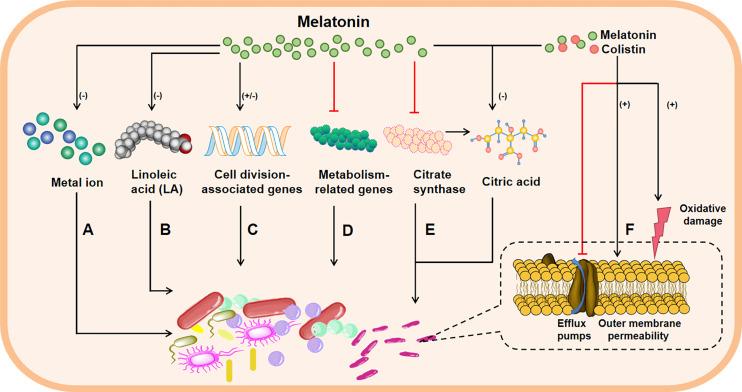
Diseases caused by pathogenic bacteria in animals (e.g., bacterial pneumonia, meningitis and sepsis) and plants (e.g., bacterial wilt, angular spot and canker) lead to high prevalence and mortality, and decomposition of plant leaves, respectively. Melatonin, an endogenous molecule, is highly pleiotropic, and accumulating evidence supports the notion that melatonin's actions in bacterial infection deserve particular attention. Here, we summarize the antibacterial effects of melatonin , in animals as well as plants, and discuss the potential mechanisms. Melatonin exerts antibacterial activities not only on classic gram-negative and -positive bacteria, but also on members of other bacterial groups, such as . Protective actions against bacterial infections can occur at different levels. Direct actions of melatonin may occur only at very high concentrations, which is at the borderline of practical applicability. However, various indirect functions comprise activation of hosts' defense mechanisms or, in sepsis, attenuation of bacterially induced inflammation. In plants, its antibacterial functions involve the mitogen-activated protein kinase (MAPK) pathway; in animals, protection by melatonin against bacterially induced damage is associated with inhibition or activation of various signaling pathways, including key regulators such as NF-κB, STAT-1, Nrf2, NLRP3 inflammasome, MAPK and TLR-2/4. Moreover, melatonin can reduce formation of reactive oxygen and nitrogen species (ROS, RNS), promote detoxification and protect mitochondrial damage. Altogether, we propose that melatonin could be an effective approach against various pathogenic bacterial infections.
动物(如细菌性肺炎、脑膜炎和败血症)和植物(如细菌性萎蔫病、角斑病和溃疡病)中致病细菌引起的疾病分别导致高发病率和死亡率,以及植物叶片的分解。褪黑素是一种内源性分子,具有高度的多效性,越来越多的证据支持褪黑素在细菌感染中的作用值得特别关注。在这里,我们总结了褪黑素在动物和植物中的抗菌作用,并讨论了潜在的机制。褪黑素不仅对经典的革兰氏阴性和阳性菌具有抗菌活性,而且对其他细菌群体的成员也具有抗菌活性,如。对细菌感染的保护作用可以发生在不同的水平。褪黑素的直接作用可能仅在非常高的浓度下发生,这已经接近实际应用的边界。然而,各种间接功能包括激活宿主的防御机制,或者在败血症中,减轻细菌诱导的炎症。在植物中,其抗菌功能涉及丝裂原活化蛋白激酶(MAPK)途径;在动物中,褪黑素对细菌诱导损伤的保护作用与抑制或激活各种信号通路有关,包括 NF-κB、STAT-1、Nrf2、NLRP3 炎性小体、MAPK 和 TLR-2/4 等关键调节剂。此外,褪黑素可以减少活性氧和氮物种(ROS、RNS)的形成,促进解毒并保护线粒体损伤。总的来说,我们提出褪黑素可能是对抗各种致病性细菌感染的有效方法。
 Zotero 插件