
不同来源菌株中CRISPR/Cas系统的鉴定与特征分析
Identification and Characterization of the CRISPR/Cas System in Strains From Diverse Sources.
作者信息
Cruz-López Erick Adrian, Rivera Gildardo, Cruz-Hernández María Antonia, Martínez-Vázquez Ana Verónica, Castro-Escarpulli Graciela, Flores-Magallón Rebeca, Vázquez Karina, Cruz-Pulido Wendy Lizeth, Bocanegra-García Virgilio
机构信息
Laboratorio Interacción Ambiente-Microorganismo, Centro de Biotecnología Genómica, Instituto Politécnico Nacional, Tamaulipas, Mexico.
Laboratorio de Investigación Clínica y Ambiental, Departamento de Microbiología, Escuela Nacional de Ciencias Biológicas, Instituto Politécnico Nacional, Mexico City, Mexico.
出版信息
Front Microbiol. 2021 Jun 2;12:656996. doi: 10.3389/fmicb.2021.656996. eCollection 2021.
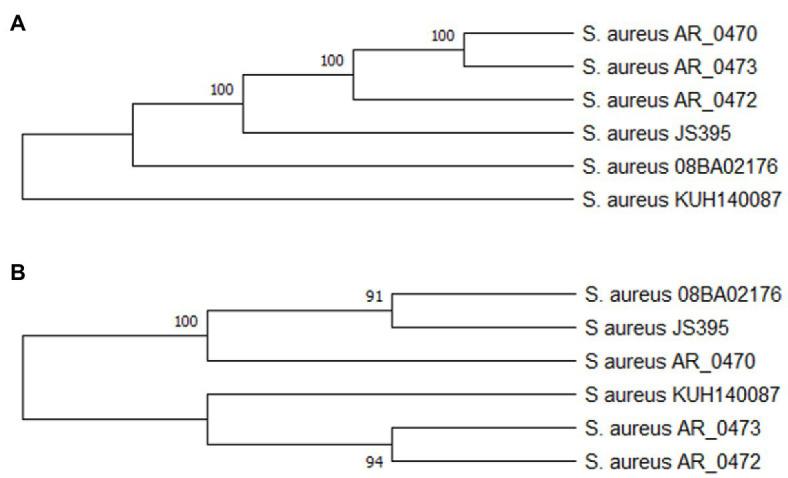
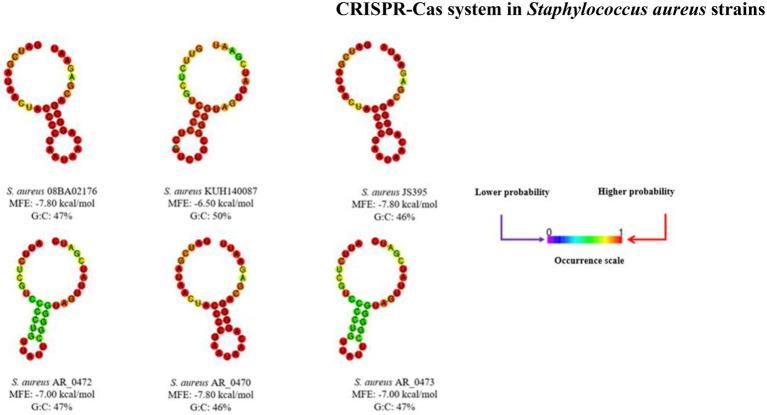
The CRISPR-Cas [clustered regularly interspaced short palindromic repeats and the CRISPR-associated genes (Cas)] system provides defense mechanisms in bacteria and archaea vs. mobile genetic elements (MGEs), such as plasmids and bacteriophages, which can either be harmful or add sequences that can provide virulence or antibiotic resistance. is a Gram-positive bacterium that could be the etiological agent of important soft tissue infections that can lead to bacteremia and sepsis. The role of the CRISPR-Cas system in is not completely understood since there is a lack of knowledge about it. We analyzed 716 genomes and 1 genomic island from GENOMES-NCBI and ENA-EMBL searching for the CRISPR-Cas systems and their spacer sequences (SSs). Our bioinformatic analysis shows that only 0.83% (6/716) of the analyzed genomes harbored the CRISPR-Cas system, all of them were subtype III-A, which is characterized by the presence of the gene. Analysis of SSs showed that 91% (40/44) had no match to annotated MGEs and 9% of SSs corresponded to plasmids and bacteriophages, indicating that those phages had infected those strains. Some of those phages have been proposed as an alternative therapy in biofilm-forming or infection with strains, but these findings indicate that such antibiotic phage strategy would be ineffective. More research about the CRISPR/Cas system is necessary for a bigger number of strains from different sources, so additional features can be studied.
CRISPR-Cas(成簇规律间隔短回文重复序列及其相关基因)系统为细菌和古生菌提供了抵御移动遗传元件(MGEs)的防御机制,这些移动遗传元件如质粒和噬菌体,它们可能有害,也可能添加可提供毒力或抗生素抗性的序列。 是一种革兰氏阳性菌,可能是重要软组织感染的病原体,可导致菌血症和败血症。由于对CRISPR-Cas系统在 中的作用缺乏了解,其作用尚未完全明确。我们分析了来自GENOMES-NCBI和ENA-EMBL的716个基因组和1个基因组岛,以寻找CRISPR-Cas系统及其间隔序列(SSs)。我们的生物信息学分析表明,在所分析的基因组中,只有0.83%(6/716)含有CRISPR-Cas系统,所有这些系统均为III-A亚型,其特征是存在 基因。对间隔序列的分析表明,91%(40/44)与注释的移动遗传元件不匹配,9%的间隔序列对应于质粒和噬菌体,这表明这些噬菌体已感染了那些 菌株。其中一些噬菌体已被提议作为治疗形成生物膜或感染 菌株的替代疗法,但这些发现表明这种抗生素噬菌体策略将无效。对于来自不同来源的更多 菌株,有必要对CRISPR/Cas系统进行更多研究,以便研究更多的特征。



 Zotero 插件