
以二甲基乙二肟掺杂的石墨烯量子点作为诱导金属络合物纳米粒子,通过共振光散射传感器对水样中镍(II)离子进行超痕量检测。
Ultratrace Detection of Nickel(II) Ions in Water Samples Using Dimethylglyoxime-Doped GQDs as the Induced Metal Complex Nanoparticles by a Resonance Light Scattering Sensor.
作者信息
Pimsin Nipaporn, Kongsanan Niradchada, Keawprom Chayanee, Sricharoen Phitchan, Nuengmatcha Prawit, Oh Won-Chun, Areerob Yonrapach, Chanthai Saksit, Limchoowong Nunticha
机构信息
Materials Chemistry Research Center, Department of Chemistry and Center of Excellence for Innovation in Chemistry, Faculty of Science, Khon Kaen University, Khon Kaen 40002, Thailand.
Nuclear Technology Research and Development Center, Thailand Institute of Nuclear Technology (Public Organization), Nakhon Nayok 26120, Thailand.
出版信息
ACS Omega. 2021 Jun 2;6(23):14796-14805. doi: 10.1021/acsomega.1c00190. eCollection 2021 Jun 15.
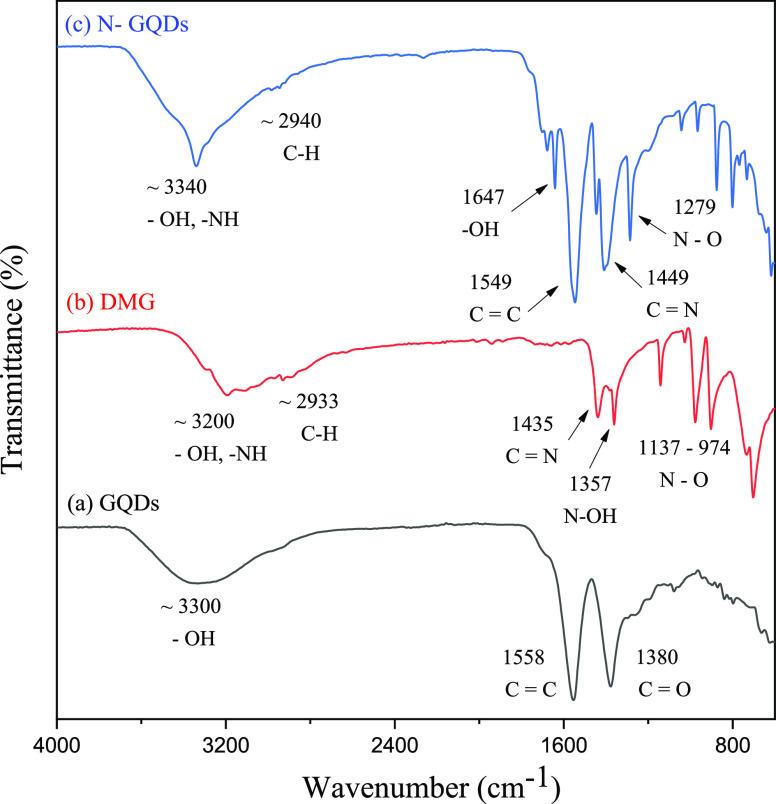
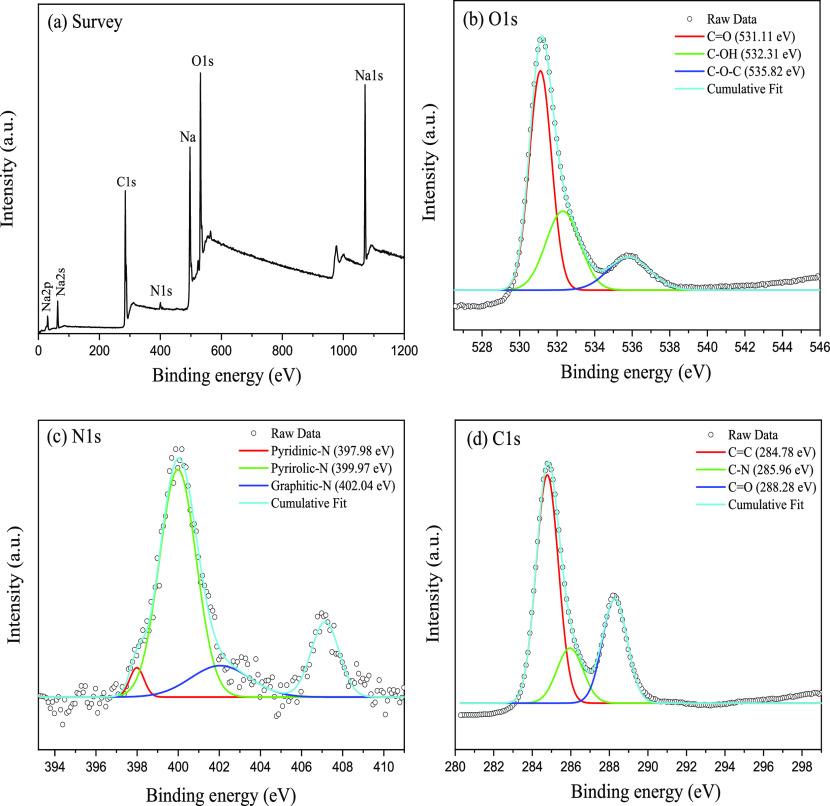
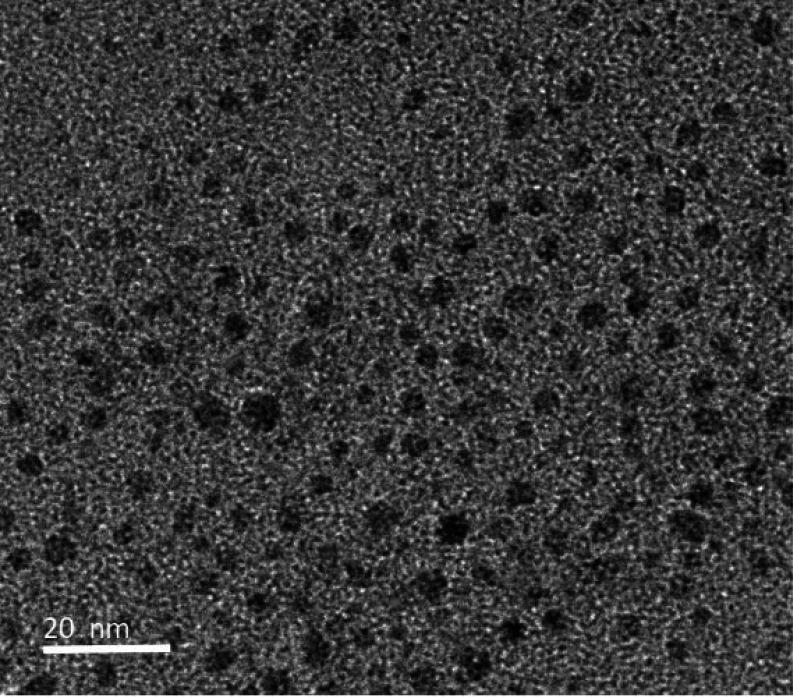
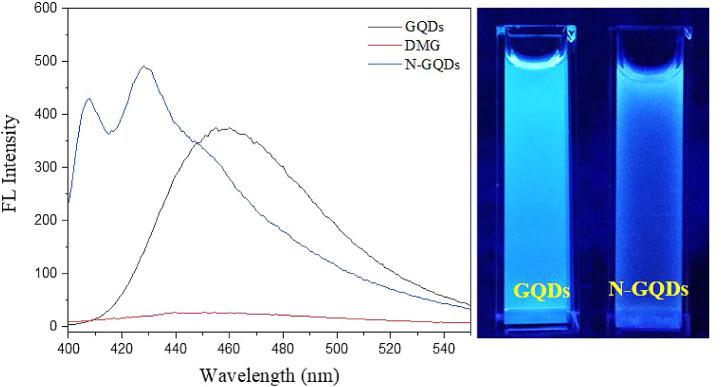
This study aimed to synthesize dimethylglyoxime (DMG) (N-source)-doped graphene quantum dots (N-GQDs) via simultaneous pyrolysis of citric acid and 1.0% (w/v) DMG. The maximum excitation wavelength (λ, ex = 380 nm) of the N-GQD solution (49% quantum yield (QY)) was a red shift with respect to that of bare GQDs (λ, ex = 365 nm) (46% QY); at the same maximum emission wavelength (λ, em = 460 nm), their resonance light scattering (RLS) intensity peak was observed at λ, ex/em = 530/533 nm. FTIR, X-ray photoelectron spectroscopy, XRD, energy-dispersive X-ray spectroscopy, and transmission electron microscopy analyses were performed to examine the synthesized materials. The selective and sensitive detection of Ni using the RLS intensity was performed at 533 nm under the optimum conditions consisting of both 25 mg L N-GQDs and 2.5 mg L DMG in the ammonium buffer solution of pH 9.0. The linearity of Ni was 50.0-200.0 μg L with a regression line, = 5.031 - 190.4 ( = 0.9948). The limit of detection (LOD) and the limit of quantitation (LOQ) were determined to be 20.0 and 60.0 μg L, respectively. The method precision expressed as % RSDs was 4.90 for intraday ( = 3 × 3) and 7.65 for interday ( = 5 × 3). This developed method afforded good recoveries of Ni in a range of 85-108% when spiked with real water samples. Overall, this innovative method illustrated the identification and detection of Ni as a DMG complex with N-GQDs, and the detection was highly sensitive and selective.
本研究旨在通过同时热解柠檬酸和1.0%(w/v)二甲基乙二肟(DMG)来合成二甲基乙二肟(N源)掺杂的石墨烯量子点(N-GQDs)。N-GQD溶液(量子产率(QY)为49%)的最大激发波长(λ,ex = 380 nm)相对于裸GQDs(λ,ex = 365 nm)(QY为46%)发生了红移;在相同的最大发射波长(λ,em = 460 nm)下,其共振光散射(RLS)强度峰出现在λ,ex/em = 530/533 nm处。进行了傅里叶变换红外光谱(FTIR)、X射线光电子能谱、X射线衍射(XRD)、能量色散X射线光谱和透射电子显微镜分析,以检测合成材料。在pH 9.0的铵缓冲溶液中,由25 mg L N-GQDs和2.5 mg L DMG组成的最佳条件下,利用RLS强度对Ni进行选择性和灵敏检测。Ni的线性范围为50.0 - 200.0 μg L,回归线为 = 5.031 - 190.4( = 0.9948)。检测限(LOD)和定量限(LOQ)分别确定为20.0和60.0 μg L。以相对标准偏差(%RSDs)表示的方法精密度,日内( = 3×3)为4.90,日间( = 5×3)为7.65。当对实际水样进行加标时,该方法对Ni的回收率在85 - 108%范围内。总体而言,这种创新方法阐明了作为与N-GQDs形成的DMG配合物的Ni的鉴定和检测,且检测具有高灵敏度和选择性。



 Zotero 插件