
通过遗传去重复和异源表达将一个基因簇与地衣的主要皮层物质之一的长松萝素联系起来。
Linking a Gene Cluster to Atranorin, a Major Cortical Substance of Lichens, through Genetic Dereplication and Heterologous Expression.
机构信息
Korean Lichen Research Institute, Sunchon National Universitygrid.412871.9, Suncheon, South Korea.
Research Institute of Pharmaceutical Sciences, College of Pharmacy, Sookmyung Women's University, Seoul, South Korea.
出版信息
mBio. 2021 Jun 29;12(3):e0111121. doi: 10.1128/mBio.01111-21. Epub 2021 Jun 22.
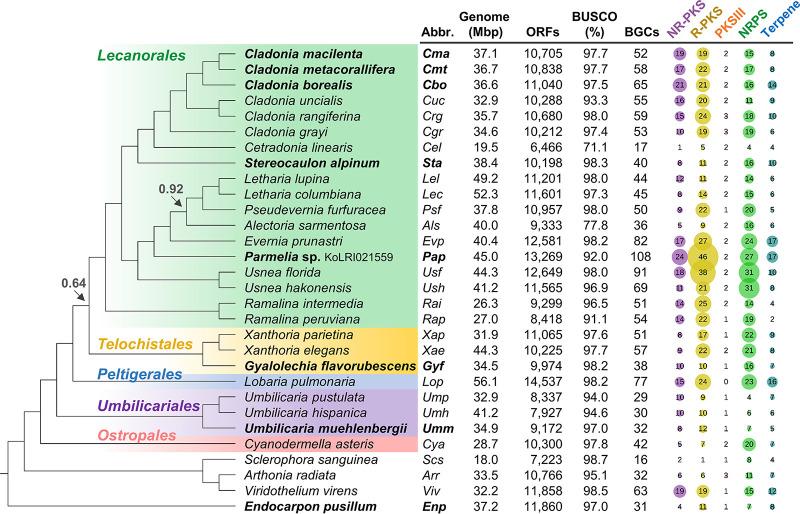
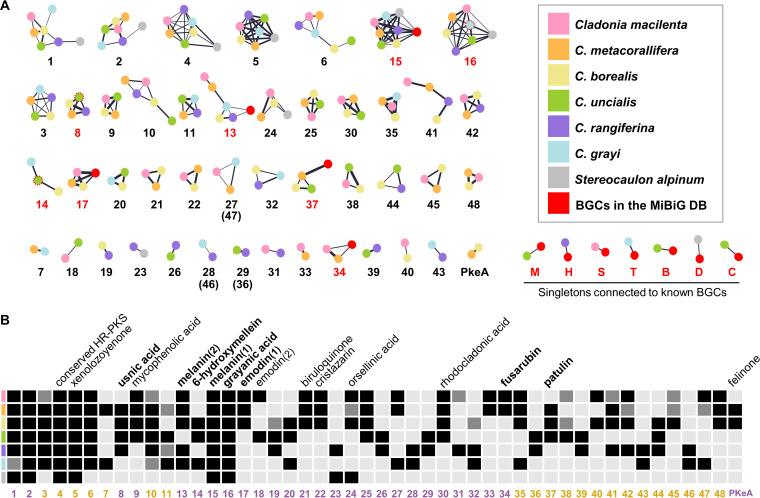
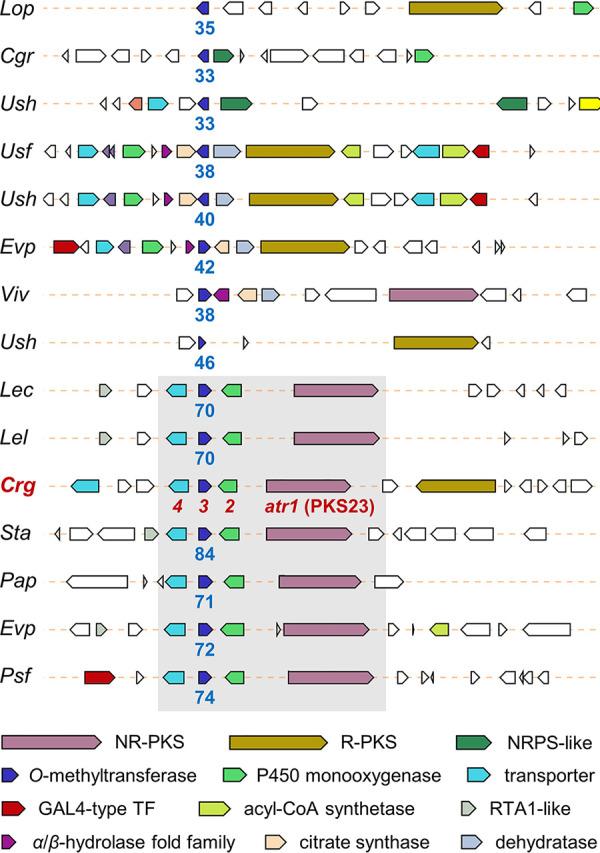
The depside and depsidone series compounds of polyketide origin accumulate in the cortical or medullary layers of lichen thalli. Despite the taxonomic and ecological significance of lichen chemistry and its pharmaceutical potentials, there has been no single piece of genetic evidence linking biosynthetic genes to lichen substances. Thus, we systematically analyzed lichen polyketide synthases (PKSs) for categorization and identification of the biosynthetic gene cluster (BGC) involved in depside/depsidone production. Our in-depth analysis of the interspecies PKS diversity in the genus and a related Antarctic lichen, Stereocaulon alpinum, identified 45 BGC families, linking lichen PKSs to 15 previously characterized PKSs in nonlichenized fungi. Among these, we identified highly syntenic BGCs found exclusively in lichens producing atranorin (a depside). Heterologous expression of the putative atranorin PKS gene (coined ) yielded 4--demethylbarbatic acid, found in many lichens as a precursor compound, indicating an intermolecular cross-linking activity of Atr1 for depside formation. Subsequent introductions of tailoring enzymes into the heterologous host yielded atranorin, one of the most common cortical substances of macrolichens. Phylogenetic analysis of fungal PKS revealed that the Atr1 is in a novel PKS clade that included two conserved lichen-specific PKS families likely involved in biosynthesis of depsides and depsidones. Here, we provide a comprehensive catalog of PKS families of the genus and functionally characterize a biosynthetic gene cluster from lichens, establishing a cornerstone for studying the genetics and chemical evolution of diverse lichen substances. Lichens play significant roles in ecosystem function and comprise about 20% of all known fungi. Polyketide-derived natural products accumulate in the cortical and medullary layers of lichen thalli, some of which play key roles in protection from biotic and abiotic stresses (e.g., herbivore attacks and UV irradiation). To date, however, no single lichen product has been linked to respective biosynthetic genes with genetic evidence. Here, we identified a gene cluster family responsible for biosynthesis of atranorin, a cortical substance found in diverse lichen species, by categorizing lichen polyketide synthase and reconstructing the atranorin biosynthetic pathway in a heterologous host. This study will help elucidate lichen secondary metabolism, harnessing the lichen's chemical diversity, hitherto obscured due to limited genetic information on lichens.
聚酮起源的 depside 和 depsidone 系列化合物在地衣藻体的皮质或髓质层中积累。尽管地衣化学具有分类学和生态学意义及其药物潜力,但尚未有单一的遗传证据将生物合成基因与地衣物质联系起来。因此,我们系统地分析了地衣聚酮合酶(PKS),以对参与 depside/depsidone 生产的生物合成基因簇(BGC)进行分类和鉴定。我们对地衣属和相关南极地衣 Stereocaulon alpinum 种间 PKS 多样性的深入分析,确定了 45 个 BGC 家族,将地衣 PKS 与 15 个先前在非地衣化真菌中表征的 PKS 联系起来。其中,我们鉴定了仅在地衣中产生 atranorin(一种 depside)的高度同基因 BGC。推测的 atranorin PKS 基因(命名为 )的异源表达产生了 4--demethylbarbatic 酸,它是许多地衣中的一种前体化合物,表明 Atr1 具有 depside 形成的分子间交联活性。随后将修饰酶引入异源宿主中,得到了 atranorin,它是大型地衣中最常见的皮质物质之一。真菌 PKS 的系统发育分析表明,Atr1 位于一个新的 PKS 分支中,该分支包括两个保守的地衣特异性 PKS 家族,可能参与 depsides 和 depsidones 的生物合成。在这里,我们提供了一个全面的地衣属 PKS 家族目录,并从地衣中功能表征了一个生物合成基因簇,为研究不同地衣物质的遗传学和化学进化奠定了基础。地衣在地衣在生态系统功能中发挥着重要作用,占所有已知真菌的 20%左右。聚酮衍生的天然产物在地衣藻体的皮质和髓质层中积累,其中一些在地衣对生物和非生物胁迫(例如食草动物攻击和 UV 辐射)的保护中起着关键作用。然而,迄今为止,还没有一个地衣产品与相应的生物合成基因具有遗传证据。在这里,我们通过对地衣聚酮合酶进行分类,并在异源宿主中重建 atranorin 生物合成途径,确定了一个负责 atranorin 生物合成的基因簇家族,atranorin 是一种在多种地衣物种中发现的皮质物质。这项研究将有助于阐明地衣次生代谢,利用地衣的化学多样性,迄今为止由于地衣的遗传信息有限,这种多样性一直被掩盖。


 Zotero 插件