
肠道干细胞中自发体细胞突变的进化和基因组特征。
Evolution and genomic signatures of spontaneous somatic mutation in intestinal stem cells.
机构信息
Institut Curie, PSL Research University, CNRS UMR 3215, INSERM U934, Stem Cells and Tissue Homeostasis Group, 75005 Paris, France.
出版信息
Genome Res. 2021 Aug;31(8):1419-1432. doi: 10.1101/gr.268441.120. Epub 2021 Jun 24.
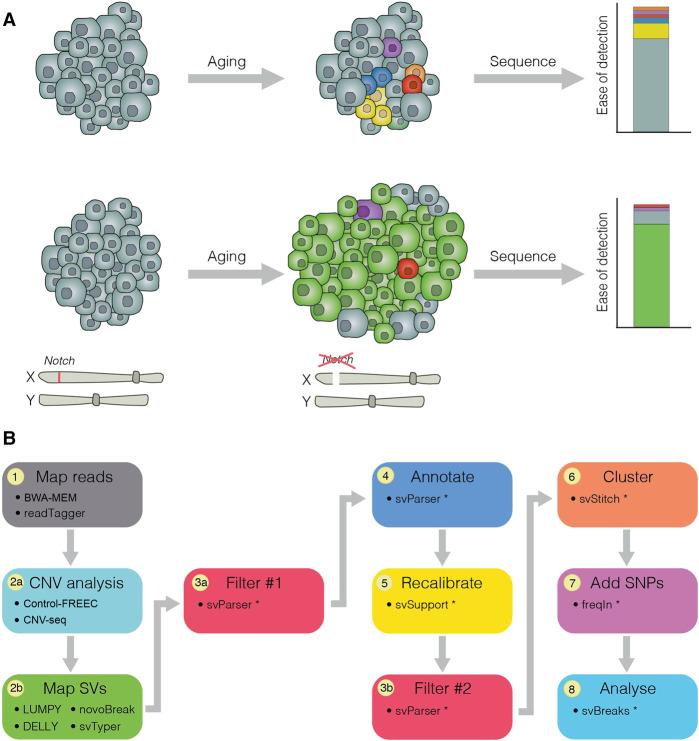
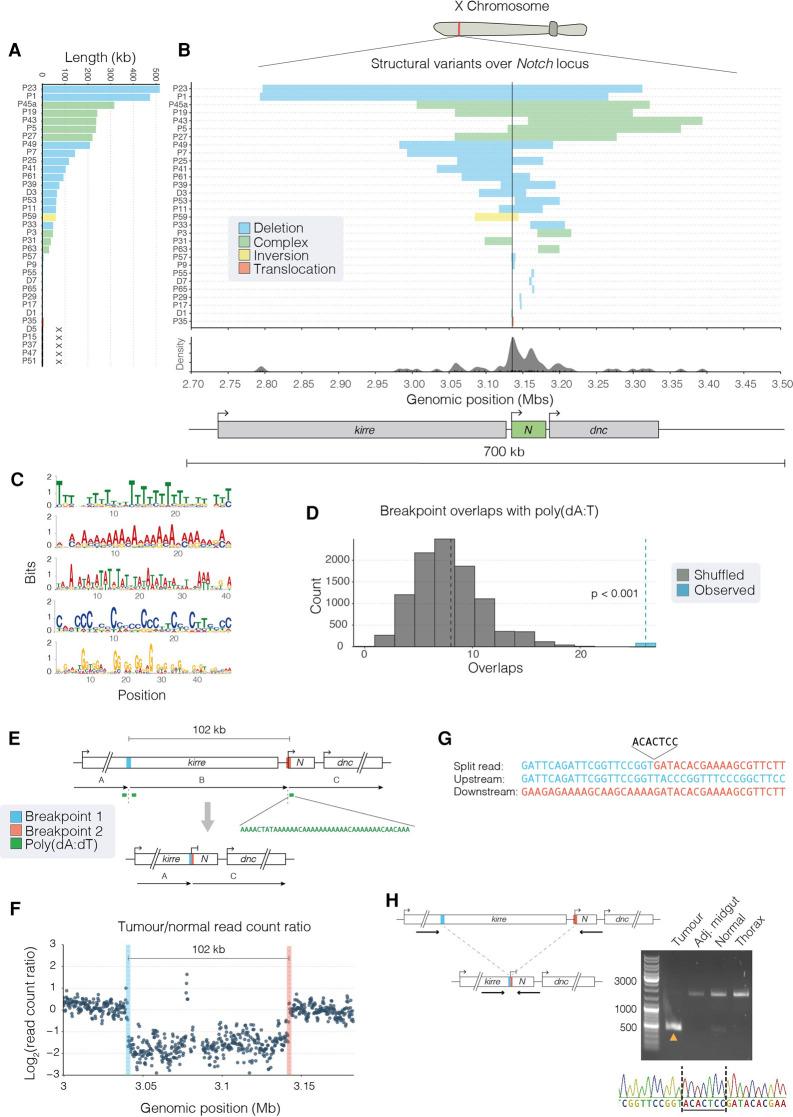
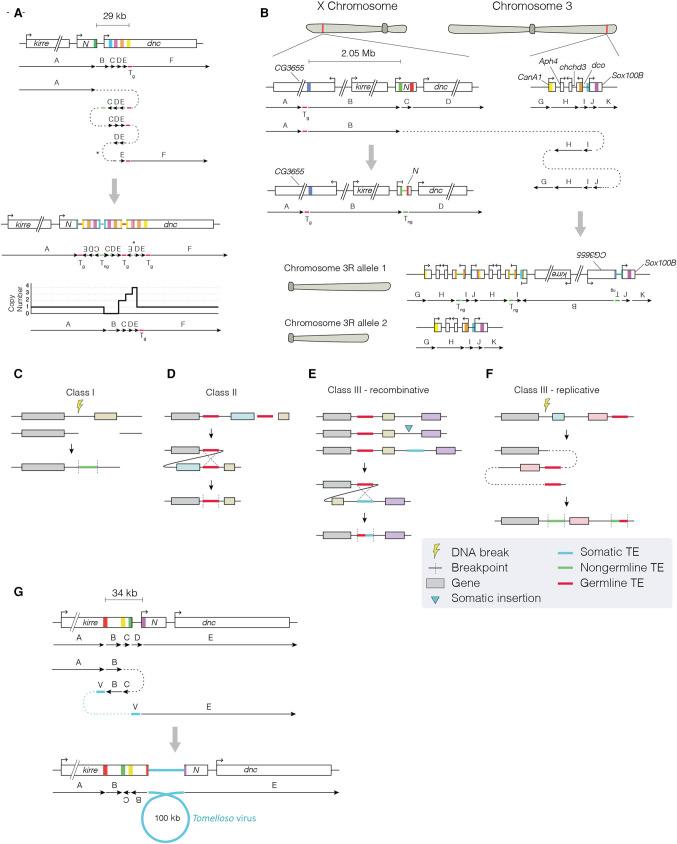
Spontaneous mutations can alter tissue dynamics and lead to cancer initiation. Although large-scale sequencing projects have illuminated processes that influence somatic mutation and subsequent tumor evolution, the mutational dynamics operating in the very early stages of cancer development are currently not well understood. To explore mutational processes in the early stages of cancer evolution, we exploited neoplasia arising spontaneously in the intestine. Analysing whole-genome sequencing data with a dedicated bioinformatic pipeline, we found neoplasia formation to be driven largely through the inactivation of by structural variants, many of which involve highly complex genomic rearrangements. The genome-wide mutational burden in neoplasia was found to be similar to that of several human cancers. Finally, we identified genomic features associated with spontaneous mutation, and defined the evolutionary dynamics and mutational landscape operating within intestinal neoplasia over the short lifespan of the adult fly. Our findings provide unique insight into mutational dynamics operating over a short timescale in the genetic model system, .
自发突变可改变组织动力学并导致癌症的发生。尽管大规模测序项目已经阐明了影响体细胞突变和随后肿瘤进化的过程,但目前对于在癌症发展的早期阶段起作用的突变动力学还了解甚少。为了探索癌症进化早期的突变过程,我们利用自发发生在肠道中的肿瘤进行研究。通过专门的生物信息学管道分析全基因组测序数据,我们发现肿瘤的形成主要是通过结构变体使失活所致,其中许多涉及高度复杂的基因组重排。肿瘤中的全基因组突变负担与几种人类癌症相似。最后,我们鉴定了与自发突变相关的基因组特征,并定义了在成年果蝇的短寿命内肠道肿瘤内发生的进化动态和突变景观。我们的研究结果为在遗传模型系统中在短时间尺度上起作用的突变动态提供了独特的见解。



 Zotero 插件