
AEG-1 在不同癌症类型中的作用及临床病理意义:简要综述。
Emerging Role and Clinicopathological Significance of AEG-1 in Different Cancer Types: A Concise Review.
机构信息
Department of Medical Biotechnology, Faculty of Allied Health Sciences, Chettinad Academy of Research and Education (CARE), Chettinad Hospital and Research Institute (CHRI), Kelambakkam, Chennai 603103, India.
Department of Oncology, Linköping University, SE-581 83 Linköping, Sweden.
出版信息
Cells. 2021 Jun 15;10(6):1497. doi: 10.3390/cells10061497.
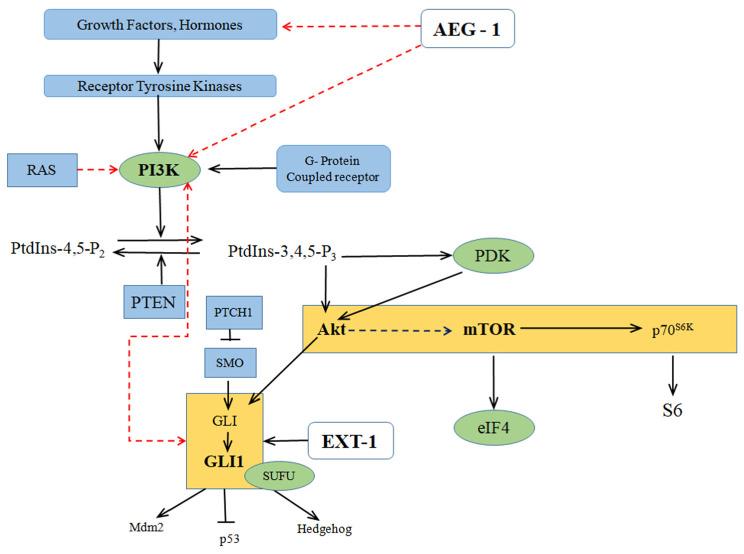
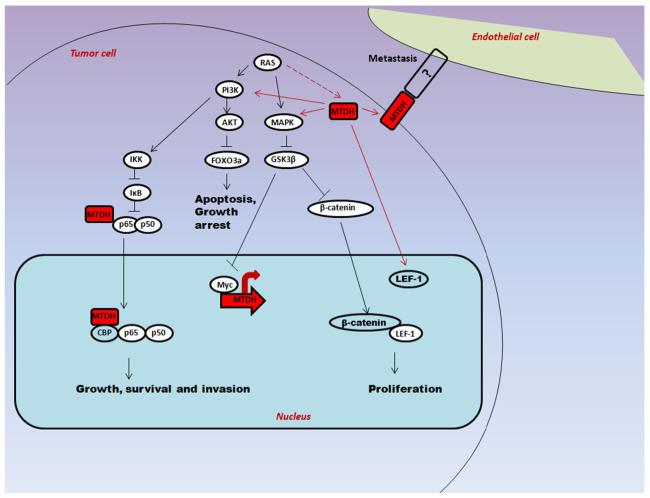
Tumor breakthrough is driven by genetic or epigenetic variations which assist in initiation, migration, invasion and metastasis of tumors. Astrocyte elevated gene-1 (AEG-1) protein has risen recently as the crucial factor in malignancies and plays a potential role in diverse complex oncogenic signaling cascades. AEG-1 has multiple roles in tumor growth and development and is found to be involved in various signaling pathways of: (i) Ha-ras and PI3K/AKT; (ii) the NF-κB; (iii) the ERK or mitogen-activated protein kinase and Wnt or β-catenin and (iv) the Aurora-A kinase. Recent studies have confirmed that in all the hallmarks of cancers, AEG-1 plays a key functionality including progression, transformation, sustained angiogenesis, evading apoptosis, and invasion and metastasis. Clinical studies have supported that AEG-1 is actively intricated in tumor growth and progression which includes esophageal squamous cell, gastric, colorectal, hepatocellular, gallbladder, breast, prostate and non-small cell lung cancers, as well as renal cell carcinomas, melanoma, glioma, neuroblastoma and osteosarcoma. Existing studies have reported that AEG-1 expression has been induced by Ha-ras through intrication of PI3K/AKT signaling. Conversely, AEG-1 also activates PI3K/AKT pathway and modulates the defined subset of downstream target proteins via crosstalk between the PI3K/AKT/mTOR and Hedgehog signaling cascade which further plays a crucial role in metastasis. Thus, AEG-1 may be employed as a biomarker to discern the patients of those who are likely to get aid from AEG-1-targeted medication. AEG-1 may play as an effective target to repress tumor development, occlude metastasis, and magnify the effectiveness of treatments. In this review, we focus on the molecular mechanism of AEG-1 in the process of carcinogenesis and its involvement in regulation of crosstalk between the PI3K/AKT/mTOR and Hedgehog signaling. We also highlight the multifaceted functions, expression, clinicopathological significance and molecular inhibitors of AEG-1 in various cancer types.
肿瘤突破是由遗传或表观遗传变异驱动的,这些变异有助于肿瘤的起始、迁移、浸润和转移。星形细胞上调基因-1(AEG-1)蛋白最近作为恶性肿瘤的关键因素而兴起,并在多种复杂的致癌信号级联中发挥潜在作用。AEG-1 在肿瘤的生长和发展中有多种作用,并且被发现参与了以下各种信号通路:(i)Ha-ras 和 PI3K/AKT;(ii)NF-κB;(iii)ERK 或丝裂原活化蛋白激酶和 Wnt 或β-catenin;(iv)Aurora-A 激酶。最近的研究证实,在癌症的所有特征中,AEG-1 发挥着关键作用,包括进展、转化、持续的血管生成、逃避凋亡以及浸润和转移。临床研究表明,AEG-1 积极参与肿瘤的生长和进展,包括食管鳞状细胞癌、胃癌、结直肠癌、肝癌、胆囊癌、乳腺癌、前列腺癌和非小细胞肺癌,以及肾细胞癌、黑色素瘤、神经胶质瘤、神经母细胞瘤和骨肉瘤。现有研究报告称,AEG-1 的表达已通过 PI3K/AKT 信号的介入由 Ha-ras 诱导。相反,AEG-1 还通过 PI3K/AKT/mTOR 和 Hedgehog 信号级联之间的串扰激活 PI3K/AKT 途径并调节定义的下游靶蛋白亚群,这进一步在转移中发挥关键作用。因此,AEG-1 可作为生物标志物来区分那些可能从 AEG-1 靶向药物治疗中获益的患者。AEG-1 可能作为一种有效的靶点,抑制肿瘤的发展,阻断转移,并提高治疗效果。在这篇综述中,我们重点介绍了 AEG-1 在致癌过程中的分子机制及其在调节 PI3K/AKT/mTOR 和 Hedgehog 信号串扰中的作用。我们还强调了 AEG-1 在各种癌症类型中的多方面功能、表达、临床病理意义和分子抑制剂。
 Zotero 插件