
用于新鲜农产品的可重复使用塑料箱(RPCs)(以花椰菜为例):可持续包装但存在存活及交叉污染风险
Reusable Plastic Crates (RPCs) for Fresh Produce (Case Study on Cauliflowers): Sustainable Packaging but Potential Survival and Risk of Cross-Contamination.
作者信息
López-Gálvez Francisco, Rasines Laura, Conesa Encarnación, Gómez Perla A, Artés-Hernández Francisco, Aguayo Encarna
机构信息
Postharvest and Refrigeration Group, Escuela Técnica Superior de Ingeniería Agronómica (ETSIA), Universidad Politécnica de Cartagena (UPCT), Paseo Alfonso XIII, 48, 30203 Cartagena, Spain.
Food Quality and Health Group, Institute of Plant Biotechnology (UPCT), Campus Muralla del Mar, 30202 Cartagena, Spain.
出版信息
Foods. 2021 Jun 1;10(6):1254. doi: 10.3390/foods10061254.
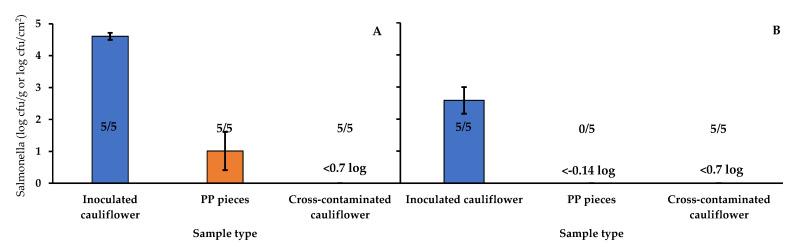
The handling of fresh fruits and vegetables in reusable plastic crates (RPCs) has the potential to increase the sustainability of packaging in the fresh produce supply chain. However, the utilization of multiple-use containers can have consequences related to the microbial safety of this type of food. The present study assessed the potential cross-contamination of fresh cauliflowers with via different contact materials (polypropylene from RPCs, corrugated cardboard, and medium-density fiberboard (MDF) from wooden boxes). Additionally, the survival of the pathogenic microorganism was studied in cauliflowers and the contact materials during storage. The life cycle assessment (LCA) approach was used to evaluate the environmental impact of produce handling containers made from the different food-contact materials tested. The results show a higher risk of cross-contamination via polypropylene compared with cardboard and MDF. Another outcome of the study is the potential of for surviving both in cross-contaminated produce and in contact materials under supply chain conditions. Regarding environmental sustainability, RPCs have a lower environmental impact than single-use containers (cardboard and wooden boxes). To exploit the potential environmental benefits of RPCs while ensuring food safety, it is necessary to guarantee the hygiene of this type of container.
使用可重复使用的塑料箱(RPC)处理新鲜水果和蔬菜,有可能提高新鲜农产品供应链中包装的可持续性。然而,使用多次使用的容器可能会对这类食品的微生物安全产生影响。本研究评估了新鲜菜花通过不同接触材料(RPC的聚丙烯、瓦楞纸板和木箱的中密度纤维板(MDF))发生交叉污染的可能性。此外,还研究了致病微生物在菜花和储存期间接触材料中的存活情况。采用生命周期评估(LCA)方法评估了由测试的不同食品接触材料制成的农产品处理容器对环境的影响。结果表明,与纸板和MDF相比,通过聚丙烯发生交叉污染的风险更高。该研究的另一个结果是,在供应链条件下,[原文此处缺失具体微生物名称]有在交叉污染的农产品和接触材料中存活的可能性。关于环境可持续性,RPC对环境的影响比一次性容器(纸板和木箱)更低。为了在确保食品安全的同时利用RPC潜在的环境效益,有必要保证这类容器的卫生。


 Zotero 插件