
中国儿童 1 型糖尿病的多中心调查。
A Multicenter Survey of Type I Diabetes Mellitus in Chinese Children.
机构信息
Department of Pediatrics, Tongji Hospital, Tongji Medical College, Huazhong University of Science and Technology, Wuhan, China.
Department of Genetics and Endocrinology, Guangzhou Women and Children's Medical Center, Guangzhou Medical University, Guangzhou, China.
出版信息
Front Endocrinol (Lausanne). 2021 Jun 15;12:583114. doi: 10.3389/fendo.2021.583114. eCollection 2021.
PURPOSE
To investigate the features and treatment status of children with type 1 diabetes mellitus (T1DM) in China.
METHODS
We recruited patients <14 years of age with T1DM from 33 medical centers in 25 major cities of China between January 2012 and March 2015. All patients completed a questionnaire that was conducted by their pediatric endocrinologists at all centers.
RESULTS
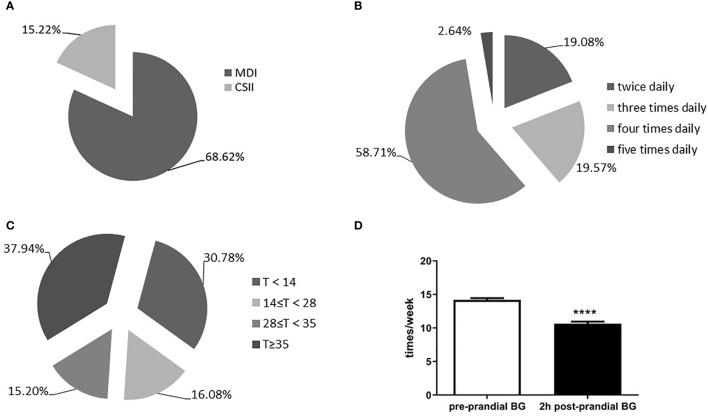
A total of 1,603 children (755 males and 848 females) with T1DM participated in this survey. Of these, 834 (52.03%) of the patients exhibited diabetic ketoacidosis (DKA) at onset, while 769 patients (47.97%) did not exhibit DKA (non-DKA) at onset. There was a higher proportion of females (55.71%) in the cohort of patients exhibiting DKA at onset than in the non-DKA cohort (49.33%). The mean age of patients exhibiting DKA at presentation was 7.12 ± 0.14 years; this was significantly younger than that in non-DKA group (7.79 ± 0.15 years; P < 0.005). The frequency of DKA in 3 years old, 3-7 years old, and 7 years old or more was 77.21%, 26.17%, and 37.62%, respectively. Upon initial diagnosis, 29.4%, 15.2% and 11.8% of patients showed positivity for glutamic acid decarboxylase antibody (GADA), Insulin autoantibodies (IAA), or islet cell antibody (ICA), respectively. During six months follow-up, 244 patients (15.21%) reported receiving insulin pump therapy, and more than 60% of patients monitored their blood glucose levels less than 35 times per week. Although the majority of patients had no problems with obtaining insulin, 4.74% of the children surveyed were not able to receive insulin due to financial reasons, a shortage of insulin preparations, or the failure of the parents or guardians to acquire the appropriate medicine.
CONCLUSION
DKA is more common in very young children. Treatment and follow-up of T1DM in China still face very serious challenges.
目的
研究中国儿童 1 型糖尿病(T1DM)的特征和治疗现状。
方法
我们招募了 2012 年 1 月至 2015 年 3 月期间来自中国 25 个主要城市 33 个医疗中心的年龄<14 岁的 T1DM 患者。所有患者均由各中心的儿科内分泌医生完成问卷调查。
结果
共有 1603 例 T1DM 儿童(男 755 例,女 848 例)参与了此次调查。其中 834 例(52.03%)患儿发病时出现糖尿病酮症酸中毒(DKA),769 例(47.97%)患儿发病时未出现 DKA(非 DKA)。在发病时出现 DKA 的患儿中,女性比例(55.71%)高于非 DKA 组(49.33%)。发病时出现 DKA 的患儿的平均年龄为 7.12±0.14 岁,显著小于非 DKA 组(7.79±0.15 岁;P<0.005)。3 岁、3-7 岁和 7 岁及以上患儿 DKA 的发生率分别为 77.21%、26.17%和 37.62%。初诊时,谷氨酸脱羧酶抗体(GADA)、胰岛素自身抗体(IAA)和胰岛细胞抗体(ICA)阳性率分别为 29.4%、15.2%和 11.8%。随访 6 个月时,244 例(15.21%)患者接受胰岛素泵治疗,超过 60%的患者每周监测血糖<35 次。虽然大多数患者在获得胰岛素方面没有问题,但由于经济原因、胰岛素制剂短缺或父母或监护人无法获得适当的药物,仍有 4.74%的患儿无法获得胰岛素。
结论
DKA 在非常年幼的儿童中更为常见。中国 T1DM 的治疗和随访仍面临着非常严峻的挑战。


 Zotero 插件