
评价α-酮戊二酸对松江鲈()感染后肠道抗氧化能力和免疫反应的改善作用。
Evaluation of Alpha-Ketoglutarate Supplementation on the Improvement of Intestinal Antioxidant Capacity and Immune Response in Songpu Mirror Carp () After Infection With .
机构信息
Key Laboratory of Aquatic Animal Diseases and Immune Technology of Heilongjiang Province, Heilongjiang River Fisheries Research Institute, Chinese Academy of Fishery Sciences, Harbin, China.
School of Life Science, Huzhou University, Huzhou, China.
出版信息
Front Immunol. 2021 Jun 18;12:690234. doi: 10.3389/fimmu.2021.690234. eCollection 2021.
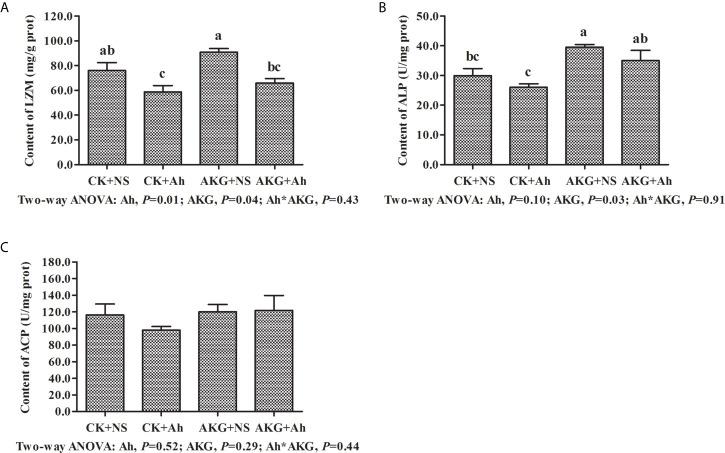
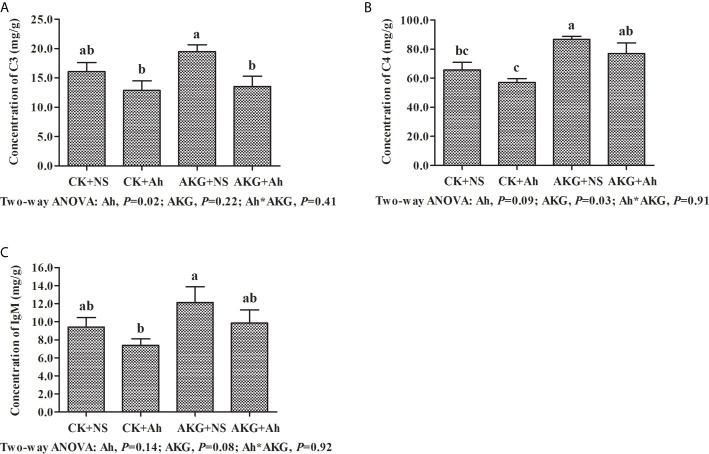
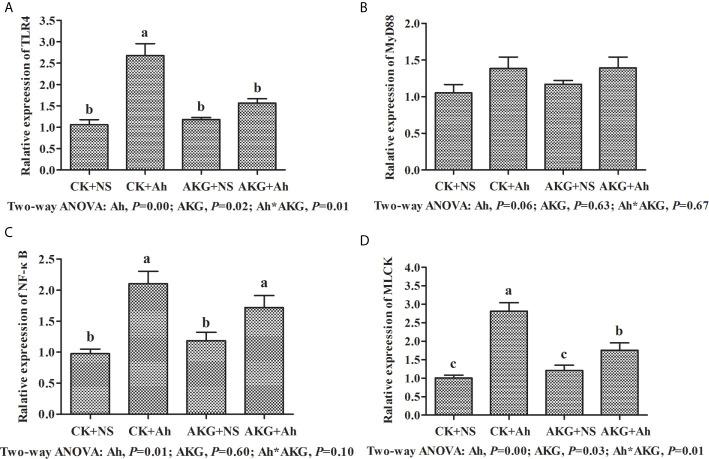
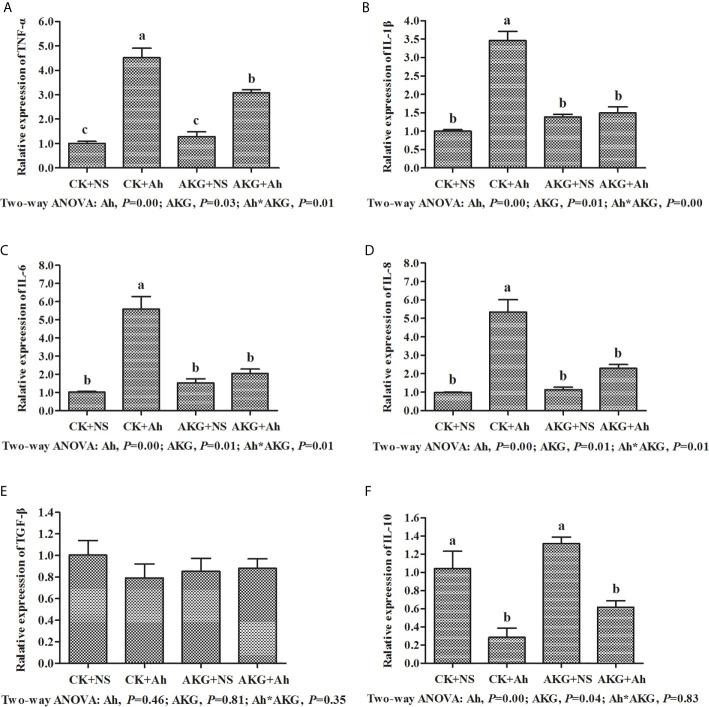
As an intermediate substance of the tricarboxylic acid cycle and a precursor substance of glutamic acid synthesis, the effect of alpha-ketoglutarate on growth and protein synthesis has been extensively studied. However, its prevention and treatment of pathogenic bacteria and its mechanism have not yet been noticed. To evaluate the effects of alpha-ketoglutarate on intestinal antioxidant capacity and immune response of Songpu mirror carp, a total of 360 fish with an average initial weight of 6.54 ± 0.08 g were fed diets containing alpha-ketoglutarate with 1% for 8 weeks. At the end of the feeding trial, the fish were challenged with for 2 weeks. The results indicated that alpha-ketoglutarate supplementation significantly increased the survival rate of carp after infection with ( < 0.05), and the contents of immune digestion enzymes including lysozyme, alkaline phosphatase and the concentration of complement C4 were markedly enhanced after alpha-ketoglutarate supplementation ( < 0.05). Also, appropriate alpha-ketoglutarate increased the activities of total antioxidant capacity and catalase and prevented the up-regulation in the mRNA expression levels of pro-inflammatory cytokines including tumor necrosis factor-α, interleukin-1β, interleukin-6, and interleukin-8 ( < 0.05). Furthermore, the mRNA expression levels of toll-like receptor 4 (TLR4), and nuclear factor kappa-B (NF-κB) were strikingly increased after infection with ( < 0.05), while the TLR4 was strikingly decreased with alpha-ketoglutarate supplementation ( < 0.05). Moreover, the mRNA expression levels of tight junctions including claudin-1, claudin-3, claudin-7, claudin-11 and myosin light chain kinases (MLCK) were upregulated after alpha-ketoglutarate supplementation ( < 0.05). In summary, the appropriate alpha-ketoglutarate supplementation could increase survival rate, strengthen the intestinal enzyme immunosuppressive activities, antioxidant capacities and alleviate the intestinal inflammation, thereby promoting the intestinal immune responses and barrier functions of Songpu mirror carp activating TLR4/MyD88/NF-κB and MLCK signaling pathways after infection with .
作为三羧酸循环的中间物质和谷氨酸合成的前体物质,α-酮戊二酸对生长和蛋白质合成的影响已得到广泛研究。然而,其对致病性细菌的预防和治疗及其机制尚未得到关注。为了评估α-酮戊二酸对松江鲈肠道抗氧化能力和免疫反应的影响,共饲养了 360 条初始平均体重为 6.54±0.08g 的鱼,投喂含有 1%α-酮戊二酸的饲料 8 周。在喂养试验结束时,用 对鱼进行了为期 2 周的攻毒。结果表明,α-酮戊二酸的补充显著提高了感染 后鲤鱼的存活率(<0.05),补充α-酮戊二酸后,免疫消化酶的含量,如溶菌酶、碱性磷酸酶和补体 C4 的浓度明显增加(<0.05)。此外,适当的α-酮戊二酸增加了总抗氧化能力和过氧化氢酶的活性,并防止了促炎细胞因子,如肿瘤坏死因子-α、白细胞介素-1β、白细胞介素-6 和白细胞介素-8 的 mRNA 表达水平上调(<0.05)。此外,感染 后,Toll 样受体 4(TLR4)和核因子 kappa-B(NF-κB)的 mRNA 表达水平显著增加(<0.05),而α-酮戊二酸的补充则显著降低了 TLR4(<0.05)。此外,紧密连接相关基因,如 Claudin-1、Claudin-3、Claudin-7、Claudin-11 和肌球蛋白轻链激酶(MLCK)的 mRNA 表达水平在α-酮戊二酸补充后上调(<0.05)。总之,适当的α-酮戊二酸补充可以提高存活率,增强肠道酶的免疫抑制活性、抗氧化能力,减轻肠道炎症,从而促进松江鲈的肠道免疫反应和屏障功能,激活 TLR4/MyD88/NF-κB 和 MLCK 信号通路,感染 后。


 Zotero 插件