
人类免疫刺激和免疫抑制基因的间断性选择分别作为一种自我驯化综合征引发和预防类风湿性关节炎。
Disruptive Selection of Human Immunostimulatory and Immunosuppressive Genes Both Provokes and Prevents Rheumatoid Arthritis, Respectively, as a Self-Domestication Syndrome.
作者信息
Klimova Natalya V, Oshchepkova Evgeniya, Chadaeva Irina, Sharypova Ekaterina, Ponomarenko Petr, Drachkova Irina, Rasskazov Dmitry, Oshchepkov Dmitry, Ponomarenko Mikhail, Savinkova Ludmila, Kolchanov Nikolay A, Kozlov Vladimir
机构信息
Institute of Cytology and Genetics, Siberian Branch of the Russian Academy of Sciences (ICG SB RAS), Novosibirsk, Russia.
Research Institute of Fundamental and Clinical Immunology (RIFCI SB RAS), Novosibirsk, Russia.
出版信息
Front Genet. 2021 Jun 22;12:610774. doi: 10.3389/fgene.2021.610774. eCollection 2021.
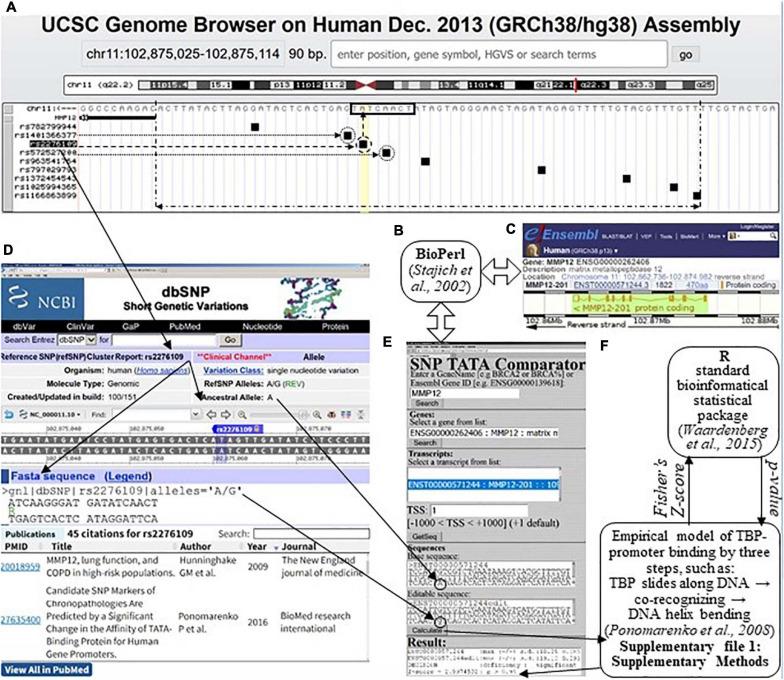
Using our previously published Web service SNP_TATA_Comparator, we conducted a genome-wide study of single-nucleotide polymorphisms (SNPs) within core promoters of 68 human rheumatoid arthritis (RA)-related genes. Using 603 SNPs within 25 genes clinically associated with RA-comorbid disorders, we predicted 84 and 70 candidate SNP markers for overexpression and underexpression of these genes, respectively, among which 58 and 96 candidate SNP markers, respectively, can relieve and worsen RA as if there is a neutral drift toward susceptibility to RA. Similarly, we predicted natural selection toward susceptibility to RA for 8 immunostimulatory genes (e.g., ) and 10 genes most often associated with RA (e.g., ). On the contrary, using 25 immunosuppressive genes, we predicted 70 and 109 candidate SNP markers aggravating and relieving RA, respectively (e.g., and ), suggesting that natural selection can simultaneously additionally yield resistance to RA. We concluded that disruptive natural selection of human immunostimulatory and immunosuppressive genes is concurrently elevating and reducing the risk of RA, respectively. So, we hypothesize that RA in human could be a self-domestication syndrome referring to evolution patterns in domestic animals. We tested this hypothesis by means of public RNA-Seq data on 1740 differentially expressed genes (DEGs) of pets vs. wild animals (e.g., dogs vs. wolves). The number of DEGs in the domestic animals corresponding to worsened RA condition in humans was significantly larger than that in the related wild animals (10 vs. 3). Moreover, much less DEGs in the domestic animals were accordant to relieved RA condition in humans than those in the wild animals (1 vs. 8 genes). This indicates that the anthropogenic environment, in contrast to a natural one, affects gene expression across the whole genome (e.g., immunostimulatory and immunosuppressive genes) in a manner that likely contributes to RA. The difference in gene numbers is statistically significant as confirmed by binomial distribution ( < 0.01), Pearson's χ ( < 0.01), and Fisher's exact test ( < 0.05). This allows us to propose RA as a candidate symptom within a self-domestication syndrome. Such syndrome might be considered as a human's payment with health for the benefits received during evolution.
利用我们之前发表的网络服务SNP_TATA_Comparator,我们对68个人类类风湿关节炎(RA)相关基因的核心启动子内的单核苷酸多态性(SNP)进行了全基因组研究。利用25个与RA合并症临床相关基因中的603个SNP,我们分别预测了84个和70个这些基因过表达和低表达的候选SNP标记,其中分别有58个和96个候选SNP标记可以缓解和加重RA,就好像存在向RA易感性的中性漂移。同样,我们预测了8个免疫刺激基因(如……)和10个最常与RA相关的基因(如……)对RA易感性的自然选择。相反,利用25个免疫抑制基因,我们分别预测了70个和109个加重和缓解RA的候选SNP标记(如……和……),这表明自然选择可以同时额外产生对RA的抗性。我们得出结论,人类免疫刺激和免疫抑制基因的破坏性自然选择分别同时增加和降低了RA的风险。因此,我们假设人类的RA可能是一种自我驯化综合征,类似于家畜的进化模式。我们通过关于宠物与野生动物(如狗与狼)的1740个差异表达基因(DEG)的公共RNA测序数据来检验这一假设。与人类RA病情恶化相对应的家畜中的DEG数量显著多于相关野生动物中的DEG数量(10个对3个)。此外,家畜中与人类RA病情缓解相符的DEG数量比野生动物中的少得多(1个对8个基因)。这表明与自然环境相比,人为环境以可能导致RA的方式影响整个基因组(如免疫刺激和免疫抑制基因)的基因表达。二项分布(<0.01)、Pearson卡方检验(<0.01)和Fisher精确检验(<0.05)证实基因数量差异具有统计学意义。这使我们能够提出RA作为自我驯化综合征中的一个候选症状。这种综合征可能被视为人类为进化过程中获得的益处而付出的健康代价。


 Zotero 插件