
S100 蛋白家族在肺部疾病中的作用及作为治疗靶点
The S100 Protein Family as Players and Therapeutic Targets in Pulmonary Diseases.
机构信息
Division of Pulmonary and Critical Care Medicine, Department of Medicine, State University of New York Downstate Health Sciences University, 450 Clarkson Avenue, Brooklyn, NY 11203, USA.
Department of Cell Biology, State University of New York Downstate Health Sciences University, 450 Clarkson Avenue, Brooklyn, NY 11203, USA.
出版信息
Pulm Med. 2021 Jun 18;2021:5488591. doi: 10.1155/2021/5488591. eCollection 2021.
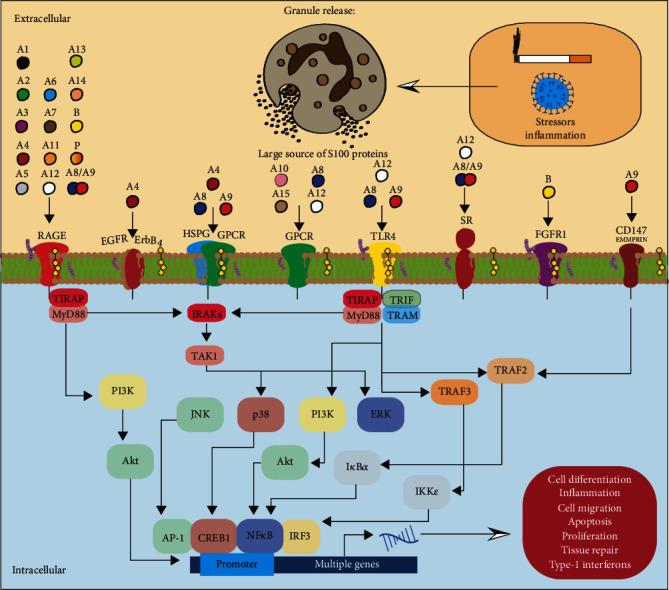
The S100 protein family consists of over 20 members in humans that are involved in many intracellular and extracellular processes, including proliferation, differentiation, apoptosis, Ca homeostasis, energy metabolism, inflammation, tissue repair, and migration/invasion. Although there are structural similarities between each member, they are not functionally interchangeable. The S100 proteins function both as intracellular Ca sensors and as extracellular factors. Dysregulated responses of multiple members of the S100 family are observed in several diseases, including the lungs (asthma, chronic obstructive pulmonary disease, idiopathic pulmonary fibrosis, cystic fibrosis, pulmonary hypertension, and lung cancer). To this degree, extensive research was undertaken to identify their roles in pulmonary disease pathogenesis and the identification of inhibitors for several S100 family members that have progressed to clinical trials in patients for nonpulmonary conditions. This review outlines the potential role of each S100 protein in pulmonary diseases, details the possible mechanisms observed in diseases, and outlines potential therapeutic strategies for treatment.
S100 蛋白家族由人类中的 20 多种成员组成,参与许多细胞内和细胞外过程,包括增殖、分化、凋亡、Ca 稳态、能量代谢、炎症、组织修复和迁移/侵袭。尽管每个成员之间存在结构相似性,但它们在功能上不可互换。S100 蛋白既作为细胞内 Ca 传感器,又作为细胞外因子发挥作用。在几种疾病中观察到 S100 家族的多个成员的失调反应,包括肺部疾病(哮喘、慢性阻塞性肺疾病、特发性肺纤维化、囊性纤维化、肺动脉高压和肺癌)。在这一程度上,进行了广泛的研究以确定它们在肺部疾病发病机制中的作用,以及鉴定几种 S100 家族成员的抑制剂,这些抑制剂已在非肺部疾病患者的临床试验中取得进展。本综述概述了每个 S100 蛋白在肺部疾病中的潜在作用,详细描述了在疾病中观察到的可能机制,并概述了治疗的潜在治疗策略。
 Zotero 插件