
基质束缚的病毒可以通过定殖细胞来阻止细菌生物膜的入侵。
Matrix-trapped viruses can prevent invasion of bacterial biofilms by colonizing cells.
机构信息
Department of Biological Sciences, Dartmouth College, Hanover, United States.
Max Planck Institute for Terrestrial Microbiology, Marburg, Germany.
出版信息
Elife. 2021 Jul 9;10:e65355. doi: 10.7554/eLife.65355.
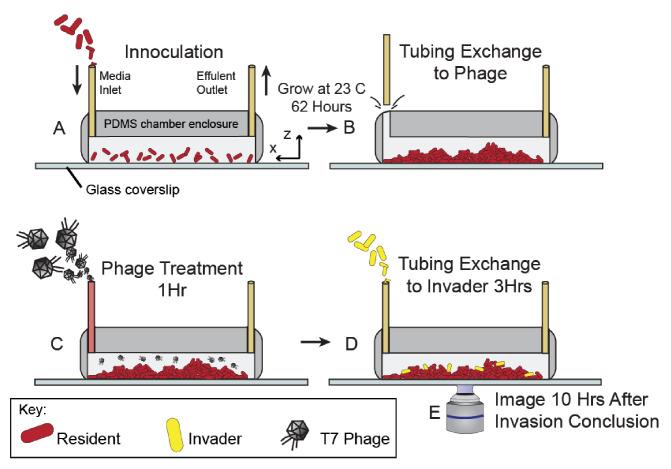
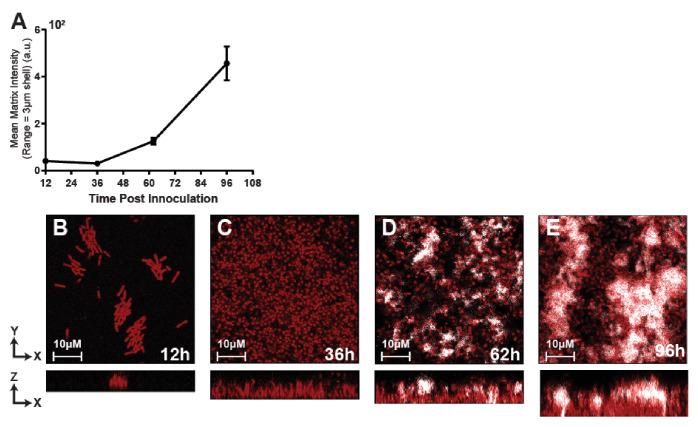
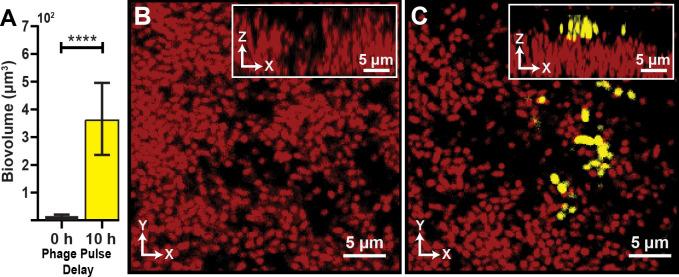
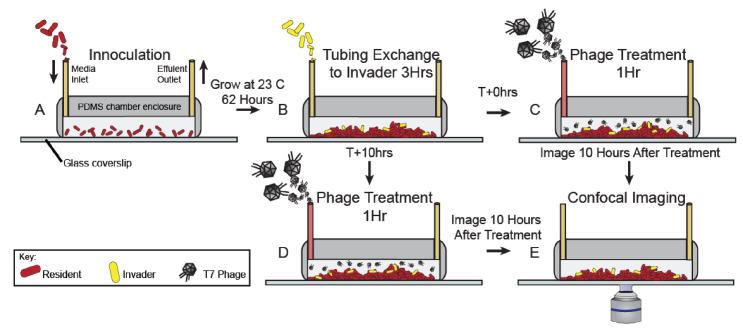
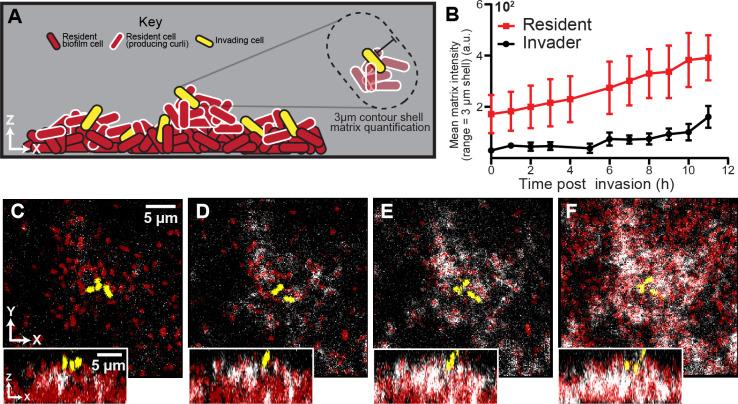
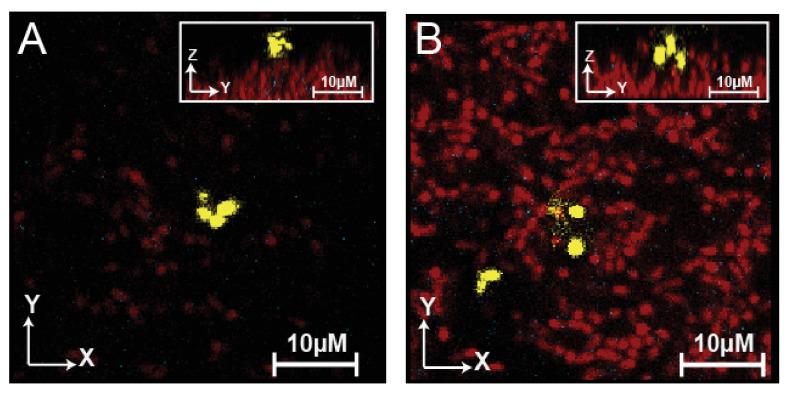
Bacteriophages can be trapped in the matrix of bacterial biofilms, such that the cells inside them are protected. It is not known whether these phages are still infectious and whether they pose a threat to newly arriving bacteria. Here, we address these questions using and its lytic phage T7. Prior work has demonstrated that T7 phages are bound in the outermost curli polymer layers of the biofilm matrix. We show that these phages do remain viable and can kill colonizing cells that are T7-susceptible. If cells colonize a resident biofilm before phages do, we find that they can still be killed by phage exposure if it occurs soon thereafter. However, if colonizing cells are present on the biofilm long enough before phage exposure, they gain phage protection via envelopment within curli-producing clusters of the resident biofilm cells.
噬菌体可以被困在细菌生物膜的基质中,从而使其中的细胞得到保护。目前尚不清楚这些噬菌体是否仍然具有感染性,以及它们是否对新到达的细菌构成威胁。在这里,我们使用 和它的裂解噬菌体 T7 来解决这些问题。先前的工作表明,T7 噬菌体被绑定在 的生物膜基质的最外层卷曲聚合物层中。我们表明,这些噬菌体仍然具有活力,可以杀死对 T7 敏感的定植细胞。如果细胞在噬菌体之前定植于常驻生物膜中,我们发现如果随后很快暴露于噬菌体,它们仍然可以被噬菌体杀死。但是,如果定植细胞在噬菌体暴露之前在生物膜上存在足够长的时间,它们就可以通过被包裹在常驻生物膜细胞的卷曲产生簇中而获得噬菌体的保护。


 Zotero 插件