
利用线虫和哺乳动物系统进行衰老研究的组合方法。
Combinatorial Approach Using and Mammalian Systems for Aging Research.
机构信息
Department of Biological Sciences, Korea Advanced Institute of Science and Technology, Daejeon 34141, Korea.
These authors contributed equally to this work.
出版信息
Mol Cells. 2021 Jul 31;44(7):425-432. doi: 10.14348/molcells.2021.0080.
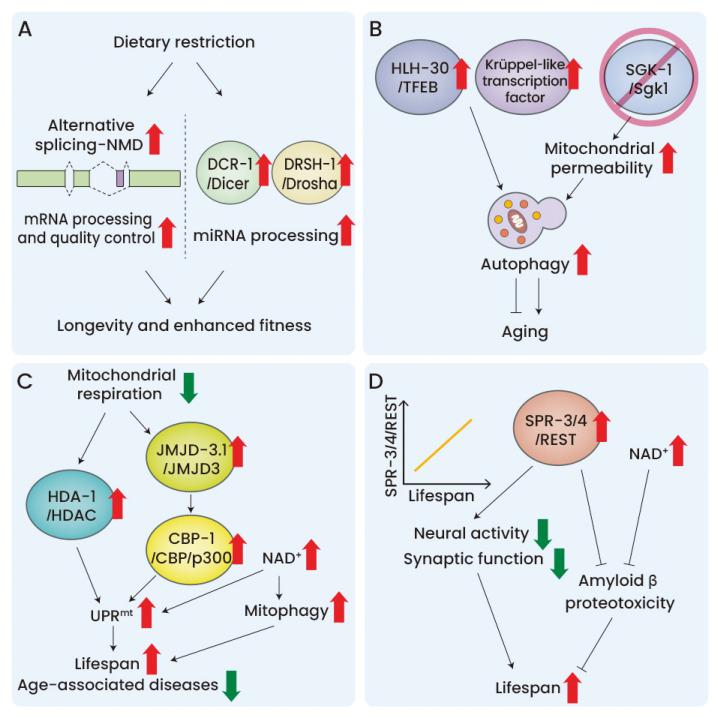
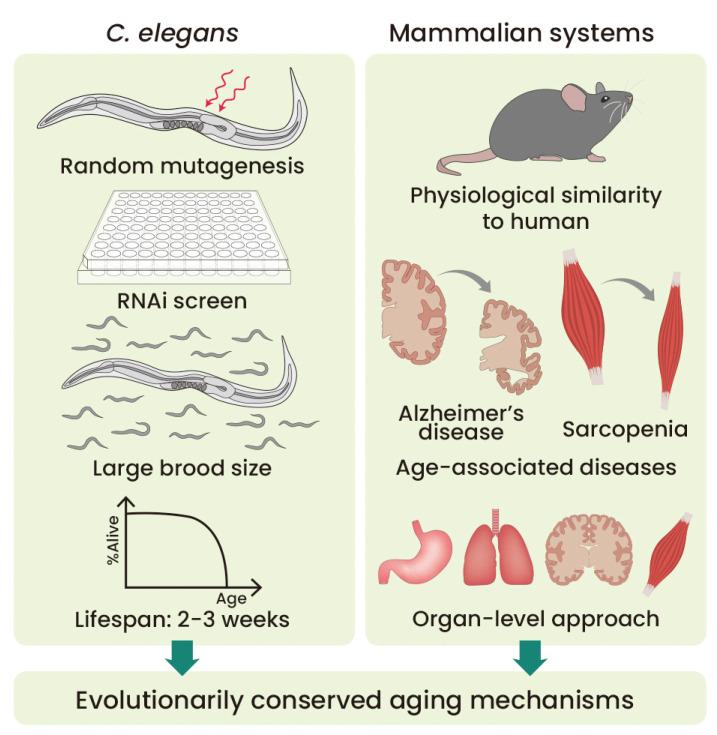
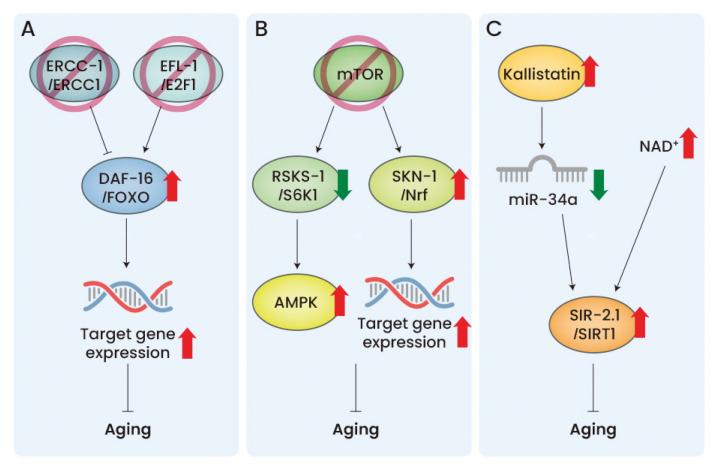
Aging is associated with functional and structural declines in organisms over time. Organisms as diverse as the nematode and mammals share signaling pathways that regulate aging and lifespan. In this review, we discuss recent combinatorial approach to aging research employing and mammalian systems that have contributed to our understanding of evolutionarily conserved aging-regulating pathways. The topics covered here include insulin/IGF-1, mechanistic target of rapamycin (mTOR), and sirtuin signaling pathways; dietary restriction; autophagy; mitochondria; and the nervous system. A combinatorial approach employing high-throughput, rapid systems, and human model mammalian systems is likely to continue providing mechanistic insights into aging biology and will help develop therapeutics against age-associated disorders.
衰老是生物体随着时间的推移而出现的功能和结构衰退。线虫和哺乳动物等多种多样的生物都有调节衰老和寿命的信号通路。在这篇综述中,我们讨论了最近采用线虫和哺乳动物系统的组合方法进行衰老研究,这些方法有助于我们理解进化保守的衰老调节途径。本文涵盖的主题包括胰岛素/IGF-1、雷帕霉素靶蛋白(mTOR)和沉默调节蛋白信号通路;饮食限制;自噬;线粒体;以及神经系统。采用高通量、快速的线虫系统和人类模型哺乳动物系统的组合方法,很可能会继续为衰老生物学提供机制上的见解,并有助于开发针对与年龄相关的疾病的治疗方法。
 Zotero 插件