
雌激素受体阴性乳腺癌:生物学混沌与治疗悖论。
Estrogen receptor-low breast cancer: Biology chaos and treatment paradox.
机构信息
Department of Breast Surgery, Fudan University Shanghai Cancer Center, Shanghai, 200032, P. R. China.
Shanghai Medical College, Fudan University, Shanghai, 200032, P. R. China.
出版信息
Cancer Commun (Lond). 2021 Oct;41(10):968-980. doi: 10.1002/cac2.12191. Epub 2021 Jul 12.
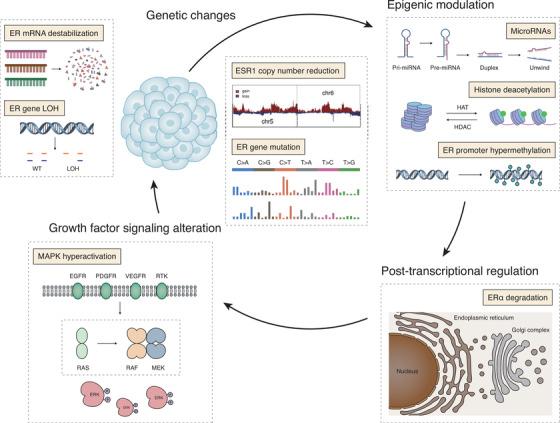
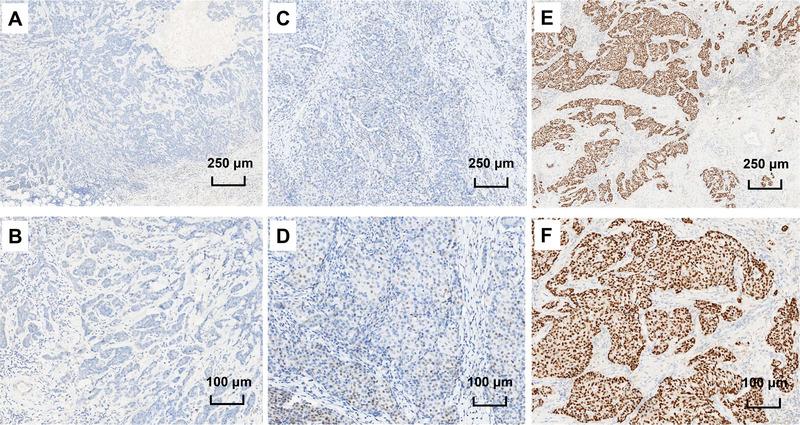
Hormone receptor testing mainly serves the purpose of guiding treatment choices for breast cancer patients. Patients with estrogen receptor (ER)-positive breast cancers show significant response to endocrine therapy. However, the methods to define ER status and eligibility for treatment remain controversial. Despite recent guidelines considering staining ≥1% of tumor nuclei by immunohistology as ER-positive, it has raised concerns on the benefit of endocrine therapy for tumors with ER 1%-10% expression, termed "ER-low positive". This subgroup accounts for 3% to 9% of all patients and is likely to have unique molecular features, and therefore distinct therapeutic response to endocrine therapy compared with ER-high positive tumors. The latest guidelines did not provide detailed descriptions for those patients, resulting in inconsistent treatment strategies. Consequently, we aimed to resolve this dilemma comprehensively. This review discusses molecular traits and recent ER-low positive breast cancer innovations, highlighting molecular-targeted treatment rather than traditional unified endocrine therapy for future basic and clinical research.
激素受体检测主要用于指导乳腺癌患者的治疗选择。雌激素受体(ER)阳性乳腺癌患者对内分泌治疗有显著反应。然而,定义 ER 状态和治疗资格的方法仍存在争议。尽管最近的指南将免疫组织化学染色≥1%的肿瘤细胞核定义为 ER 阳性,但对于 ER 表达 1%-10%的肿瘤(称为“ER 低阳性”),内分泌治疗的益处引发了关注。该亚组占所有患者的 3%至 9%,可能具有独特的分子特征,因此与 ER 高阳性肿瘤相比,对内分泌治疗有不同的反应。最新的指南没有详细描述这些患者,导致治疗策略不一致。因此,我们旨在全面解决这一困境。本综述讨论了分子特征和最近的 ER 低阳性乳腺癌创新,强调了分子靶向治疗,而不是传统的统一内分泌治疗,为未来的基础和临床研究提供了方向。
 Zotero 插件