
有反复种植失败史的不孕女性阴道和子宫内膜微生物群落分析。
Analysis of vaginal and endometrial microbiota communities in infertile women with a history of repeated implantation failure.
作者信息
Ichiyama Takuhiko, Kuroda Keiji, Nagai Yoko, Urushiyama Daichi, Ohno Motoharu, Yamaguchi Takashi, Nagayoshi Motoi, Sakuraba Yoshiyuki, Yamasaki Fumio, Hata Kenichiro, Miyamoto Shingo, Itakura Atsuo, Takeda Satoru, Tanaka Atsushi
机构信息
Saint Mother Obstetrics and Gynecology Clinic and Institute for Assisted Reproductive Technologies Fukuoka Japan.
Department of Obstetrics and Gynecology Juntendo University School of Medicine Tokyo Japan.
出版信息
Reprod Med Biol. 2021 May 31;20(3):334-344. doi: 10.1002/rmb2.12389. eCollection 2021 Jul.
PURPOSE
To identify specific bacterial communities in vaginal and endometrial microbiotas as biomarkers of implantation failure by comprehensively analyzing their microbiotas using next-generation sequencing.
METHODS
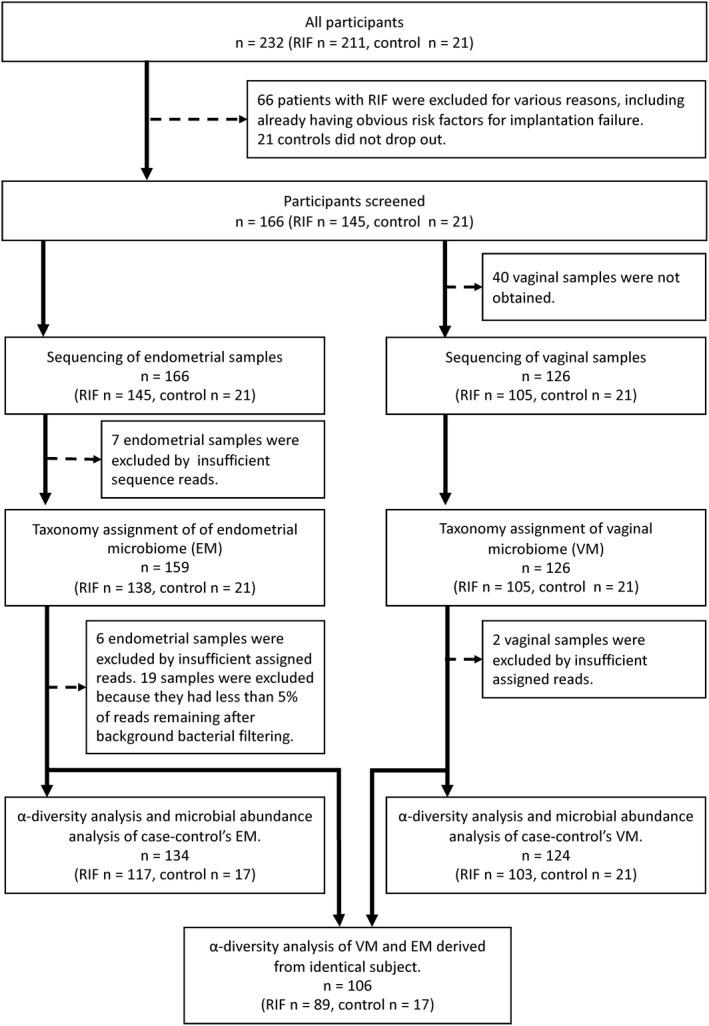
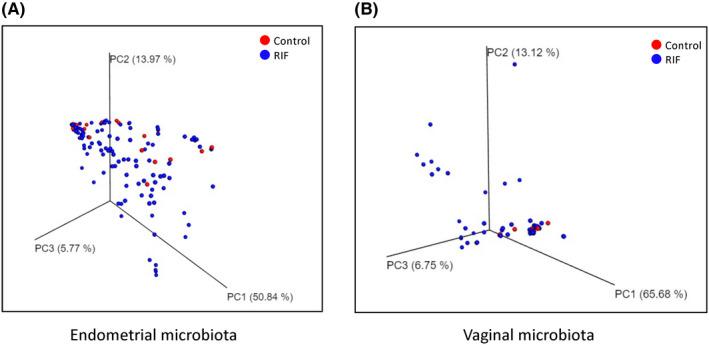
We investigated α- and β-diversities of vaginal and endometrial microbiotas using 16S rRNA gene sequencing and compared their profiles between 145 women with repeated implantation failure (RIF) and 21 controls who lacked the factors responsible for implantation failure with a high probability of being healthy and fertile to identify specific bacteria that induce implantation failure.
RESULTS
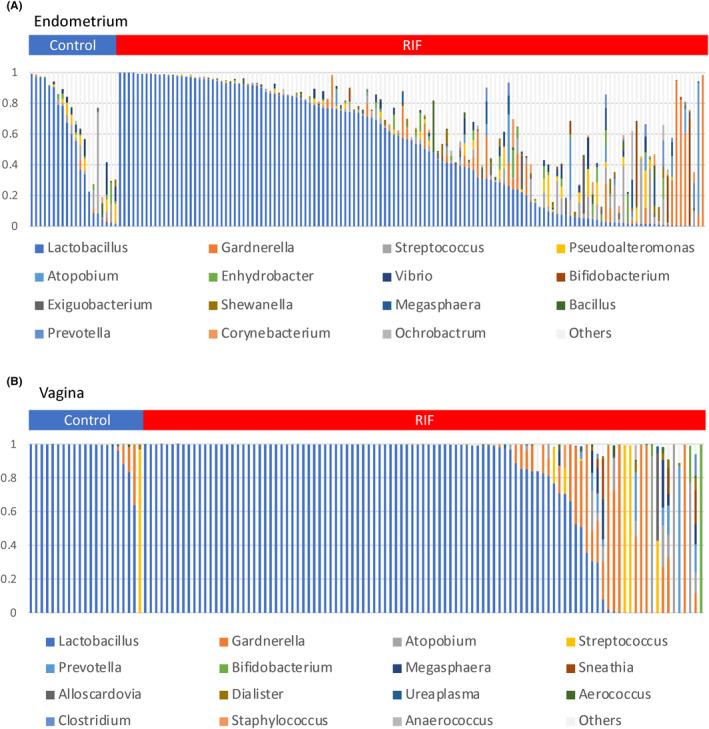
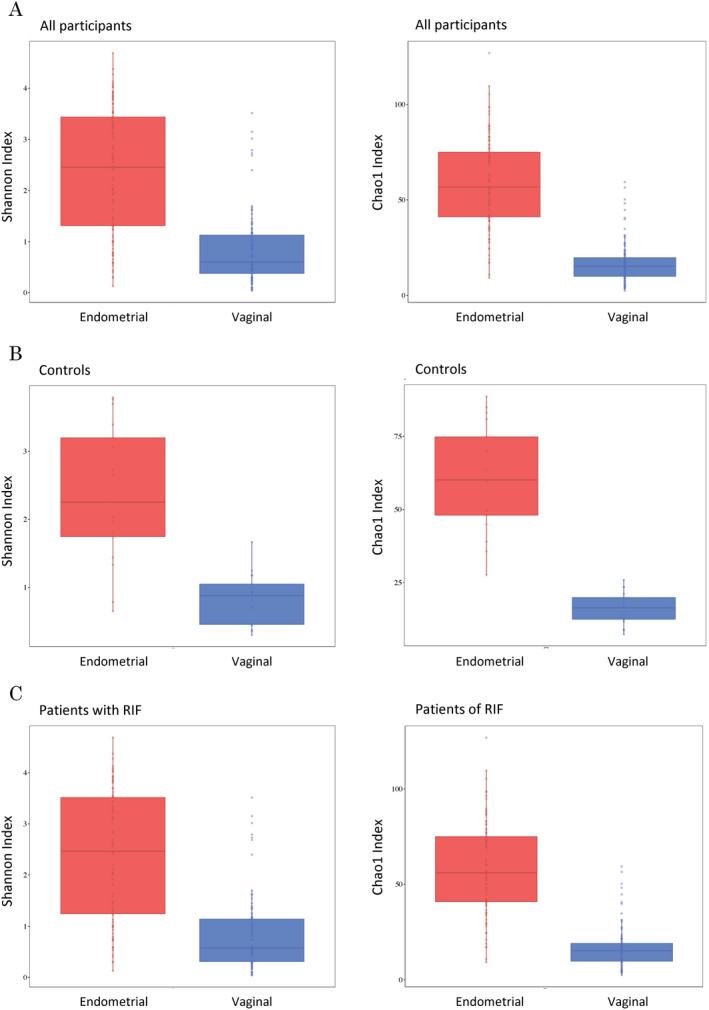
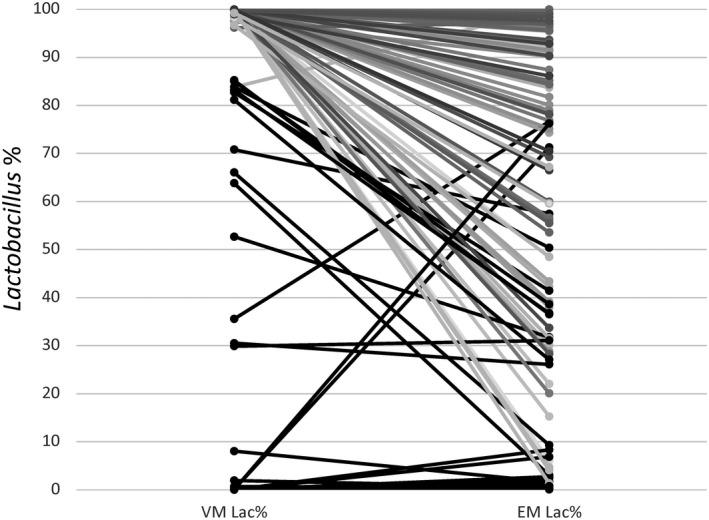
The endometrial microbiotas had higher α-diversities than did the vaginal microbiotas ( < .001). The microbiota profiles showed that vaginal and endometrial samples in RIF patients had significantly higher levels of 5 and 14 bacterial genera, respectively, than those in controls. Vaginal rates in RIF patients were significantly lower at 76.4 ± 38.9% compared with those of the controls at 91.8 ± 22.7% ( = .018), but endometrial rates did not significantly differ between the RIF patients and controls (56.2 ± 36.4% and 58.8 ± 37.0%, respectively, = .79).
CONCLUSIONS
Impaired microbiota communities containing specific bacteria in both the endometrium and vagina were associated with implantation failure. The vaginal rates, but not the endometrial, may be a biomarker for RIF.
目的
通过使用下一代测序技术全面分析阴道和子宫内膜微生物群,以确定其中特定的细菌群落作为植入失败的生物标志物。
方法
我们使用16S rRNA基因测序研究了阴道和子宫内膜微生物群的α-多样性和β-多样性,并比较了145例反复植入失败(RIF)女性与21例对照者的微生物群谱,这些对照者极有可能健康且可育,不存在导致植入失败的因素,以确定诱导植入失败的特定细菌。
结果
子宫内膜微生物群的α-多样性高于阴道微生物群(<0.001)。微生物群谱显示,RIF患者的阴道和子宫内膜样本中,分别有5个和14个细菌属的水平显著高于对照组。RIF患者的阴道率显著低于对照组,分别为76.4±38.9%和91.8±22.7%(P=0.018),但RIF患者与对照组的子宫内膜率无显著差异(分别为56.2±36.4%和58.8±37.0%,P=0.79)。
结论
子宫内膜和阴道中含有特定细菌的微生物群受损与植入失败有关。阴道率而非子宫内膜率可能是RIF的生物标志物。
 Zotero 插件