
通过凝集素受体样激酶将外生菌根共生工程引入柳枝稷生物能源作物。
Towards engineering ectomycorrhization into switchgrass bioenergy crops via a lectin receptor-like kinase.
机构信息
Biosciences Division, Oak Ridge National Laboratory, Oak Ridge, TN, USA.
Bredesen Center for Interdisciplinary Research and Graduate Education, University of Tennessee, Knoxville, TN, USA.
出版信息
Plant Biotechnol J. 2021 Dec;19(12):2454-2468. doi: 10.1111/pbi.13671. Epub 2021 Aug 11.
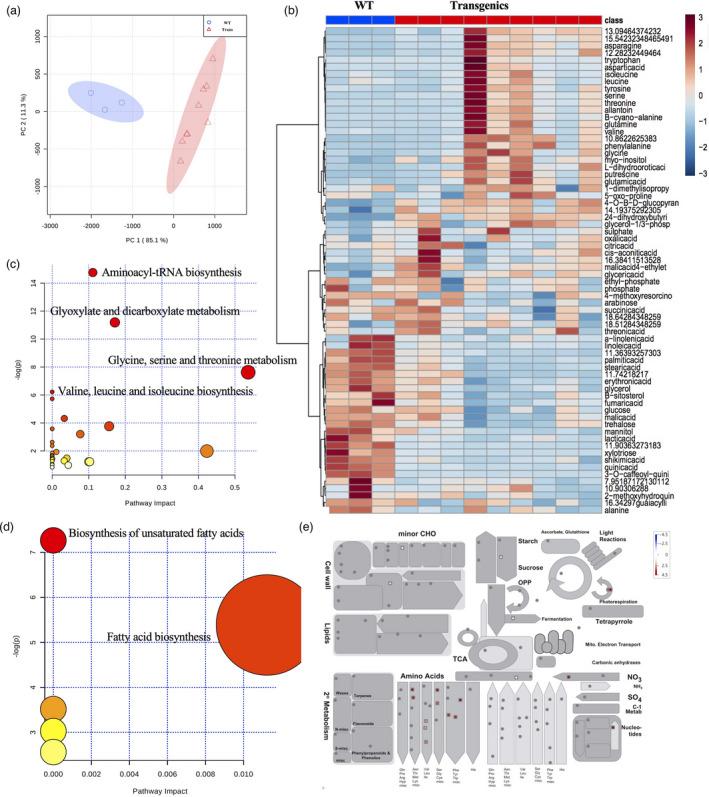
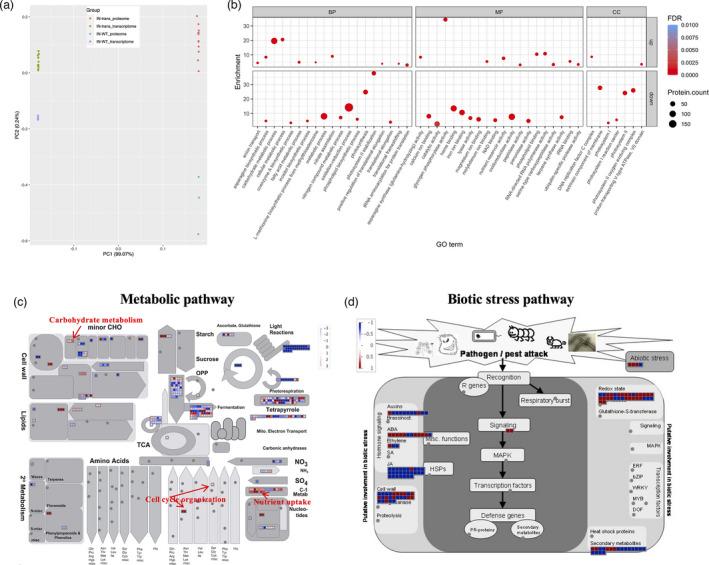
Soil-borne microbes can establish compatible relationships with host plants, providing a large variety of nutritive and protective compounds in exchange for photosynthesized sugars. However, the molecular mechanisms mediating the establishment of these beneficial relationships remain unclear. Our previous genetic mapping and whole-genome resequencing studies identified a gene deletion event of a Populus trichocarpa lectin receptor-like kinase gene PtLecRLK1 in Populus deltoides that was associated with poor-root colonization by the ectomycorrhizal fungus Laccaria bicolor. By introducing PtLecRLK1 into a perennial grass known to be a non-host of L. bicolor, switchgrass (Panicum virgatum L.), we found that L. bicolor colonizes ZmUbipro-PtLecRLK1 transgenic switchgrass roots, which illustrates that the introduction of PtLecRLK1 has the potential to convert a non-host to a host of L. bicolor. Furthermore, transcriptomic and proteomic analyses on inoculated-transgenic switchgrass roots revealed genes/proteins overrepresented in the compatible interaction and underrepresented in the pathogenic defence pathway, consistent with the view that pathogenic defence response is down-regulated during compatible interaction. Metabolomic profiling revealed that root colonization in the transgenic switchgrass was associated with an increase in N-containing metabolites and a decrease in organic acids, sugars, and aromatic hydroxycinnamate conjugates, which are often seen in the early steps of establishing compatible interactions. These studies illustrate that PtLecRLK1 is able to render a plant susceptible to colonization by the ectomycorrhizal fungus L. bicolor and shed light on engineering mycorrhizal symbiosis into a non-host to enhance plant productivity and fitness on marginal lands.
土壤微生物可以与宿主植物建立相容关系,提供大量营养和保护化合物,以换取光合作用产生的糖。然而,介导这些有益关系建立的分子机制仍不清楚。我们之前的遗传图谱和全基因组重测序研究发现,在美洲黑杨中,一个与外生菌根真菌共生菌密粘褶菌(Laccaria bicolor)根系定植不良相关的基因缺失事件,即杨树凝集素受体样激酶基因 PtLecRLK1。通过将 PtLecRLK1 导入一种已知不是密粘褶菌宿主的多年生草类柳枝稷(Panicum virgatum L.),我们发现密粘褶菌可以定植到 ZmUbipro-PtLecRLK1 转基因柳枝稷根系中,这表明引入 PtLecRLK1 有可能将非宿主植物转化为密粘褶菌的宿主植物。此外,接种转基因柳枝稷根系的转录组和蛋白质组分析显示,在相容互作中高度表达而在致病防御途径中低度表达的基因/蛋白质,与致病防御反应在相容互作中被下调的观点一致。代谢组学分析显示,转基因柳枝稷根系的定殖与含氮代谢物的增加和有机酸、糖和芳香羟基肉桂酸缀合物的减少有关,这些通常发生在建立相容互作的早期阶段。这些研究表明,PtLecRLK1 能够使植物容易被外生菌根真菌密粘褶菌定植,并揭示了将菌根共生关系工程化到非宿主植物中以提高植物在边缘土地上的生产力和适应性的潜力。


 Zotero 插件