
严重急性呼吸综合征冠状病毒2:从发现到基因组结构、转录及复制
SARS-CoV-2: from its discovery to genome structure, transcription, and replication.
作者信息
Brant Ayslan Castro, Tian Wei, Majerciak Vladimir, Yang Wei, Zheng Zhi-Ming
机构信息
Tumor Virus RNA Biology Section, HIV DRP, National Cancer Institute, NIH, Frederick, MD, USA.
Mechanism of DNA Repair, Replication, and Recombination Section, Laboratory of Molecular Biology, NIDDK, Bethesda, MD, USA.
出版信息
Cell Biosci. 2021 Jul 19;11(1):136. doi: 10.1186/s13578-021-00643-z.
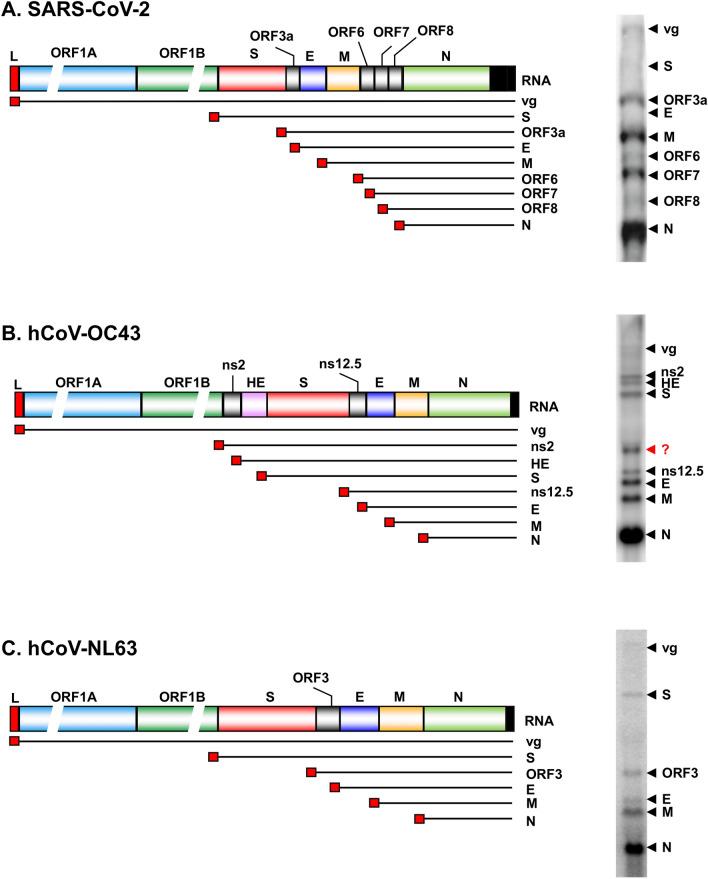
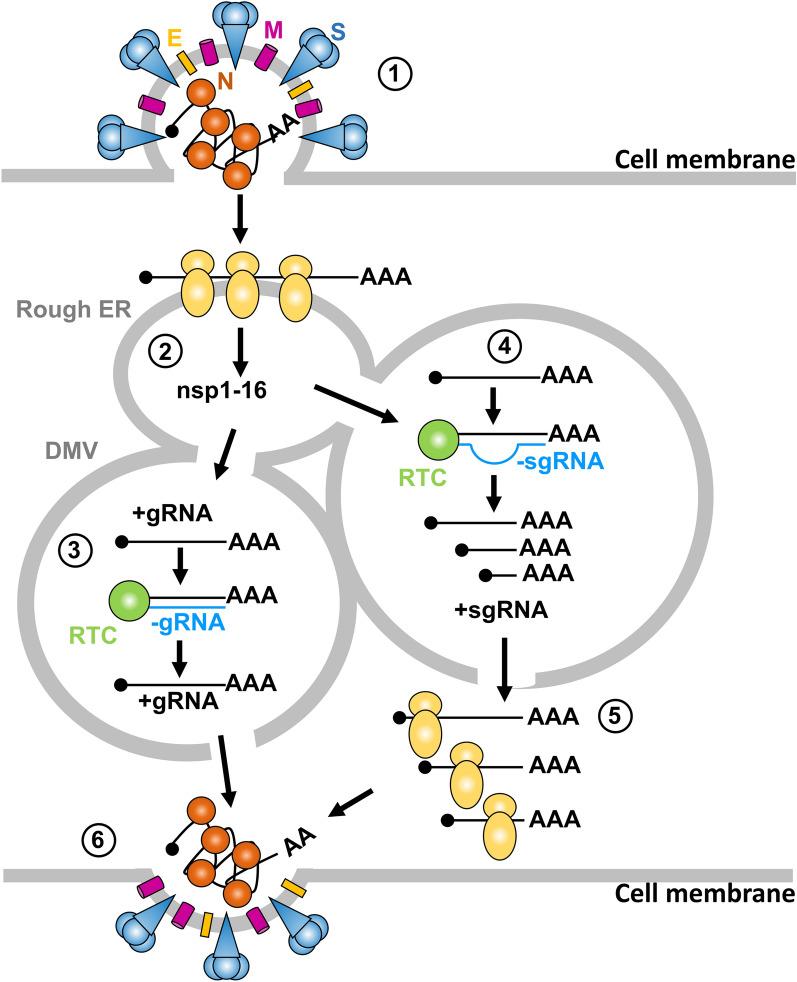
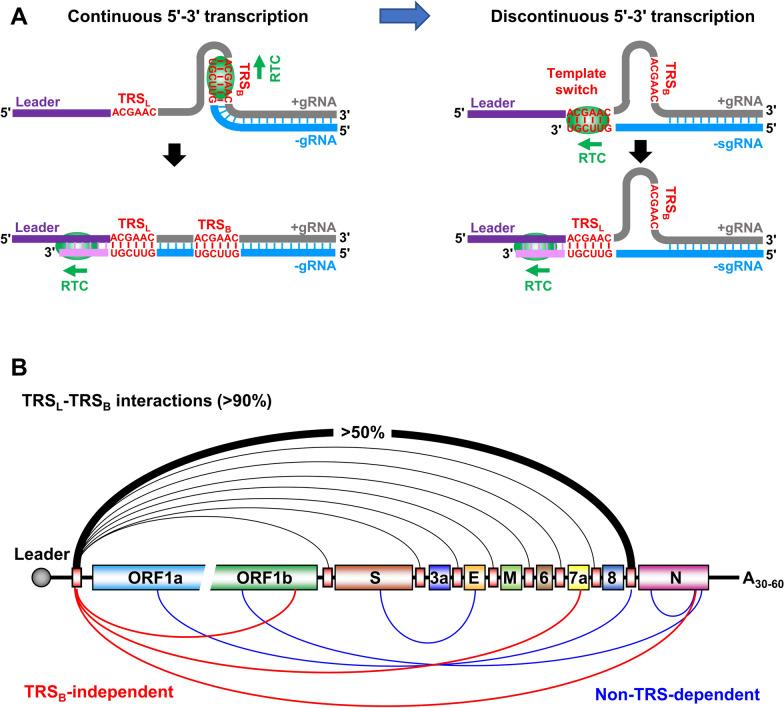
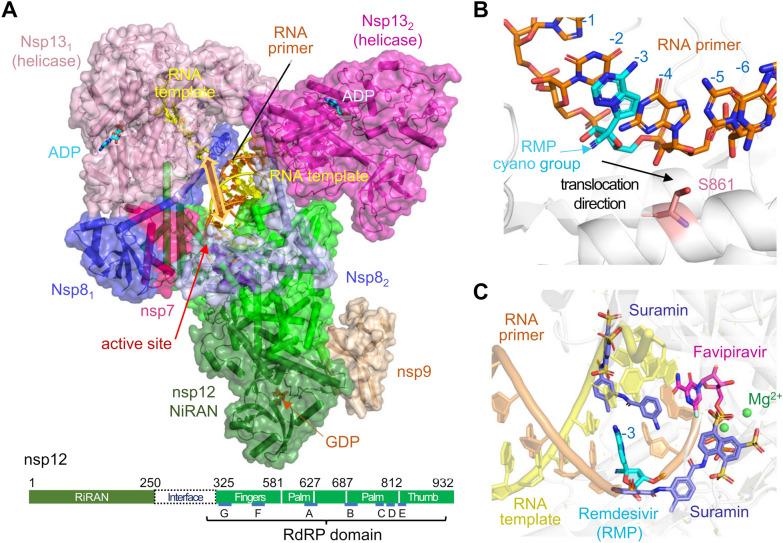
SARS-CoV-2 is an extremely contagious respiratory virus causing adult atypical pneumonia COVID-19 with severe acute respiratory syndrome (SARS). SARS-CoV-2 has a single-stranded, positive-sense RNA (+RNA) genome of ~ 29.9 kb and exhibits significant genetic shift from different isolates. After entering the susceptible cells expressing both ACE2 and TMPRSS2, the SARS-CoV-2 genome directly functions as an mRNA to translate two polyproteins from the ORF1a and ORF1b region, which are cleaved by two viral proteases into sixteen non-structural proteins (nsp1-16) to initiate viral genome replication and transcription. The SARS-CoV-2 genome also encodes four structural (S, E, M and N) and up to six accessory (3a, 6, 7a, 7b, 8, and 9b) proteins, but their translation requires newly synthesized individual subgenomic RNAs (sgRNA) in the infected cells. Synthesis of the full-length viral genomic RNA (gRNA) and sgRNAs are conducted inside double-membrane vesicles (DMVs) by the viral replication and transcription complex (RTC), which comprises nsp7, nsp8, nsp9, nsp12, nsp13 and a short RNA primer. To produce sgRNAs, RTC starts RNA synthesis from the highly structured gRNA 3' end and switches template at various transcription regulatory sequence (TRS) sites along the gRNA body probably mediated by a long-distance RNA-RNA interaction. The TRS motif in the gRNA 5' leader (TRS) is responsible for the RNA-RNA interaction with the TRS upstream of each ORF and skipping of the viral genome in between them to produce individual sgRNAs. Abundance of individual sgRNAs and viral gRNA synthesized in the infected cells depend on the location and read-through efficiency of each TRS. Although more studies are needed, the unprecedented COVID-19 pandemic has taught the world a painful lesson that is to invest and proactively prepare future emergence of other types of coronaviruses and any other possible biological horrors.
严重急性呼吸综合征冠状病毒2(SARS-CoV-2)是一种极具传染性的呼吸道病毒,可引发成人非典型肺炎——冠状病毒病2019(COVID-19),伴有严重急性呼吸综合征(SARS)。SARS-CoV-2具有约29.9kb的单链、正义RNA(+RNA)基因组,并且在不同分离株之间表现出显著的基因变异。进入同时表达血管紧张素转换酶2(ACE2)和跨膜丝氨酸蛋白酶2(TMPRSS2)的易感细胞后,SARS-CoV-2基因组直接作为信使核糖核酸(mRNA)发挥作用,从开放阅读框1a(ORF1a)和开放阅读框1b(ORF1b)区域翻译两种多聚蛋白,这两种多聚蛋白被两种病毒蛋白酶切割成16种非结构蛋白(nsp1-16),以启动病毒基因组的复制和转录。SARS-CoV-2基因组还编码四种结构蛋白(刺突蛋白(S)、包膜蛋白(E)、膜蛋白(M)和核衣壳蛋白(N))以及多达六种辅助蛋白(3a、6、7a、7b、8和9b),但其翻译需要受感染细胞中新合成的单个亚基因组RNA(sgRNA)。全长病毒基因组RNA(gRNA)和sgRNA的合成是在双膜囊泡(DMV)内由病毒复制和转录复合体(RTC)进行的,该复合体由nsp7、nsp8、nsp9、nsp12、nsp13和一个短RNA引物组成。为了产生sgRNA,RTC从高度结构化的gRNA 3'末端开始RNA合成,并可能在长距离RNA-RNA相互作用的介导下,在沿着gRNA主体的各种转录调控序列(TRS)位点处切换模板。gRNA 5'前导序列中的TRS基序(TRS)负责与每个开放阅读框上游的TRS进行RNA-RNA相互作用,并跳过它们之间的病毒基因组以产生单个sgRNA。在受感染细胞中合成的单个sgRNA和病毒gRNA的丰度取决于每个TRS的位置和通读效率。尽管还需要更多的研究,但前所未有的COVID-19大流行给全世界上了惨痛的一课,即要进行投资并积极为未来其他类型冠状病毒以及任何其他可能的生物灾难的出现做好准备。

 Zotero 插件