
《逃无可逃:AML 及其生态位如何逃避免疫疗法》
Catch me if you can: how AML and its niche escape immunotherapy.
机构信息
Tettamanti Research Center, Department of Pediatrics, University of Milano-Bicocca/Fondazione MBBM, Monza, Italy.
Lineberger Comprehensive Cancer Center, University of North Carolina at Chapel Hill, Chapel Hill, NC, USA.
出版信息
Leukemia. 2022 Jan;36(1):13-22. doi: 10.1038/s41375-021-01350-x. Epub 2021 Jul 23.
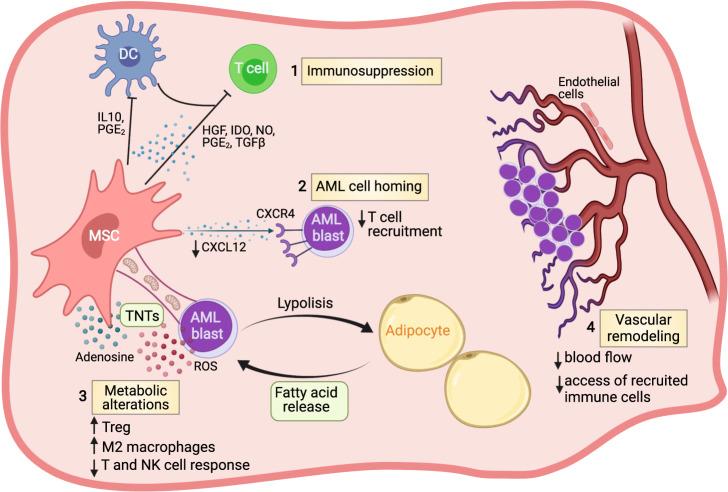
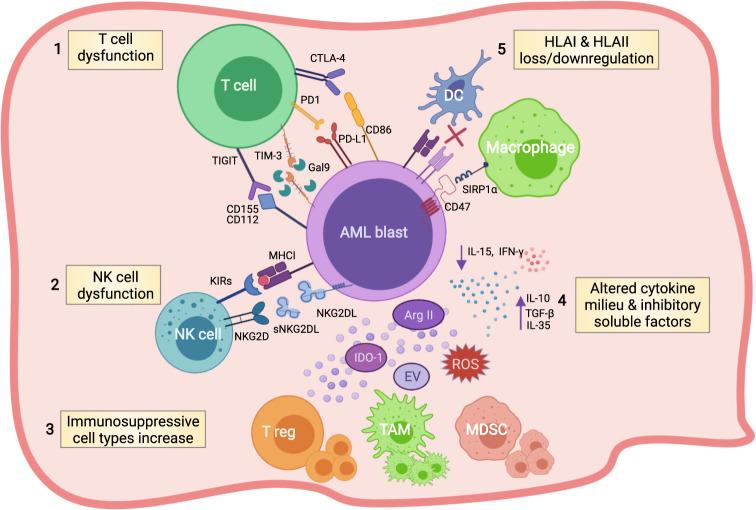
In spite of the remarkable progress in basic and preclinical studies of acute myeloid leukemia (AML), the five-year survival rate of AML patients remains poor, highlighting the urgent need for novel and synergistic therapies. Over the past decade, increased attention has been focused on identifying suitable immunotherapeutic strategies for AML, and in particular on targeting leukemic cells and their progenitors. However, recent studies have also underlined the important contribution of the leukemic microenvironment in facilitating tumor escape mechanisms leading to disease recurrence. Here, we describe the immunological features of the AML niche, with particular attention to the crosstalk between the AML blasts and the cellular components of the altered tumor microenvironment (TME) and the mechanisms of immune escape that hamper the therapeutic effects of the most advanced treatments. Considering the AML complexity, immunotherapy approaches may benefit from a rational combination of complementary strategies aimed at preventing escape mechanisms without increasing toxicity.
尽管在急性髓系白血病 (AML) 的基础和临床前研究方面取得了显著进展,但 AML 患者的五年生存率仍然很差,这凸显了对新型协同治疗方法的迫切需求。在过去的十年中,人们越来越关注为 AML 确定合适的免疫治疗策略,特别是针对白血病细胞及其祖细胞的策略。然而,最近的研究也强调了白血病微环境在促进肿瘤逃逸机制从而导致疾病复发方面的重要作用。在这里,我们描述了 AML 生态位的免疫学特征,特别关注 AML 原始细胞与改变的肿瘤微环境 (TME) 的细胞成分之间的串扰,以及阻碍最先进治疗效果的免疫逃逸机制。鉴于 AML 的复杂性,免疫疗法方法可能受益于合理组合互补策略,旨在防止逃逸机制而不增加毒性。
 Zotero 插件