
生物碱益母草碱通过调节滋养细胞中 MST1 的表达发挥抗炎作用。
Alkaloid leonurine exerts anti-inflammatory effects via modulating MST1 expression in trophoblast cells.
机构信息
Department 3 of Obstetrics, Cangzhou Central Hospital, Cangzhou, China.
出版信息
Immun Inflamm Dis. 2021 Dec;9(4):1439-1446. doi: 10.1002/iid3.493. Epub 2021 Jul 28.
BACKGROUND
Pre-eclampsia (PE) is mainly attributed to the inflammation of trophoblast cells in pregnant women, which results in damage to the maternal organs and growth retardation of the fetus. Alkaloid leonurine (LNR) is a plant compound and has anti-inflammatory effects. Here we aimed to investigate the effects of LNR on human and mouse trophoblast cells and the underlying mechanisms.
METHODS
The levels of the inflammatory factors in trophoblast cells under lipopolysaccharides (LPS) stimulation were analyzed with ELISA. Western blot was employed to examine the protein expression. Trophoblast cells in Mammalian ste20-like kinase 1 (MST1 ) or wild type (WT) mice were isolated to examine the expression of signal molecules in the nuclear factor-κB (NF-κB) pathway. Concentration-dependent activity of NF-κB was examined. The regulation of LNR and MST1 in MST1 trophoblast cells was studied as well.
RESULTS
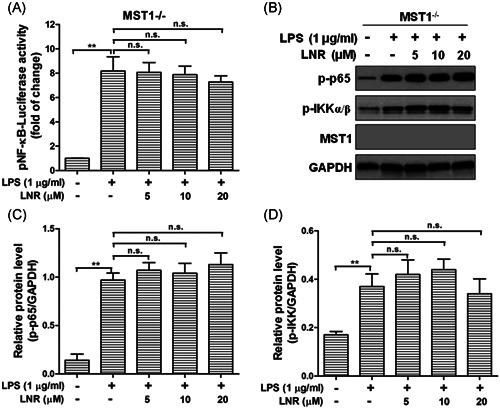
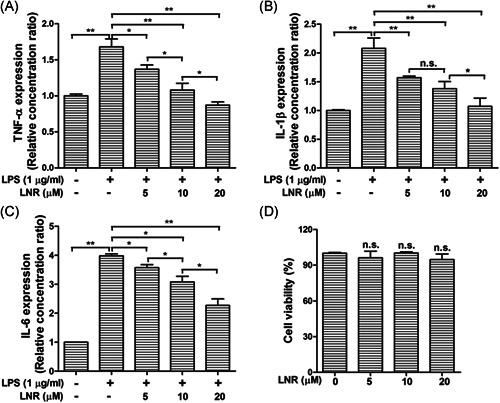
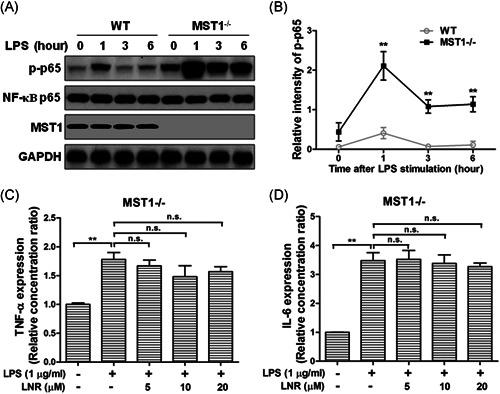
Our data showed that LNR exhibited anti-inflammatory effects and suppressed the NF-κB signaling by inhibiting LPS-induced inflammation in trophoblast cells. LNR upregulated the expression of MST1, and the anti-inflammatory role of LNR was greatly relieved in MST1-knockout trophoblast cells, although it displayed weak roles in NF-κB signaling.
CONCLUSION
LNR exhibits anti-inflammatory effects on human and mouse trophoblast cells by upregulating MST1 in the NF-κB signal pathway.
背景
子痫前期(PE)主要归因于孕妇滋养细胞的炎症,导致母体器官损伤和胎儿生长迟缓。生物碱益母草碱(LNR)是一种植物化合物,具有抗炎作用。本研究旨在探讨 LNR 对人源和鼠源滋养细胞的作用及其潜在机制。
方法
采用 ELISA 分析 LPS 刺激下滋养细胞中炎症因子的水平。采用 Western blot 检测蛋白表达。分离 MST1 或野生型(WT)小鼠的滋养细胞,检测核因子-κB(NF-κB)通路中信号分子的表达。检测 NF-κB 的浓度依赖性活性。研究 LNR 和 MST1 在 MST1 滋养细胞中的调节作用。
结果
我们的数据表明,LNR 通过抑制 LPS 诱导的滋养细胞炎症,表现出抗炎作用并抑制 NF-κB 信号通路。LNR 上调了 MST1 的表达,尽管在 MST1 敲除滋养细胞中 LNR 的抗炎作用大大缓解,但它在 NF-κB 信号通路中仅发挥微弱作用。
结论
LNR 通过上调 NF-κB 信号通路中的 MST1,对人源和鼠源滋养细胞发挥抗炎作用。


 Zotero 插件