
利用计算和实验流程发现严重急性呼吸综合征冠状病毒2(SARS-CoV-2)蛋白的小分子抑制剂
Discovery of Small-Molecule Inhibitors of SARS-CoV-2 Proteins Using a Computational and Experimental Pipeline.
作者信息
Lau Edmond Y, Negrete Oscar A, Bennett W F Drew, Bennion Brian J, Borucki Monica, Bourguet Feliza, Epstein Aidan, Franco Magdalena, Harmon Brooke, He Stewart, Jones Derek, Kim Hyojin, Kirshner Daniel, Lao Victoria, Lo Jacky, McLoughlin Kevin, Mosesso Richard, Murugesh Deepa K, Saada Edwin A, Segelke Brent, Stefan Maxwell A, Stevenson Garrett A, Torres Marisa W, Weilhammer Dina R, Wong Sergio, Yang Yue, Zemla Adam, Zhang Xiaohua, Zhu Fangqiang, Allen Jonathan E, Lightstone Felice C
机构信息
Lawrence Livermore National Laboratory, Physical and Life Sciences Directorate, Biotechnology and Biosciences Division, Livermore, CA, United States.
Sandia National Laboratory, Department of Biotechnologies and Bioengineering, Livermore, CA, United States.
出版信息
Front Mol Biosci. 2021 Jul 9;8:678701. doi: 10.3389/fmolb.2021.678701. eCollection 2021.
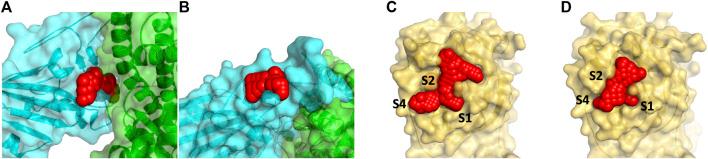
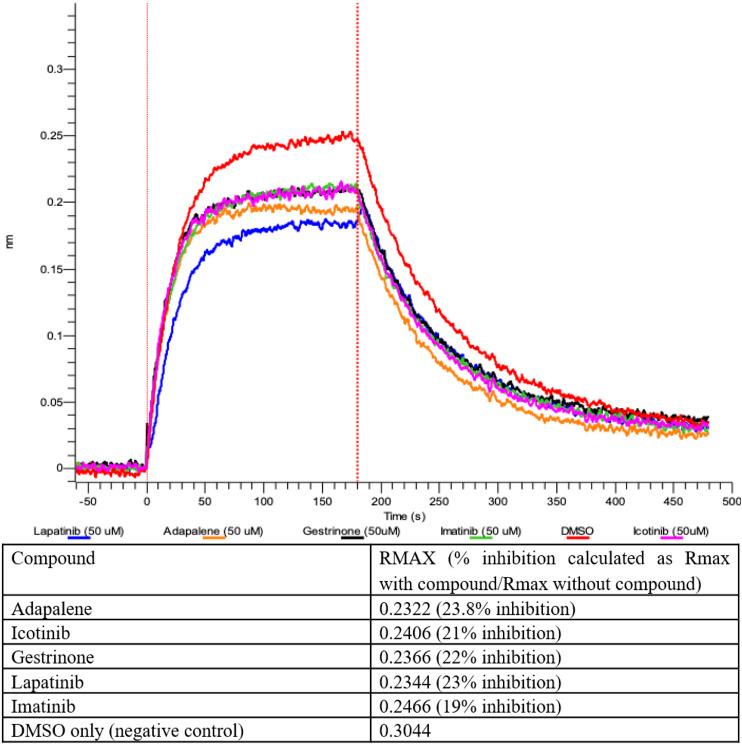
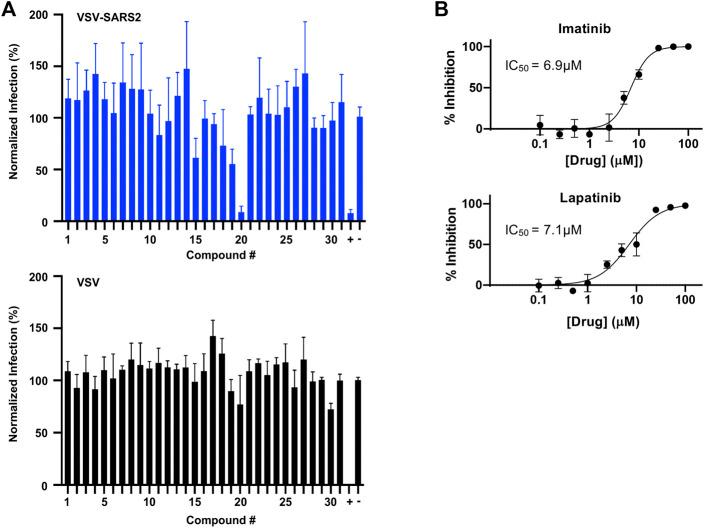
A rapid response is necessary to contain emergent biological outbreaks before they can become pandemics. The novel coronavirus (SARS-CoV-2) that causes COVID-19 was first reported in December of 2019 in Wuhan, China and reached most corners of the globe in less than two months. In just over a year since the initial infections, COVID-19 infected almost 100 million people worldwide. Although similar to SARS-CoV and MERS-CoV, SARS-CoV-2 has resisted treatments that are effective against other coronaviruses. Crystal structures of two SARS-CoV-2 proteins, spike protein and main protease, have been reported and can serve as targets for studies in neutralizing this threat. We have employed molecular docking, molecular dynamics simulations, and machine learning to identify from a library of 26 million molecules possible candidate compounds that may attenuate or neutralize the effects of this virus. The viability of selected candidate compounds against SARS-CoV-2 was determined experimentally by biolayer interferometry and FRET-based activity protein assays along with virus-based assays. In the pseudovirus assay, imatinib and lapatinib had IC values below 10 μM, while candesartan cilexetil had an IC value of approximately 67 µM against M in a FRET-based activity assay. Comparatively, candesartan cilexetil had the highest selectivity index of all compounds tested as its half-maximal cytotoxicity concentration 50 (CC) value was the only one greater than the limit of the assay (>100 μM).
在新兴生物疫情演变为大流行之前,迅速做出反应以控制疫情至关重要。导致新冠肺炎的新型冠状病毒(SARS-CoV-2)于2019年12月首次在中国武汉被报告,并在不到两个月的时间里蔓延到全球大部分地区。自最初感染以来的短短一年多时间里,新冠肺炎在全球感染了近1亿人。尽管SARS-CoV-2与SARS-CoV和MERS-CoV相似,但它对其他冠状病毒有效的治疗方法具有抗性。已报道了两种SARS-CoV-2蛋白——刺突蛋白和主要蛋白酶的晶体结构,可作为研究中和这一威胁的靶点。我们利用分子对接、分子动力学模拟和机器学习,从一个包含2600万个分子的库中筛选出可能减弱或中和这种病毒作用的候选化合物。通过生物层干涉术、基于荧光共振能量转移(FRET)的活性蛋白测定以及基于病毒的测定,对所选候选化合物针对SARS-CoV-2的活性进行了实验测定。在假病毒测定中,伊马替尼和拉帕替尼的半数抑制浓度(IC)值低于10 μM,而在基于FRET的活性测定中,坎地沙坦酯对M的IC值约为67 μM。相比之下,坎地沙坦酯在所有测试化合物中具有最高的选择性指数,因为其半数最大细胞毒性浓度(CC50)值是唯一大于测定上限(>100 μM)的。




 Zotero 插件