
基于质谱的碳青霉烯类耐药肺炎克雷伯菌血流感染血清标志物的初步探索。
Preliminary exploration on the serum biomarkers of bloodstream infection with carbapenem-resistant Klebsiella pneumoniae based on mass spectrometry.
机构信息
College of Medical Technology, Xuzhou Medical University, Xuzhou, China.
Department of Clinical Laboratory, The First Medical Centre, The PLA General Hospital, Beijing, China.
出版信息
J Clin Lab Anal. 2021 Sep;35(9):e23915. doi: 10.1002/jcla.23915. Epub 2021 Jul 31.
BACKGROUND
Carbapenem-resistant K. pneumoniae (CRKP) bloodstream infections (BSI) must be rapidly identified to improve patient survival rates. This study investigated a new mass spectrometry-based method for improving the identification of CRKP BSI and explored potential biomarkers that could differentiate CRKP BSI from sensitive.
METHODS
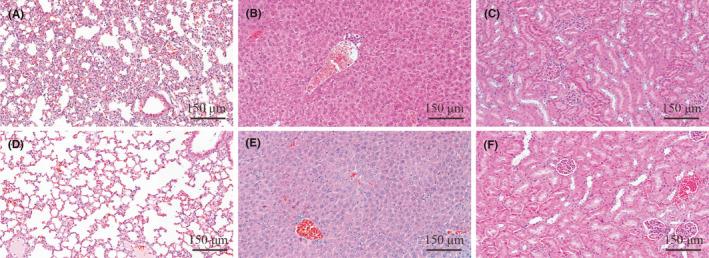
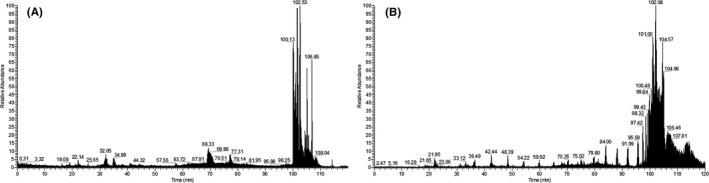
Mouse models of BSI were first established. MALDI-TOF MS was then used to profile serum peptides in CRKP BSI versus normal samples before applying BioExplorer software to establish a diagnostic model to distinguish CRKP from normal. The diagnostic value of the model was then tested against 32 clinical CRKP BSI and 27 healthy serum samples. Finally, the identities of the polypeptides used to establish the diagnostic model were determined by secondary mass spectrometry.
RESULTS
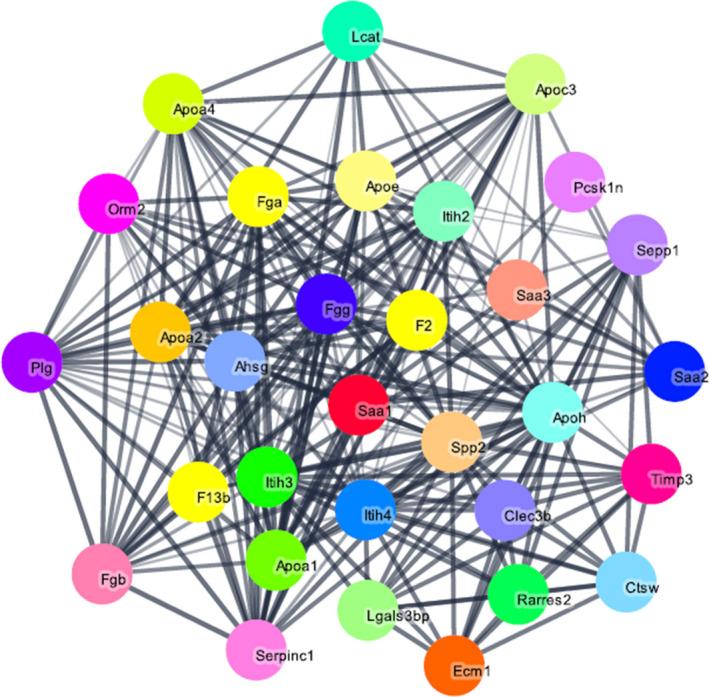
107 peptide peaks were shared between the CRKP and normal groups, with 18 peaks found to be differentially expressed. Five highly expressed peptides in the CRKP group (m/z 1349.8, 2091.3, 2908.2, 4102.1, and 8129.5) were chosen to establish a diagnostic model. The accuracy, specificity and sensitivity of the model were determined as 79.66%, 81.48%, and 78.12%, respectively. Secondary mass spectrometry identified the Fibrinogen alpha chain (FGA), Inter-alpha-trypsin inhibitor heavy chain H4 (ITIH4) and Serum amyloid A-2 protein (SAA2) as the source of the 5 serum peptides.
CONCLUSIONS
We successfully established a serum peptide-based diagnostic model that distinguished clinical CRKP BSI samples from normal healthy controls. The application of MALDI-TOF MS to measure serum peptides, therefore, represents a promising approach for early BSI diagnosis of BSI, especially for multidrug-resistant bacteria where identification is urgent.
背景
耐碳青霉烯肠杆菌血流感染(BSI)必须迅速确定,以提高患者的生存率。本研究调查了一种新的基于质谱的方法,以提高耐碳青霉烯肠杆菌 BSI 的识别,并探索了潜在的生物标志物,以区分耐碳青霉烯肠杆菌 BSI 与敏感菌。
方法
首先建立 BSI 的小鼠模型。然后使用 MALDI-TOF MS 对耐碳青霉烯肠杆菌 BSI 与正常样本的血清肽进行分析,然后应用 BioExplorer 软件建立一个诊断模型,以区分耐碳青霉烯肠杆菌与正常。然后用 32 例临床耐碳青霉烯肠杆菌 BSI 和 27 例健康血清样本对模型的诊断价值进行测试。最后,通过二次质谱确定建立诊断模型使用的多肽的身份。
结果
耐碳青霉烯肠杆菌组和正常组之间有 107 个肽峰共享,有 18 个峰差异表达。耐碳青霉烯肠杆菌组中 5 个高表达肽(m/z 1349.8、2091.3、2908.2、4102.1 和 8129.5)被选择来建立诊断模型。该模型的准确性、特异性和灵敏度分别为 79.66%、81.48%和 78.12%。二次质谱鉴定出纤维蛋白原α链(FGA)、α-胰蛋白酶抑制剂重链 H4(ITIH4)和血清淀粉样蛋白 A-2 蛋白(SAA2)为 5 个血清肽的来源。
结论
我们成功建立了一个基于血清肽的诊断模型,可区分临床耐碳青霉烯肠杆菌 BSI 样本与正常健康对照。因此,MALDI-TOF MS 用于测量血清肽代表了一种有前途的方法,用于早期 BSI 诊断,特别是对需要紧急鉴定的多药耐药菌。


 Zotero 插件