
iPSC 来源的自然杀伤细胞用于癌症免疫治疗。
iPSC-Derived Natural Killer Cells for Cancer Immunotherapy.
机构信息
Center for iPS Cell Research and Application (CiRA), Kyoto University, Kyoto 606-8507, Japan.
Research and Development Center, THERABEST, Co., Ltd., Seoul 06656, Korea.
出版信息
Mol Cells. 2021 Aug 31;44(8):541-548. doi: 10.14348/molcells.2021.0078.
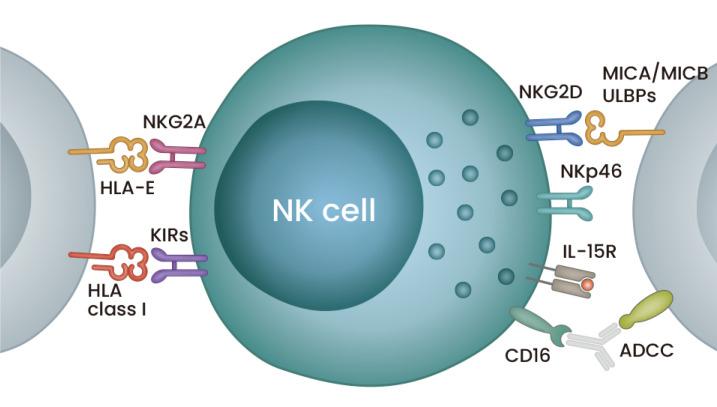
The discovery of human pluripotent stem cells (PSCs) at the turn of the century opened the door to a new generation of regenerative medicine research. Among PSCs, the donors available for induced pluripotent stem cells (iPSCs) are greatest, providing a potentially universal cell source for all types of cell therapies including cancer immunotherapies using natural killer (NK cells). Unlike primary NK cells, those prepared from iPSCs can be prepared with a homogeneous quality and are easily modified to exert a desired response to tumor cells. There already exist several protocols to genetically modify and differentiate iPSCs into NK cells, and each has its own advantages with regards to immunotherapies. In this short review, we detail the benefits of using iPSCs in NK cell immunotherapies and discuss the challenges that must be overcome before this approach becomes mainstream in the clinic.
在本世纪之交,人类多能干细胞(PSCs)的发现为新一代再生医学研究打开了大门。在 PSCs 中,诱导多能干细胞(iPSCs)的供体最多,为包括使用自然杀伤(NK)细胞的癌症免疫疗法在内的所有类型的细胞疗法提供了潜在的通用细胞来源。与原代 NK 细胞不同,那些从 iPSCs 中制备的 NK 细胞可以具有同质的质量,并且易于修饰以对肿瘤细胞产生所需的反应。已经存在几种将 iPSCs 遗传修饰并分化为 NK 细胞的方案,并且每种方案在免疫疗法方面都有其自身的优势。在这篇简短的综述中,我们详细说明了在 NK 细胞免疫疗法中使用 iPSCs 的好处,并讨论了在这种方法成为临床主流之前必须克服的挑战。


 Zotero 插件