
CB2受体选择性激动剂JWH133的药理特性、治疗潜力及分子机制
Pharmacological Properties, Therapeutic Potential and Molecular Mechanisms of JWH133, a CB2 Receptor-Selective Agonist.
作者信息
Hashiesh Hebaallah Mamdouh, Sharma Charu, Goyal Sameer N, Jha Niraj Kumar, Ojha Shreesh
机构信息
Department of Pharmacology and Therapeutics, College of Medicine and Health Sciences, United Arab Emirates University, Al Ain, United Arab Emirates.
Department of Internal Medicine, College of Medicine and Health Sciences, United Arab Emirates University, Al Ain, United Arab Emirates.
出版信息
Front Pharmacol. 2021 Jul 30;12:702675. doi: 10.3389/fphar.2021.702675. eCollection 2021.
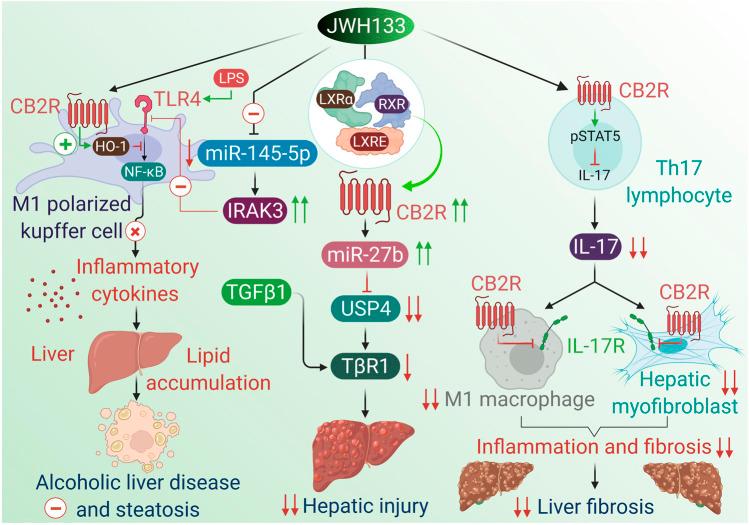
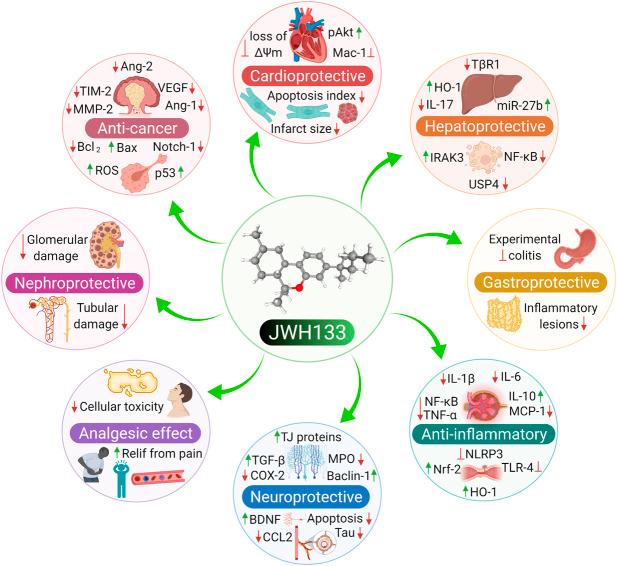
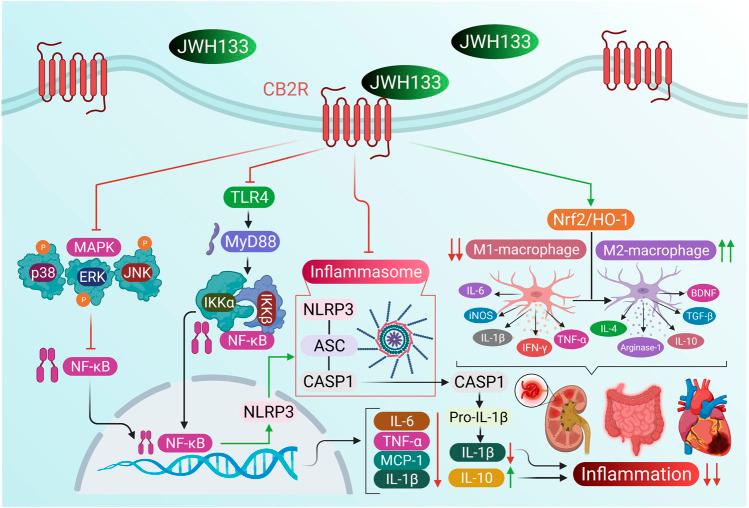
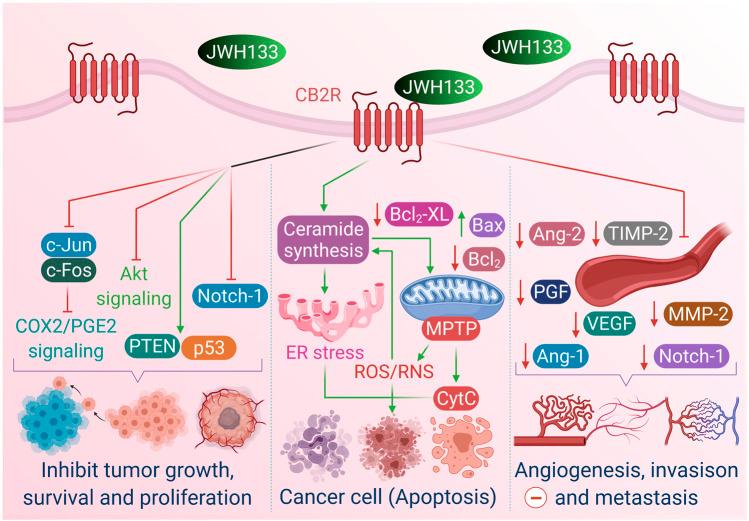
The endocannabinoid system has attracted attention as a pharmacological target for several pathological conditions. Cannabinoid (CB2)-selective agonists have been the focus of pharmacological studies because modulation of the CB2 receptor (CB2R) can be useful in the treatment of pain, inflammation, arthritis, addiction, and cancer among other possible therapeutic applications while circumventing CNS-related adverse effects. Increasing number of evidences from different independent preclinical studies have suggested new perspectives on the involvement of CB2R signaling in inflammation, infection and immunity, thus play important role in cancer, cardiovascular, renal, hepatic and metabolic diseases. JWH133 is a synthetic agonist with high CB2R selectivity and showed to exert CB2R mediated antioxidant, anti-inflammatory, anticancer, cardioprotective, hepatoprotective, gastroprotective, nephroprotective, and immunomodulatory activities. Cumulative evidences suggest that JWH133 protects against hepatic injury, renal injury, cardiotoxicity, fibrosis, rheumatoid arthritis, and cancer as well as against oxidative damage and inflammation, inhibits fibrosis and apoptosis, and acts as an immunosuppressant. This review provides a comprehensive overview of the polypharmacological properties and therapeutic potential of JWH133. This review also presents molecular mechanism and signaling pathways of JWH133 under various pathological conditions except neurological diseases. Based on the available data, this review proposes the possibilities of developing JWH133 as a promising therapeutic agent; however, further safety and toxicity studies in preclinical studies and clinical trials in humans are warranted.
内源性大麻素系统作为几种病理状况的药理学靶点已引起关注。大麻素(CB2)选择性激动剂一直是药理学研究的重点,因为调节CB2受体(CB2R)在治疗疼痛、炎症、关节炎、成瘾和癌症等其他可能的治疗应用中可能有用,同时可避免中枢神经系统相关的不良反应。来自不同独立临床前研究的越来越多的证据表明,CB2R信号传导在炎症、感染和免疫中的作用有了新的观点,因此在癌症、心血管、肾脏、肝脏和代谢疾病中发挥重要作用。JWH133是一种具有高CB2R选择性的合成激动剂,已显示出具有CB2R介导的抗氧化、抗炎、抗癌、心脏保护、肝脏保护、胃保护、肾脏保护和免疫调节活性。累积证据表明,JWH133可预防肝损伤、肾损伤、心脏毒性、纤维化、类风湿性关节炎和癌症,以及氧化损伤和炎症,抑制纤维化和细胞凋亡,并作为一种免疫抑制剂。本综述全面概述了JWH133的多药理学特性和治疗潜力。本综述还介绍了JWH133在除神经疾病外的各种病理状况下的分子机制和信号通路。基于现有数据,本综述提出了将JWH133开发成为一种有前景的治疗药物的可能性;然而,在临床前研究和人体临床试验中进行进一步的安全性和毒性研究是必要的。
 Zotero 插件