
克罗恩病的干细胞治疗:临床前和临床研究的系统评价和荟萃分析。
Stem cell therapy for Crohn's disease: systematic review and meta-analysis of preclinical and clinical studies.
机构信息
State Key Laboratory for the Diagnosis and Treatment of Infectious Diseases, Collaborative Innovation Center for Diagnosis and Treatment of Infectious Diseases, The First Affiliated Hospital, Zhejiang University School of Medicine, 79 Qingchun Rd., Hangzhou City, 310003, China.
National Clinical Research Center for Infectious Diseases, 79 Qingchun Rd., Hangzhou City, 310003, China.
出版信息
Stem Cell Res Ther. 2021 Aug 18;12(1):463. doi: 10.1186/s13287-021-02533-0.
BACKGROUND
We explored whether stem cell therapy was effective for animal models and patients with Crohn's disease (CD).
METHODS
We searched five online databases. The relative outcomes were analyzed with the aid of GetData Graph Digitizer 2.26 and Stata 16.0 software. The SYRCLE risk of bias tool and the MINORS tool were used to assess study quality.
RESULTS
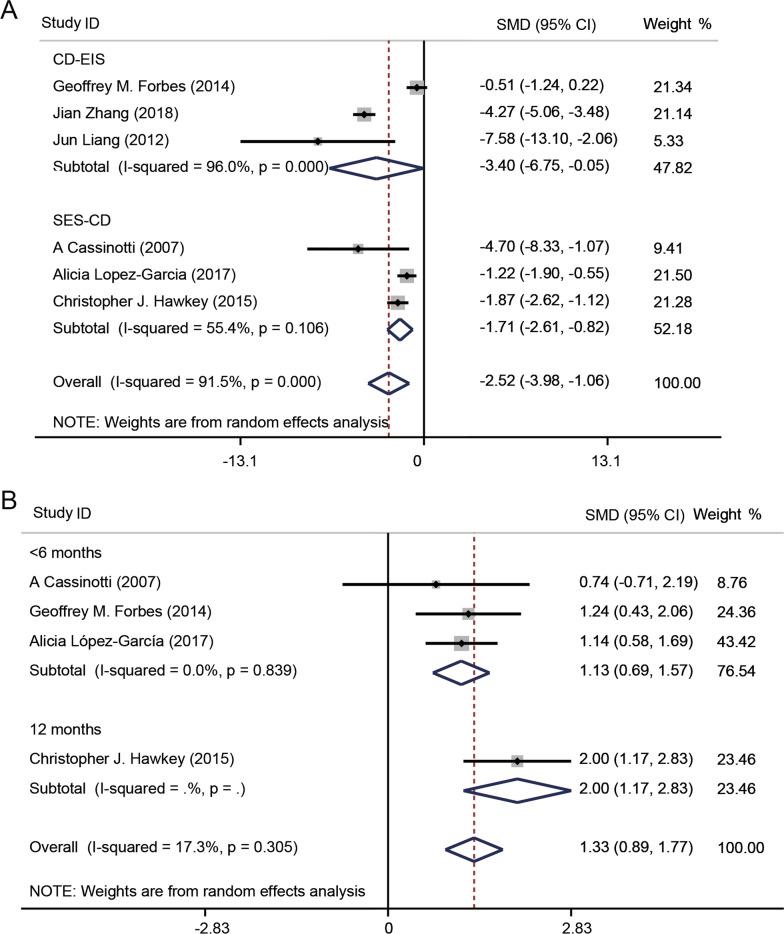
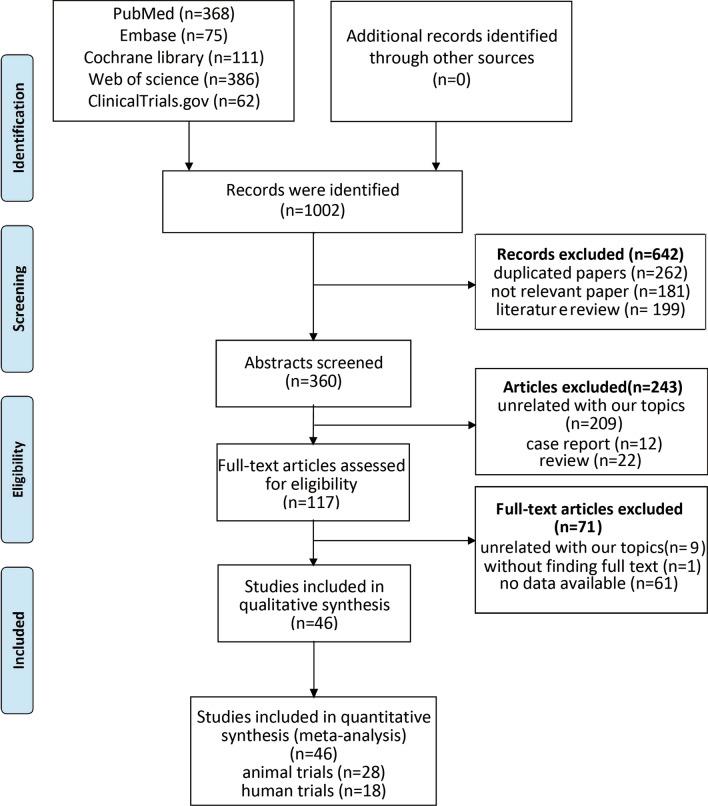
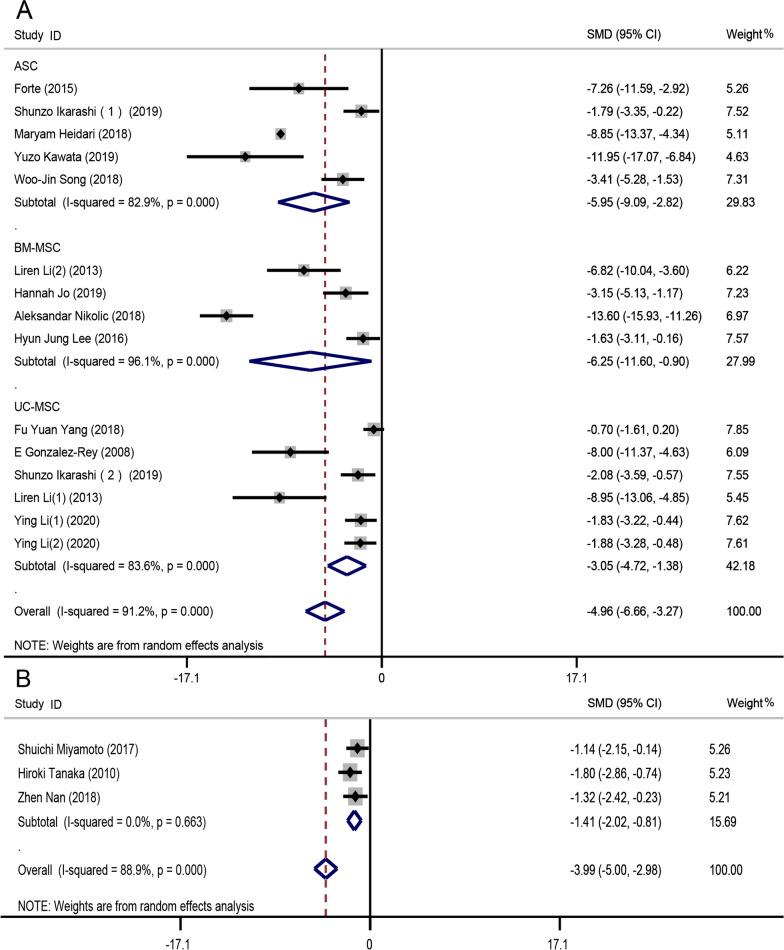
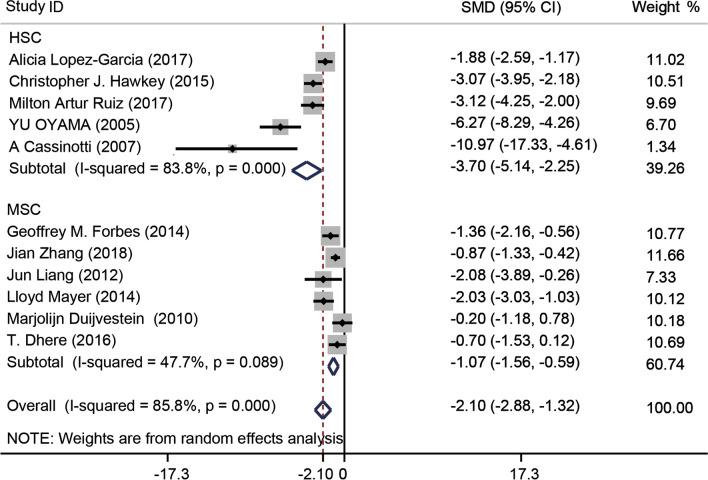
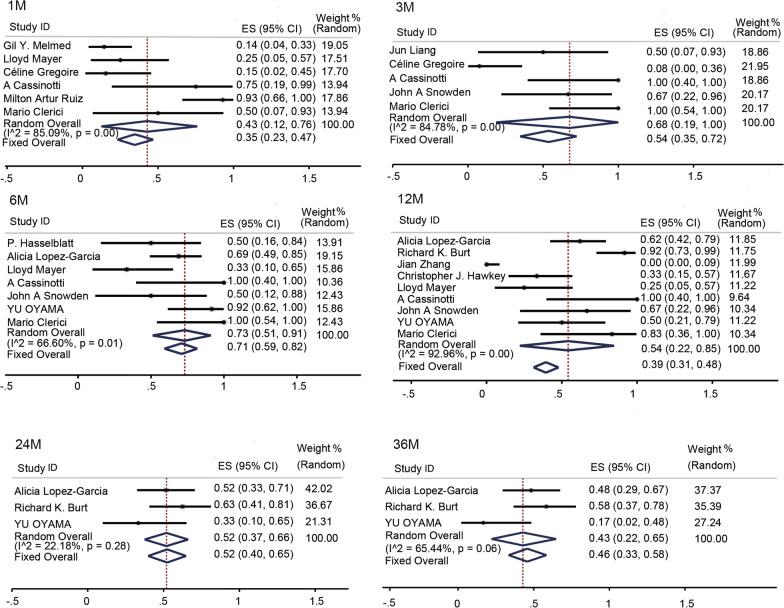
We evaluated 46 studies including 28 animal works (n = 567) and 18 human trials (n = 360). In the animal studies, the disease activity index dramatically decreased in the mesenchymal stem cell (MSC) treatment groups compared to the control group. Rats and mice receiving MSCs exhibited longer colons [mice: standardized mean difference (SMD) 2.84, P = 0.000; rats: SMD 1.44, P = 0.029], lower histopathological scores (mice: SMD - 4.58, p = 0.000; rats: SMD - 1.41, P = 0.000) and lower myeloperoxidase levels (SMD - 6.22, P = 0.000). In clinical trials, stem cell transplantation reduced the CD activity index (SMD - 2.10, P = 0.000), the CD endoscopic index of severity (SMD - 3.40, P = 0.000) and simplified endoscopy score for CD (SMD - 1.71, P = 0.000) and improved the inflammatory bowel disease questionnaire score (SMD 1.33, P = 0.305) compared to control values. CD patients maintained high remission rates for 3-24 months after transplantation.
CONCLUSIONS
Stem cell transplantation is a valuable supplementary therapy for CD.
背景
我们探讨了干细胞治疗是否对克罗恩病(CD)的动物模型和患者有效。
方法
我们检索了五个在线数据库。使用 GetData Graph Digitizer 2.26 和 Stata 16.0 软件分析相关结果。采用 SYRCLE 偏倚风险工具和 MINORS 工具评估研究质量。
结果
我们评估了 46 项研究,包括 28 项动物研究(n=567)和 18 项人体试验(n=360)。在动物研究中,间充质干细胞(MSC)治疗组的疾病活动指数明显低于对照组。接受 MSC 的大鼠和小鼠的结肠更长[小鼠:标准化均数差(SMD)2.84,P=0.000;大鼠:SMD 1.44,P=0.029],组织病理学评分更低[小鼠:SMD-4.58,p=0.000;大鼠:SMD-1.41,P=0.000],髓过氧化物酶水平更低(SMD-6.22,P=0.000)。在临床试验中,干细胞移植降低了 CD 活动指数(SMD-2.10,P=0.000)、CD 内镜严重程度指数(SMD-3.40,P=0.000)和简化 CD 内镜评分(SMD-1.71,P=0.000),并改善了炎症性肠病问卷评分(SMD 1.33,P=0.305),与对照组相比。CD 患者在移植后 3-24 个月内保持高缓解率。
结论
干细胞移植是 CD 的一种有价值的补充治疗方法。


 Zotero 插件