
中枢神经系统中的类淋巴系统,一种对抗中风后脑水肿的新治疗方向。
Glymphatic System in the Central Nervous System, a Novel Therapeutic Direction Against Brain Edema After Stroke.
作者信息
Zhou Xiangyue, Li Youwei, Lenahan Cameron, Ou Yibo, Wang Minghuan, He Yue
机构信息
Department of Neurosurgery, Tongji Hospital, Tongji Medical College, Huazhong University of Science and Technology, Wuhan, China.
Burrell College of Osteopathic Medicine, Las Cruces, NM, United States.
出版信息
Front Aging Neurosci. 2021 Aug 4;13:698036. doi: 10.3389/fnagi.2021.698036. eCollection 2021.
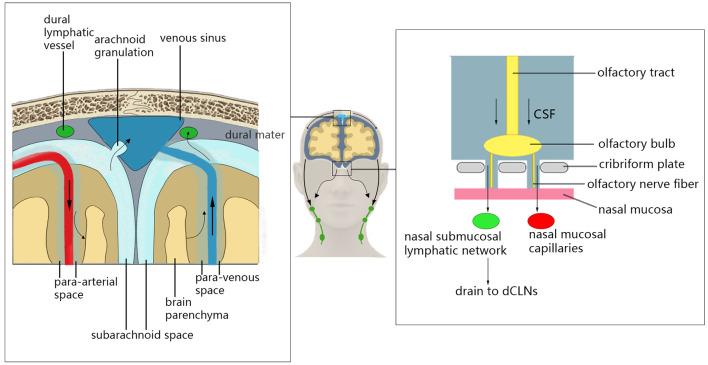
Stroke is the destruction of brain function and structure, and is caused by either cerebrovascular obstruction or rupture. It is a disease associated with high mortality and disability worldwide. Brain edema after stroke is an important factor affecting neurologic function recovery. The glymphatic system is a recently discovered cerebrospinal fluid (CSF) transport system. Through the perivascular space and aquaporin 4 (AQP4) on astrocytes, it promotes the exchange of CSF and interstitial fluid (ISF), clears brain metabolic waste, and maintains the stability of the internal environment within the brain. Excessive accumulation of fluid in the brain tissue causes cerebral edema, but the glymphatic system plays an important role in the process of both intake and removal of fluid within the brain. The changes in the glymphatic system after stroke may be an important contributor to brain edema. Understanding and targeting the molecular mechanisms and the role of the glymphatic system in the formation and regression of brain edema after stroke could promote the exclusion of fluids in the brain tissue and promote the recovery of neurological function in stroke patients. In this review, we will discuss the physiology of the glymphatic system, as well as the related mechanisms and therapeutic targets involved in the formation of brain edema after stroke, which could provide a new direction for research against brain edema after stroke.
中风是脑功能和结构的破坏,由脑血管阻塞或破裂引起。它是一种在全球范围内与高死亡率和残疾相关的疾病。中风后的脑水肿是影响神经功能恢复的重要因素。神经胶质淋巴系统是最近发现的一种脑脊液(CSF)运输系统。它通过血管周围间隙和星形胶质细胞上的水通道蛋白4(AQP4),促进脑脊液与细胞间液(ISF)的交换,清除脑代谢废物,并维持脑内环境的稳定。脑组织中液体的过度积聚导致脑水肿,但神经胶质淋巴系统在脑内液体的摄取和清除过程中都起着重要作用。中风后神经胶质淋巴系统的变化可能是脑水肿的一个重要促成因素。了解并针对神经胶质淋巴系统在中风后脑水肿形成和消退中的分子机制及作用,可能会促进脑组织中液体的排出,并促进中风患者神经功能的恢复。在本综述中,我们将讨论神经胶质淋巴系统的生理学,以及中风后脑水肿形成所涉及的相关机制和治疗靶点,这可为中风后脑水肿的研究提供新的方向。

 Zotero 插件