
在英国新冠疫情早期封锁期间,儿童和青少年的心理健康症状有何变化?
How did the mental health symptoms of children and adolescents change over early lockdown during the COVID-19 pandemic in the UK?
作者信息
Waite Polly, Pearcey Samantha, Shum Adrienne, Raw Jasmine A L, Patalay Praveetha, Creswell Cathy
机构信息
Department of Experimental Psychology University of Oxford Oxford UK.
Department of Psychiatry University of Oxford Oxford UK.
出版信息
JCPP Adv. 2021 Apr;1(1):e12009. doi: 10.1111/jcv2.12009. Epub 2021 Apr 28.
BACKGROUND
The COVID-19 pandemic has caused extensive disruption to the lives of children and young people. Understanding the psychological effects on children and young people, in the context of known risk factors is crucial to mitigate the effects of the pandemic. This study set out to explore how mental health symptoms in children and adolescents changed over a month of full lockdown in the United Kingdom in response to the pandemic.
METHODS
UK-based parents and carers ( = 2673) of school-aged children and young people aged between 4 and 16 years completed an online survey about their child's mental health at two time points between March and May 2020, during early lockdown. The survey examined changes in emotional symptoms, conduct problems and hyperactivity/inattention.
RESULTS
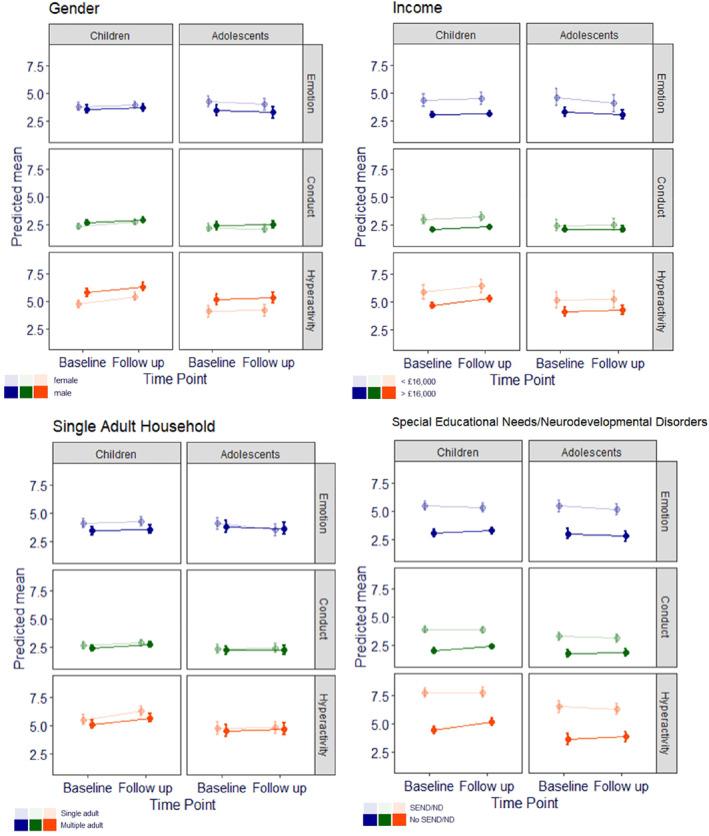
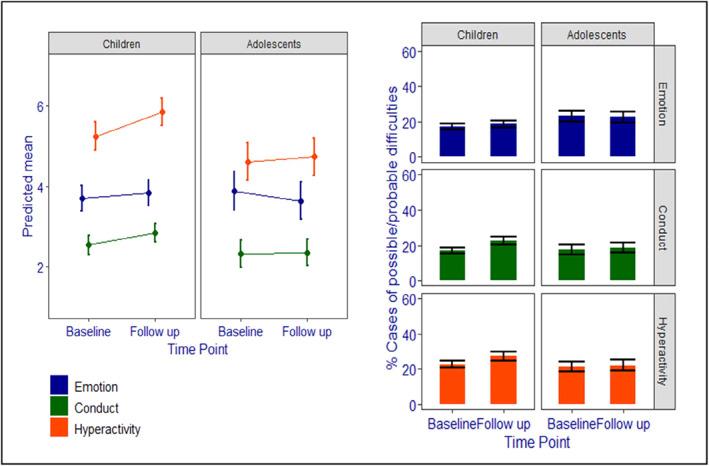
The findings highlighted particular deteriorations in mental health symptoms among preadolescent children, which translated to a 10% increase in those meeting possible/probable caseness criteria for emotional symptoms, a 20% increase in hyperactivity/inattention, and a 35% increase in conduct problems. In contrast, changes among adolescents were smaller (4% and 8% increase for hyperactivity/inattention and conduct problems, respectively) with a small reduction in emotional symptoms (reflecting a 3% reduction in caseness). Overall, there were few differences in change in symptoms or caseness over time according to demographic characteristics, but children and young people in low income households and those with special educational needs and/or neurodevelopmental disorders exhibited elevated symptoms (and caseness) at both time points.
CONCLUSIONS
The findings highlight important areas of concern in terms of the potential impact of the first national lockdown on children and young people's adjustment. Developing an understanding of who has been most severely affected by the pandemic, and in what ways, is crucial in order to target effective support where it is most needed.
背景
新冠疫情给儿童和青少年的生活带来了广泛干扰。在已知风险因素的背景下,了解疫情对儿童和青少年的心理影响对于减轻疫情的影响至关重要。本研究旨在探讨在英国全面封锁的一个月期间,儿童和青少年的心理健康症状如何因疫情而发生变化。
方法
2020年3月至5月早期封锁期间,英国4至16岁学龄儿童和青少年的家长及照顾者(n = 2673)在两个时间点完成了一项关于其子女心理健康的在线调查。该调查考察了情绪症状、行为问题和多动/注意力不集中方面的变化。
结果
研究结果突出显示,青春期前儿童的心理健康症状有明显恶化,达到情绪症状可能/很可能患病标准的儿童增加了10%,多动/注意力不集中增加了20%,行为问题增加了35%。相比之下,青少年的变化较小(多动/注意力不集中和行为问题分别增加4%和8%),情绪症状略有减少(反映患病情况减少3%)。总体而言,根据人口统计学特征,症状或患病情况随时间的变化差异不大,但低收入家庭以及有特殊教育需求和/或神经发育障碍的儿童和青少年在两个时间点的症状(和患病情况)均有所增加。
结论
研究结果凸显了首次全国封锁对儿童和青少年适应可能产生影响的重要关注领域。了解哪些人受疫情影响最严重以及受影响的方式,对于在最需要的地方提供有效支持至关重要。
 Zotero 插件