
血管紧张素通路抑制剂与 COVID-19 严重程度和死亡率的关联的荟萃分析。
Meta-analysis of the association between angiotensin pathway inhibitors and COVID-19 severity and mortality.
机构信息
Queensland Research Centre for Peripheral Vascular Disease, College of Medicine and Dentistry, James Cook University, Townsville, Queensland, 4811, Australia.
Australian Institute of Tropical Health and Medicine, James Cook University, Townsville, Queensland, Australia.
出版信息
Syst Rev. 2021 Sep 7;10(1):243. doi: 10.1186/s13643-021-01802-6.
BACKGROUND
Conflicting findings and the analysis of unpublished and retracted data have led to controversy on the safety of angiotensin-converting enzyme inhibitors and angiotensin receptor blockers in people with COVID-19 infection. This meta-analysis examined the association of prescription of angiotensin-converting enzyme inhibitors (ACEI) and angiotensin receptor blockers (ARB) with the outcome from COVID-19.
METHODS
A systematic search was conducted to find published studies that reported the outcome of COVID-19 in relation to prescription of ACEI or ARB. Two authors (MF and AD) independently screened and extracted data and assessed study quality and strength of association using standardised tools. The endpoints for the meta-analyses were severe or critical disease outcome and mortality based on standardised criteria.
RESULTS
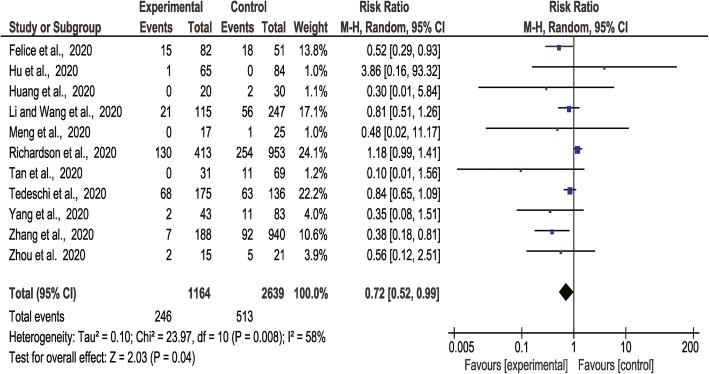
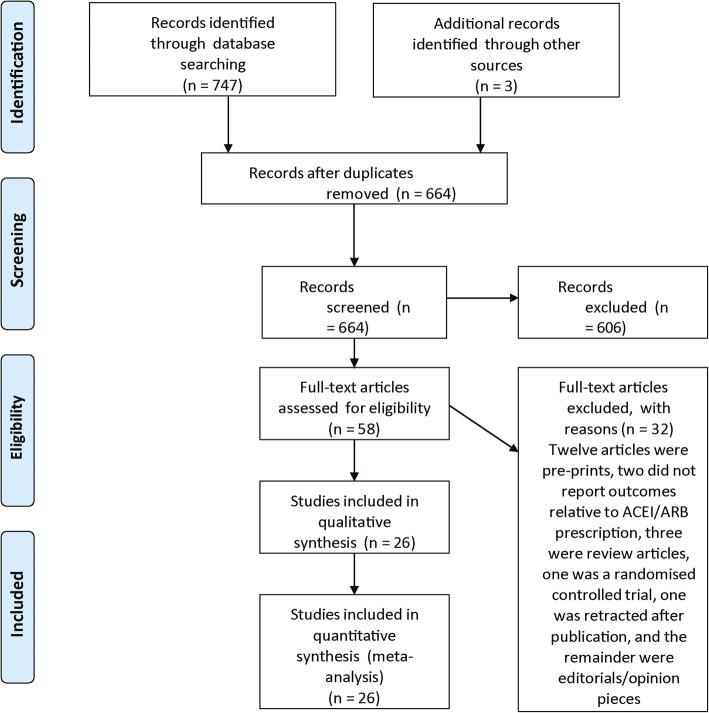
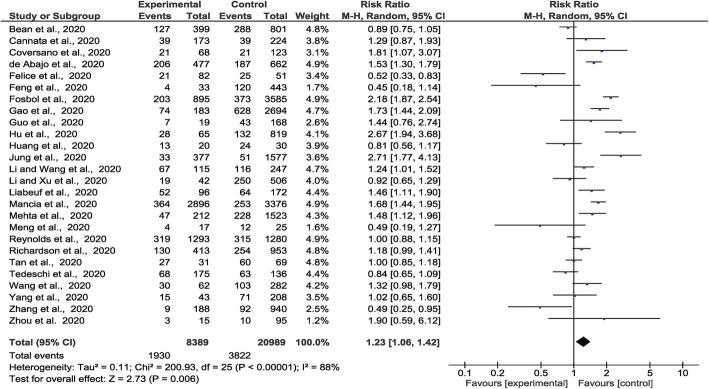
Twenty-six studies including 8389 people prescribed ACEI or ARB and 20,989 people not prescribed these medications were included. The quality of studies varied, and the overall strength of association was poor with a high risk of confounding bias. Patients prescribed ACEI or ARB had a greater prevalence of risk factors. Meta-analysis found an association between prescription of ACEI or ARB with severe or critical disease outcome (risk ratio, RR, 1.23, 95% confidence interval, CI, 1.06 to 1.42, p = 0.006, I = 88%) but this association was lost in sensitivity analyses. There was no association between ACEI or ARB prescription and mortality (RR 1.18, 95% CI 0.92 to 1.50, p = 0.19, I = 82%).
CONCLUSIONS
This meta-analysis suggests that people prescribed ACEI or ARB more commonly had severe or critical disease outcome, but not mortality, in published cohorts of patients diagnosed with COVID-19. This finding is most likely due to a greater prevalence of risk factors in these patients rather than due to exposure to angiotensin pathway inhibitors.
背景
有相互矛盾的研究结果,而且对未发表和撤回的数据进行分析后,发现血管紧张素转换酶抑制剂(ACEI)和血管紧张素受体阻滞剂(ARB)在 COVID-19 感染者中的安全性存在争议。本荟萃分析旨在研究 ACEI 和 ARB 的处方与 COVID-19 结局之间的关系。
方法
系统检索了已发表的研究,这些研究报告了 ACEI 或 ARB 处方与 COVID-19 结局之间的关系。两位作者(MF 和 AD)独立筛选和提取数据,并使用标准化工具评估研究质量和关联强度。荟萃分析的终点是基于标准化标准的严重或危急疾病结局和死亡率。
结果
共纳入 26 项研究,包括 8389 例服用 ACEI 或 ARB 的患者和 20989 例未服用这些药物的患者。研究质量参差不齐,总体关联强度较弱,存在混杂偏倚的高风险。服用 ACEI 或 ARB 的患者具有更多的危险因素。荟萃分析发现,ACEI 或 ARB 处方与严重或危急疾病结局之间存在关联(风险比 RR 1.23,95%置信区间 CI 1.06 至 1.42,p = 0.006,I = 88%),但敏感性分析中这种关联消失了。ACEI 或 ARB 处方与死亡率之间无关联(RR 1.18,95%置信区间 CI 0.92 至 1.50,p = 0.19,I = 82%)。
结论
本荟萃分析表明,在已发表的 COVID-19 确诊患者队列中,服用 ACEI 或 ARB 的患者更常见严重或危急疾病结局,但与死亡率无关。这一发现很可能是由于这些患者的危险因素更为普遍,而不是由于接触血管紧张素途径抑制剂所致。

 Zotero 插件