
在墨西哥北部测试糖尿病自我管理干预措施的可扩展性:一种生态方法。
Testing Scalability of a Diabetes Self-Management Intervention in Northern Mexico: An Ecological Approach.
机构信息
Public Health Practice and Translational Research, University of Arizona, Tucson, AZ, United States.
El Colegio de Sonora, Hermosillo, Mexico.
出版信息
Front Public Health. 2021 Aug 18;9:617468. doi: 10.3389/fpubh.2021.617468. eCollection 2021.
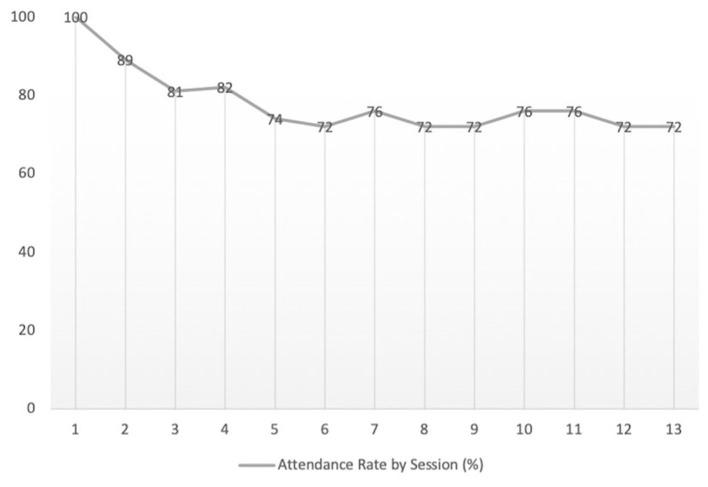
Type 2 diabetes mellitus (T2DM) has become a major issue in Mexico, reporting almost 100,000 attributable deaths in 2016. Low-income Mexican citizens who face various issues associated with T2DM, including the lack of access to self-management services, are particularly affected by the condition. Health centers have been designated to serve T2DM patients by providing resources on chronic disease prevention. (MSD) is a self-management intervention developed to address cardiovascular complications and other health issues within the T2DM population, which have been proven effective and useful for health centers. The intervention was designed for T2DM support groups- (GAMs) located within health centers. From February to June 2019, a binational research team conducted a test scale-up study in Northwest Sonora under the Ministry of Health utilizing the Institute for Healthcare Improvement Framework for scaling up health interventions. Investigators worked in collaboration and trained 19 stakeholders from a regional health system identified from various ecological levels on MSD and implementation process. All five GAMs within the regional health system received and completed the intervention. In total, 72 participants were enrolled with behavioral and biological [HbA1c, blood pressure, body mass index (BMI)] measures taken at baseline. Post-intervention measurements were taken from 72% of participants who completed the intervention. Statistical analysis demonstrated improved behavioral and biological measures when comparing baseline to post-intervention, specifically statistically significant improvements in HbA1c and sugar-sweetened beverage consumption. Implementation fidelity (IF) measures indicated extensive adherence to the intervention curriculum, and moderators specifically demonstrated influences on implementation. Stakeholders from various ecological levels provided support to those facilitating the MSD intervention by allotting time and resources to properly prepare for sessions. An implementation coordinator from the regional health office assisted MSD facilitators by resolving barriers to implementation and worked toward federal accreditation for GAMs to receive additional funding. Results provide evidence for using regional health systems as a scalable unit when implementing chronic disease self-management interventions state- and nationwide. This study will help inform future efforts to scale up the health intervention in various states throughout Mexico. www.ClinicalTrials.gov; https://www.clinicaltrials.gov/ct2/show/NCT02804698?term=NCT02804698&draw=2&rank=1, identifier: NCT02804698.
2 型糖尿病(T2DM)已成为墨西哥的一个主要问题,2016 年报告称有近 100,000 例可归因于该病的死亡病例。面临与 T2DM 相关的各种问题的墨西哥低收入公民,包括无法获得自我管理服务,尤其受到该病的影响。卫生中心被指定为 T2DM 患者提供慢性病预防资源。默沙东(MSD)是一种自我管理干预措施,旨在解决 T2DM 人群中的心血管并发症和其他健康问题,该措施已被证明对卫生中心有效且有用。该干预措施专为位于卫生中心内的 T2DM 支持小组(GAMs)设计。2019 年 2 月至 6 月,一个由两国研究人员组成的研究小组在卫生部的监督下,利用改善医疗保健协会(Institute for Healthcare Improvement)扩大卫生干预措施的框架,在索诺拉州西北部进行了一次试点扩大规模研究。研究人员合作并培训了来自不同生态层面的 19 名区域卫生系统利益相关者,内容涉及 MSD 和实施过程。区域卫生系统内的所有五个 GAMs 都接受并完成了干预措施。共有 72 名参与者参与,在基线时进行了行为和生物学(HbA1c、血压、体重指数(BMI))测量。对完成干预措施的 72%的参与者进行了干预后测量。统计分析表明,与基线相比,行为和生物学指标有所改善,特别是 HbA1c 和含糖饮料摄入量有显著改善。实施保真度(IF)测量结果表明,干预课程得到了广泛遵守,并且调解人特别对实施产生了影响。来自不同生态层面的利益相关者通过分配时间和资源为会议做好准备,为实施 MSD 干预措施提供了支持。区域卫生办公室的一名实施协调员通过解决实施障碍,协助 MSD 协调员,努力使 GAMs 获得联邦认证以获得额外资金,从而为该项目提供支持。研究结果为在全国范围内使用区域卫生系统作为实施慢性病自我管理干预措施的可扩展单位提供了证据。这项研究将有助于为今后在墨西哥各地的不同州扩大该卫生干预措施提供信息。www.ClinicalTrials.gov;https://www.clinicaltrials.gov/ct2/show/NCT02804698?term=NCT02804698&draw=2&rank=1,标识符:NCT02804698。

 Zotero 插件