
从出生到断奶,母体环境的消毒与仔猪微生物组组成有关。
Disinfection of Maternal Environments Is Associated with Piglet Microbiome Composition from Birth to Weaning.
机构信息
Department of Animal Science, University of Minnesotagrid.17635.36, St. Paul, Minnesota, USA.
University of Minnesotagrid.17635.36, West Central Research and Outreach Center, Morris, Minnesota, USA.
出版信息
mSphere. 2021 Oct 27;6(5):e0066321. doi: 10.1128/mSphere.00663-21. Epub 2021 Sep 8.
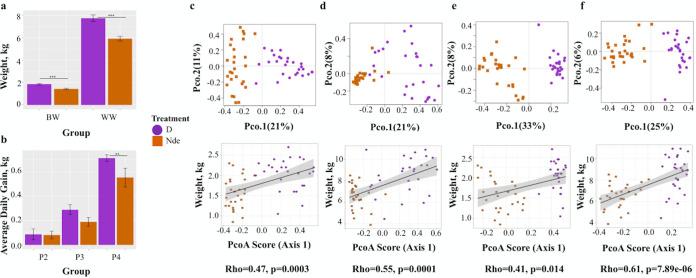
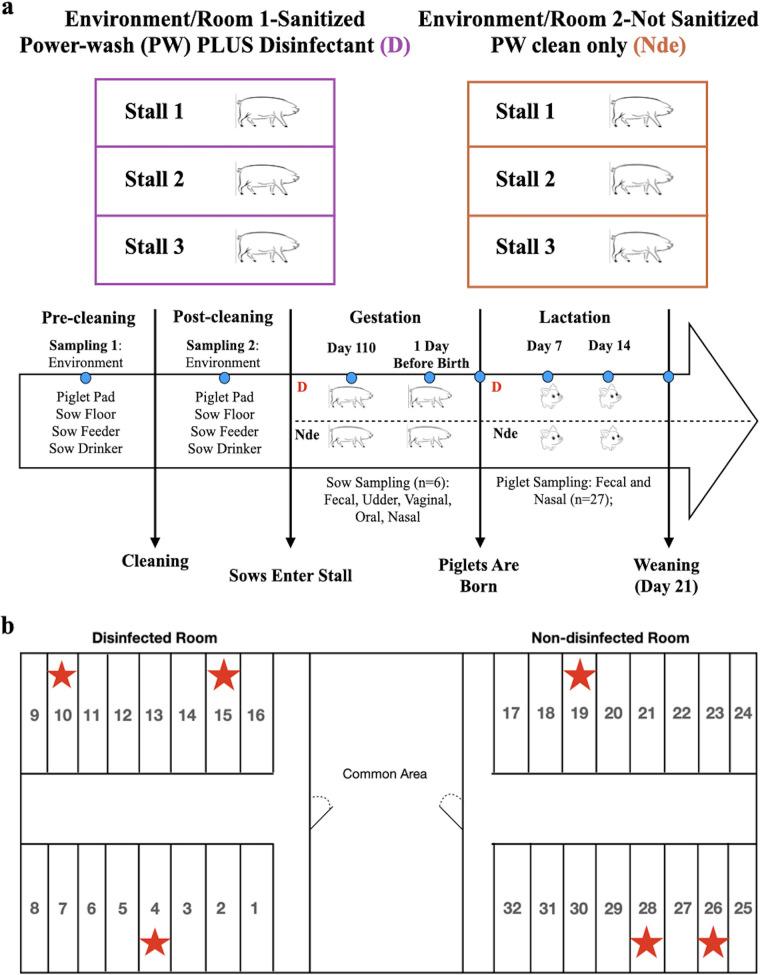
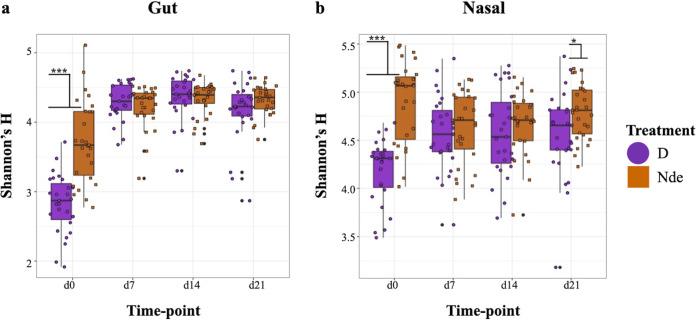
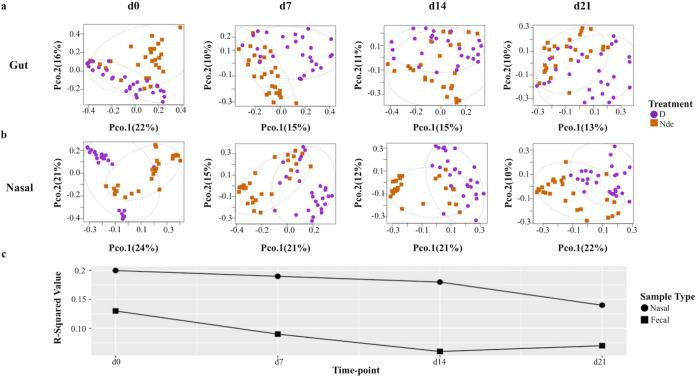
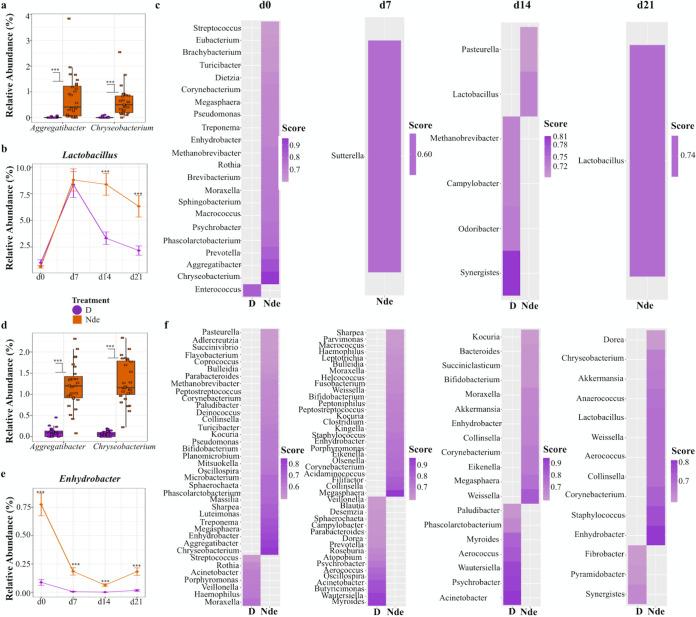
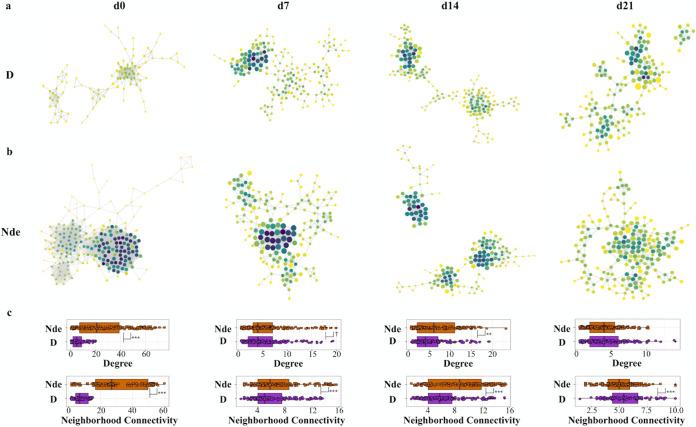
Maternal factors predetermine offspring development and health, including the establishment of offsprings' first microbiomes. Research in swine has shown that early microbial exposures impact microbiome colonization in piglets, but this phenomenon has never been tested in the context of delivery room disinfection. Thus, we exposed gestating sows to two delivery environments ( = 3/environment): stalls cleaned with a broad-spectrum disinfectant (disinfected environment [D]) or stalls cleaned only with hot-water power washing (nondisinfected environment [Nde]), 3 days prior to farrowing. Microbiomes of sows and farrowed piglets ( = 27/environment) were profiled at 4 different time points from birth to weaning via 16S rRNA sequencing. The results show that although vaginal, milk, skin, and gut microbiomes in mothers were minimally affected, sanitation of farrowing stalls impacted piglet microbiome colonization. These effects were mainly characterized by lower bacterial diversity in the gut and nasal cavity, specifically in D piglets at birth, and by distinct taxonomic compositions from birth to weaning depending on the farrowing environment. For instance, environmental bacteria greatly influenced microbiome colonization in Nde piglets, which also harbored significantly higher abundances of gut and nasal at several time points through weaning. Different sanitation strategies at birth also resulted in distinct microbiome assembly patterns, with lower microbial exposures in D piglets being associated with limited interactions between bacterial taxa. However, increasing microbial exposures at birth through the lack of disinfection were also associated with lower piglet weight, highlighting the importance of understanding the trade-offs among optimal microbiome development, health, and growth performance in swine production systems. We show that levels of disinfection in farrowing facilities can impact early microbial exposures and colonization by pioneer microbes in piglets. Although previous research has shown a similar effect by raising pigs outdoors or by exposing them to soil, these practices are unattainable in most swine production systems in the United States due to biosecurity practices. Thus, our results underscore the importance of evaluating different disinfection practices in swine production to safely reduce pathogenic risks without limiting early microbial exposures. Allowing early exposure to both beneficial and pathogenic microbes may positively impact immune responses, reduce the stressors of weaning, and potentially reduce the need for dietary antimicrobials. However, the benefits of modified early microbial exposures need to be accomplished along with acceptable growth performance. Thus, our results also provide clues for understanding how disinfection practices in farrowing rooms may impact early microbiome development and assembly.
母体因素决定了后代的发育和健康,包括后代最初微生物组的建立。猪的研究表明,早期微生物暴露会影响仔猪微生物组的定植,但这一现象从未在产房消毒的背景下进行过测试。因此,我们让妊娠母猪接触两种分娩环境(每个环境下有 3 头母猪):用广谱消毒剂清洁的产床(消毒环境[D])或仅用热水动力清洗的产床(非消毒环境[Nde]),在分娩前 3 天。通过 16S rRNA 测序,在出生到断奶的 4 个不同时间点,从母猪和新生仔猪中分别对微生物组进行了分析(每个环境下有 27 头母猪和新生仔猪)。结果表明,尽管阴道、乳汁、皮肤和肠道微生物组在母体中受影响最小,但分娩产床的卫生状况会影响仔猪的微生物组定植。这些影响主要表现为出生时仔猪肠道和鼻腔的细菌多样性降低,尤其是 D 仔猪,并且根据分娩环境,从出生到断奶时的分类组成也不同。例如,环境细菌极大地影响了 Nde 仔猪的微生物组定植,而且在多个时间点,Nde 仔猪的肠道和鼻腔中的细菌数量也显著增加。出生时不同的卫生策略也导致了不同的微生物组组装模式,D 仔猪的微生物暴露水平较低,与细菌类群之间的相互作用有限有关。然而,通过缺乏消毒而增加出生时的微生物暴露水平也与仔猪体重较低有关,这突出了在猪生产系统中理解最佳微生物组发育、健康和生长性能之间的权衡的重要性。我们表明,分娩设施的消毒水平可以影响仔猪中早期微生物暴露和先驱微生物的定植。虽然之前的研究通过将猪饲养在户外或让它们接触土壤来显示出类似的效果,但由于生物安全实践,这些做法在美国大多数猪生产系统中是无法实现的。因此,我们的研究结果强调了评估猪生产中不同消毒实践的重要性,以便在不限制早期微生物暴露的情况下安全降低发病风险。允许早期接触有益和病原微生物可能会对免疫反应产生积极影响,减少断奶的压力,并可能减少对膳食抗菌药物的需求。然而,改良的早期微生物暴露的益处需要与可接受的生长性能相结合。因此,我们的研究结果也为了解产房消毒实践如何影响早期微生物组的发育和组装提供了线索。
 Zotero 插件