
环境介质中多氯联苯转化产物的潜在环境风险特征
Potential Environmental Risk Characteristics of PCB Transformation Products in the Environmental Medium.
作者信息
Li Minghao, He Wei, Yang Hao, Sun Shimei, Li Yu
机构信息
The Moe Key Laboratory of Resources and Environmental Systems Optimization, North China Electric Power University, Beijing 102206, China.
School of Emergency Science and Engineering, Jilin Jianzhu University, Changchun 130119, China.
出版信息
Toxics. 2021 Sep 7;9(9):213. doi: 10.3390/toxics9090213.
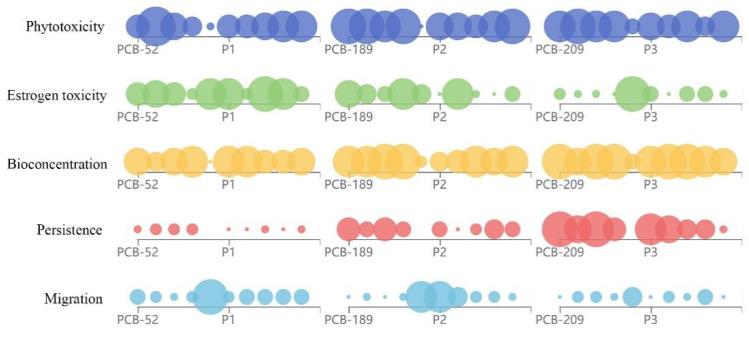
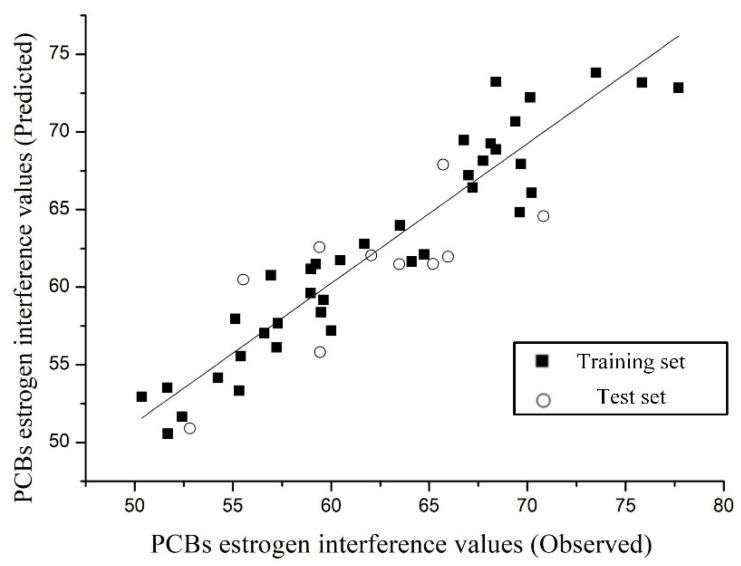
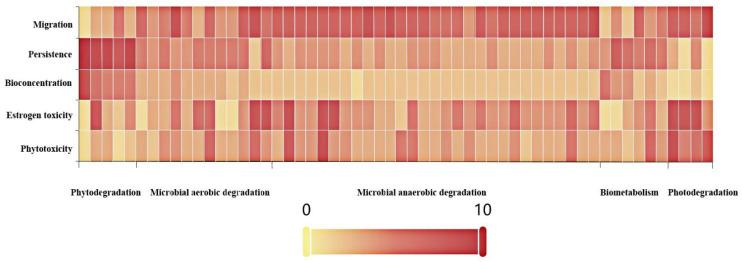
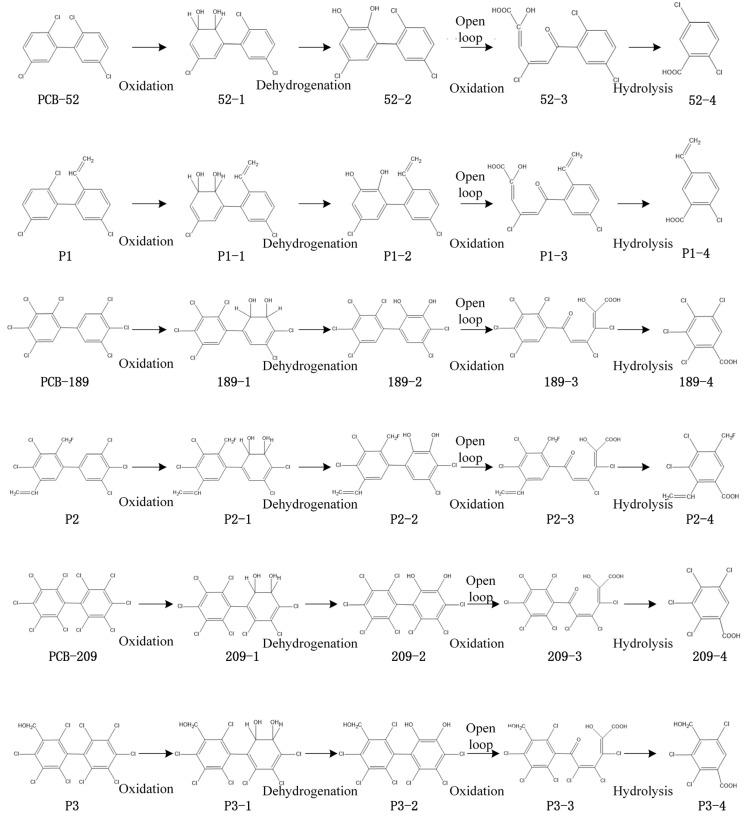
The complementary construction of polychlorinated biphenyl (PCB) phytotoxicity and the biotoxicity 3D-QSAR model, combined with the constructed PCB environmental risk characterization model, was carried out to evaluate the persistent organic pollutant (POP) properties (toxicity (phytotoxicity and biotoxicity), bioconcentration, migration, and persistence) of PCBs and their corresponding transformation products (phytodegradation, microbial degradation, biometabolism, and photodegradation). The transformation path with a significant increase in environmental risks was analyzed. Some environmentally friendly PCB derivatives, exhibiting a good modification effect, and their parent molecules were selected as precursor molecules. Their transformation processes were simulated and evaluated for assessing the environmental risks. Some transformation products displayed increased environmental risks. The environmental risks of plant degradation products of the PCBs in the environmental media showed the maximum risk, indicating that the potential risks of the transformation products of the PCBs and their environmentally friendly derivatives could not be neglected. It is essential to further improve the ability of plants to degrade their transformation products. The improvement of some degradation products for environmentally friendly PCB derivatives indicates that the theoretical modification of a single environmental feature cannot completely control the potential environmental risks of molecules. In addition, this method can be used to analyze and evaluate environmentally friendly PCB derivatives to avoid and reduce the potential environmental and human health risks caused by environmentally friendly PCB derivatives.
构建了多氯联苯(PCB)植物毒性和生物毒性的3D-QSAR模型,并结合构建的PCB环境风险表征模型,对多氯联苯及其相应转化产物(植物降解、微生物降解、生物代谢和光降解)的持久性有机污染物(POP)特性(毒性(植物毒性和生物毒性)、生物富集、迁移和持久性)进行评估。分析了环境风险显著增加的转化途径。选择了一些具有良好改性效果的环境友好型PCB衍生物及其母体分子作为前体分子。对它们的转化过程进行了模拟和评估,以评估环境风险。一些转化产物显示出环境风险增加。多氯联苯在环境介质中的植物降解产物的环境风险最大,这表明多氯联苯及其环境友好型衍生物的转化产物的潜在风险不容忽视。进一步提高植物降解其转化产物的能力至关重要。对环境友好型PCB衍生物的一些降解产物的改进表明,单一环境特征的理论改性不能完全控制分子的潜在环境风险。此外,该方法可用于分析和评估环境友好型PCB衍生物,以避免和减少环境友好型PCB衍生物引起的潜在环境和人类健康风险。


 Zotero 插件