
棉花CC-NBS-LRR基因赋予不同物种对黄萎病的抗性。
Cotton CC-NBS-LRR Gene Confers Resistance to Verticillium Wilt Across Different Species.
作者信息
Li Tinggang, Zhang Qianqian, Jiang Xilong, Li Ran, Dhar Nikhilesh
机构信息
Shandong Academy of Grape, Shandong Academy of Agricultural Sciences, Jinan, China.
Institute of Plant Protection, State Key Laboratory for Biology of Plant Diseases and Insect Pests, Chinese Academy of Agricultural Sciences, Beijing, China.
出版信息
Front Plant Sci. 2021 Sep 8;12:695691. doi: 10.3389/fpls.2021.695691. eCollection 2021.
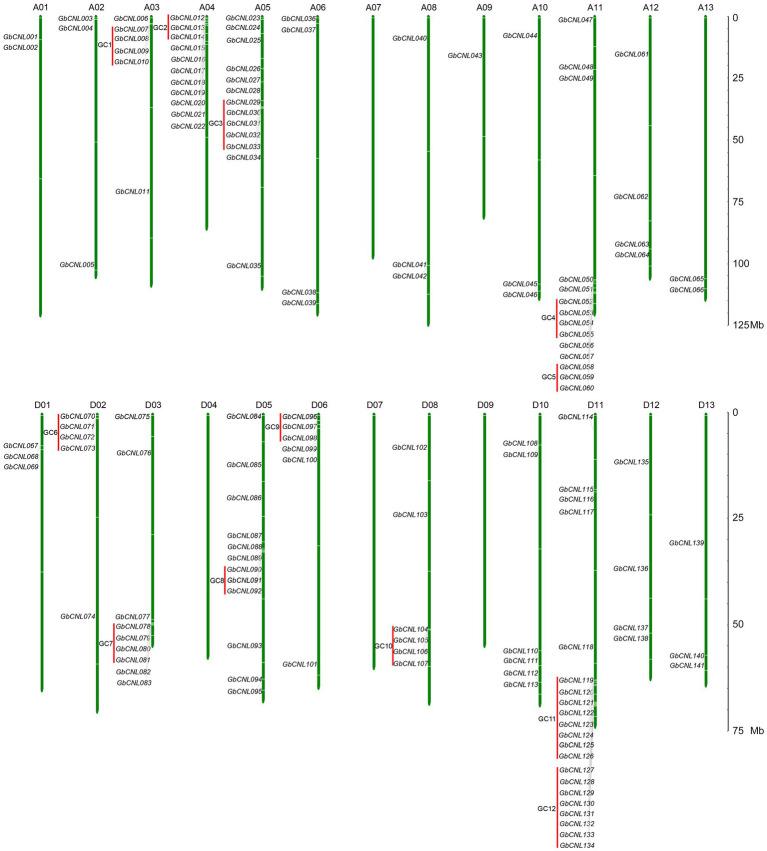
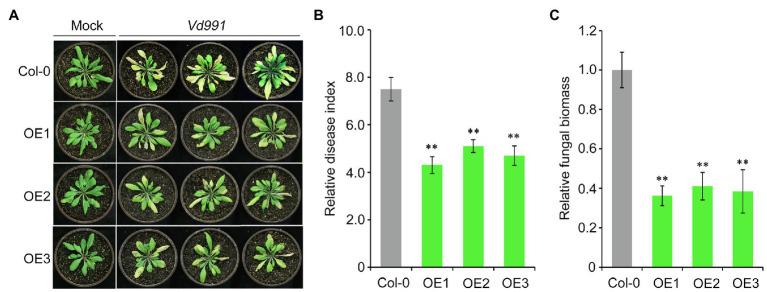
Verticillium wilt (VW) is a destructive disease in cotton caused by and has a significant impact on yield and quality. In the absence of safe and effective chemical control, VW is difficult to manage. Thus, at present, developing resistant varieties is the most economical and effective method of controlling Verticillium wilt of cotton. The CC-NBS-LRR (CNL) gene family is an important class of plant genes involved in disease resistance. This study identified 141 in genome, with 37.5% (53 genes) enriched in 12 gene clusters (GC01-GC12) based on gene distribution in the chromosomes. Especially, seven from two largest clusters (GC11 and GC12) were significantly upregulated in the resistant cultivar (Hai No. 7124) and the susceptible (Giza No. 57). Virus-induced gene silencing of in , one typical gene in the gene cluster 12 (GC12), significantly altered the response to VW, compromising plant resistance to . In contrast, overexpression significantly increased the resistance to VW in the wild-type . Based on our research findings presented here, we conclude that promotes resistance to VW by activating the salicylic acid (SA)-dependent defense response pathway resulting in strong accumulation of reactive oxygen species and upregulation of pathogenesis-related (PR) genes. In conclusion, our study resulted in the discovery of a new resistance gene in cotton, , that confers resistance to VW across different hosts.
黄萎病(VW)是棉花上一种由[病原体名称未给出]引起的毁灭性病害,对棉花产量和品质有重大影响。在缺乏安全有效的化学防治方法的情况下,黄萎病难以控制。因此,目前培育抗病品种是防治棉花黄萎病最经济有效的方法。CC-NBS-LRR(CNL)基因家族是植物中一类重要的参与抗病性的基因。本研究在[棉花品种名称未给出]基因组中鉴定出141个[基因名称未给出],基于其在染色体上的基因分布,37.5%(53个基因)富集在12个基因簇(GC01-GC12)中。特别是,来自两个最大基因簇(GC11和GC12)的7个[基因名称未给出]在抗病品种(海7124)和感病品种(吉扎57)中显著上调。对基因簇12(GC12)中的一个典型基因[基因名称未给出]进行病毒诱导的基因沉默,显著改变了对黄萎病的反应,损害了植株对[病原体名称未给出]的抗性。相反,[基因名称未给出]的过表达显著提高了野生型[棉花品种名称未给出]对黄萎病的抗性。基于我们在此呈现的研究结果,我们得出结论,[基因名称未给出]通过激活水杨酸(SA)依赖的防御反应途径,导致活性氧的强烈积累和病程相关(PR)基因的上调,从而促进对黄萎病的抗性。总之,我们的研究发现了棉花中一个新的抗黄萎病基因[基因名称未给出],它能赋予不同寄主对黄萎病的抗性。




 Zotero 插件