
两种哈萨克洋葱品种( 和 )的酚类化合物特征及其在化妆品中的意义。
The Phenolic Compounds Profile and Cosmeceutical Significance of Two Kazakh Species of Onions: and .
机构信息
School of Pharmacy, Kazakh National Medical University (KazNMU), Almaty 050012, Kazakhstan.
Chair and Department of Food and Nutrition, Medical University of Lublin, 20-093 Lublin, Poland.
出版信息
Molecules. 2021 Sep 9;26(18):5491. doi: 10.3390/molecules26185491.
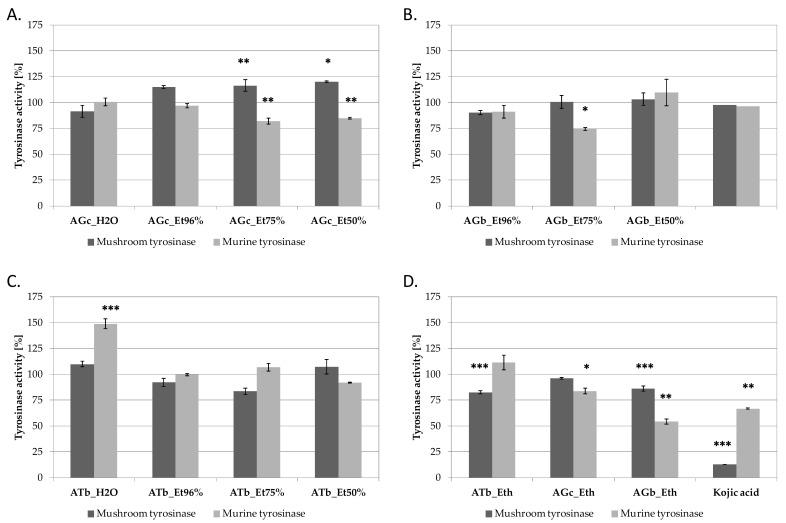
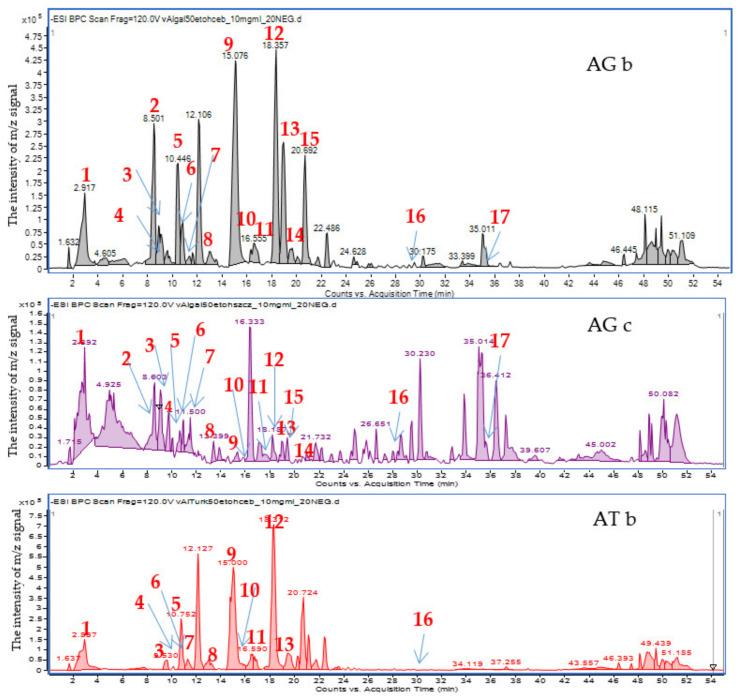
Numerous species of genus have been used in the traditional medicine based on their vast biological effects, e.g., antimicrobial, digestion stimulant, anti-sclerotic, soothing, antiradical or wound healing properties. In this work, unpolar and polar extracts from two lesser-investigated species of growing in Kazakhstan, Kar. & Kir. (AG) and Regel. (AT), were studied for their composition and biological effects. In the HPLC-ESI-QTOF-MS/MS analyses of water and alcoholic extracts simple organic acids, flavonoids and their glycosides were found to be the best represented group of secondary metabolites. On the other hand, in the GC-MS analysis diethyl ether, extracts were found to be rich sources of straight-chain hydrocarbons and their alcohols, fatty acids and sterols. The antimicrobial activity assessment showed a lower activity of polar extracts, however, the diethyl ether extract from AT bulbs and AG chives showed the strongest activity against ATCC 6633, ATCC 10876, some species of ( ATCC 25923 and ATCC 12228) and all tested species ( ATCC 2091, ATCC 10231, ATCC 90030, ATCC 14243 and ATCC 22019) with a minimum inhibitory concentration of 0.125-0.5 mg/mL. The highest antiradical capacity exhibited diethyl ether extracts from AG bulbs (IC50 = 19274.78 ± 92.11 mg Trolox eq/g of dried extract) in DPPH assay. In ABTS scavenging assay, the highest value of mg Trolox equivalents, 50.85 ± 2.90 was calculated for diethyl ether extract from AT bulbs. The same extract showed the highest inhibition of mushroom tyrosinase (82.65 ± 1.28% of enzyme activity), whereas AG bulb ether extract was the most efficient murine tyrosinase inhibitor (54% of the enzyme activity). The performed tests confirm possible cosmeceutical applications of these plants.
许多 属的物种因其广泛的生物效应而被应用于传统医学,例如抗菌、消化刺激、抗硬化、舒缓、抗自由基或愈合伤口的特性。在这项工作中,研究了在哈萨克斯坦生长的两种研究较少的 物种的非极性和极性提取物,即 Kar. & Kir. (AG) 和 Regel. (AT),以研究它们的成分和生物效应。在水和醇提取物的 HPLC-ESI-QTOF-MS/MS 分析中,发现简单有机酸、类黄酮及其糖苷是最具代表性的次生代谢产物。另一方面,在 GC-MS 分析中,二乙醚提取物富含直链烃及其醇、脂肪酸和甾醇。抗菌活性评估表明,极性提取物的活性较低,然而,来自 AT 鳞茎和 AG 韭菜的二乙醚提取物对 ATCC 6633、ATCC 10876、一些 物种 (ATCC 25923 和 ATCC 12228) 和所有测试的 物种 (ATCC 2091、ATCC 10231、ATCC 90030、ATCC 14243 和 ATCC 22019) 表现出最强的活性,最低抑菌浓度为 0.125-0.5mg/mL。在 DPPH 测定中,AG 鳞茎的二乙醚提取物表现出最高的抗自由基能力 (IC50 = 19274.78 ± 92.11mg Trolox eq/g 干燥提取物)。在 ABTS 清除测定中,AT 鳞茎的二乙醚提取物的 mg Trolox 当量值最高,为 50.85 ± 2.90。相同的提取物显示出对蘑菇酪氨酸酶最强的抑制作用 (82.65 ± 1.28%的酶活性),而 AG 鳞茎乙醚提取物是最有效的鼠酪氨酸酶抑制剂 (54%的酶活性)。进行的测试证实了这些植物在化妆品中的潜在应用。
 Zotero 插件