
针对癌症治疗的突变型 p53 靶点:直接和间接策略。
Targeting mutant p53 for cancer therapy: direct and indirect strategies.
机构信息
Department of General Surgery, Sir Run-Run Shaw Hospital, Zhejiang University, No. 3 East Qingchun Road, Hangzhou, 310016, China.
School of Medicine, Zhejiang University, Hangzhou, 310058, China.
出版信息
J Hematol Oncol. 2021 Sep 28;14(1):157. doi: 10.1186/s13045-021-01169-0.
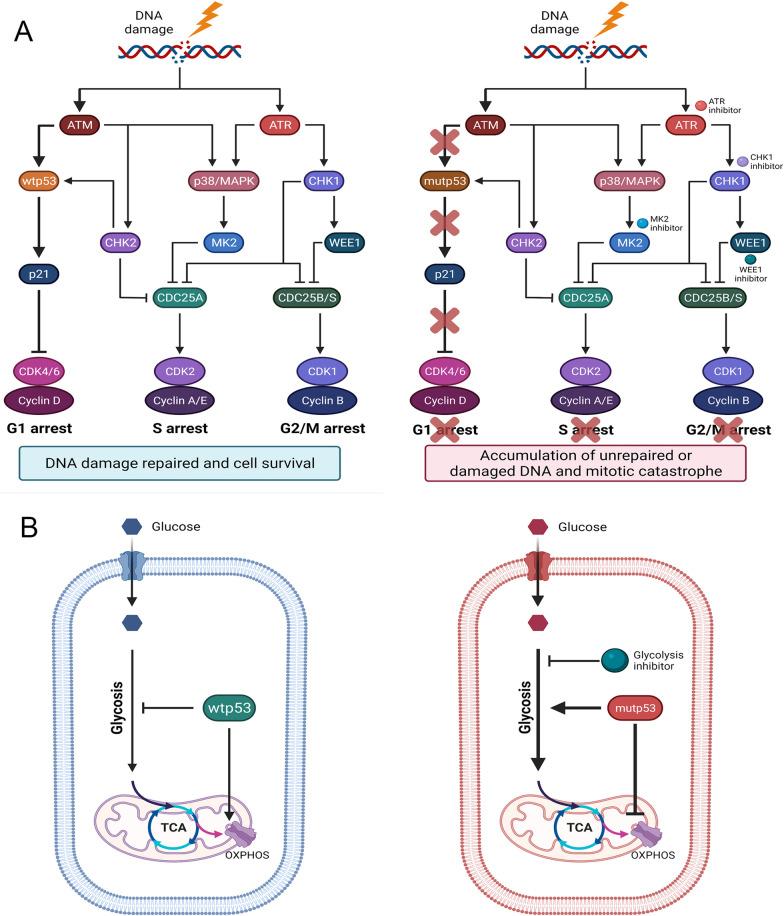
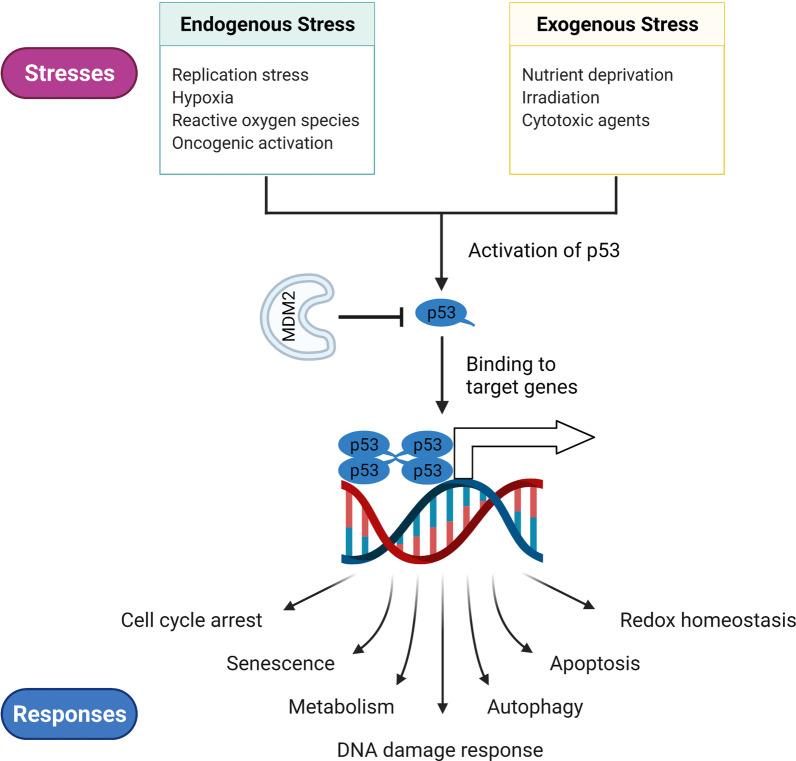
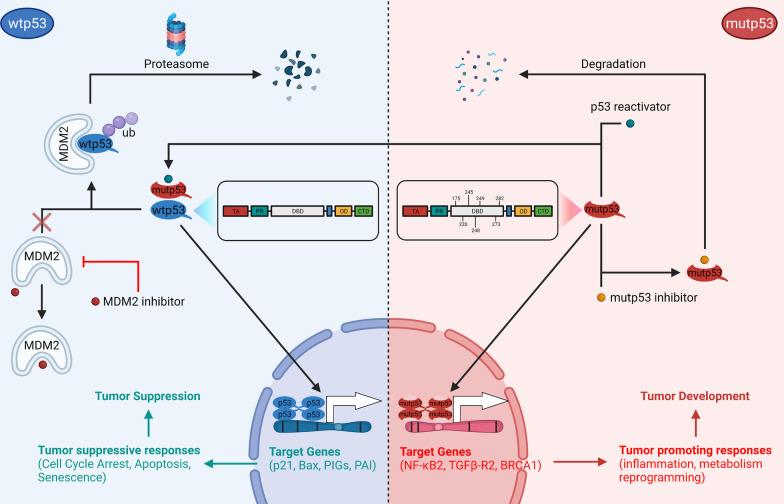
TP53 is a critical tumor-suppressor gene that is mutated in more than half of all human cancers. Mutations in TP53 not only impair its antitumor activity, but also confer mutant p53 protein oncogenic properties. The p53-targeted therapy approach began with the identification of compounds capable of restoring/reactivating wild-type p53 functions or eliminating mutant p53. Treatments that directly target mutant p53 are extremely structure and drug-species-dependent. Due to the mutation of wild-type p53, multiple survival pathways that are normally maintained by wild-type p53 are disrupted, necessitating the activation of compensatory genes or pathways to promote cancer cell survival. Additionally, because the oncogenic functions of mutant p53 contribute to cancer proliferation and metastasis, targeting the signaling pathways altered by p53 mutation appears to be an attractive strategy. Synthetic lethality implies that while disruption of either gene alone is permissible among two genes with synthetic lethal interactions, complete disruption of both genes results in cell death. Thus, rather than directly targeting p53, exploiting mutant p53 synthetic lethal genes may provide additional therapeutic benefits. Additionally, research progress on the functions of noncoding RNAs has made it clear that disrupting noncoding RNA networks has a favorable antitumor effect, supporting the hypothesis that targeting noncoding RNAs may have potential synthetic lethal effects in cancers with p53 mutations. The purpose of this review is to discuss treatments for cancers with mutant p53 that focus on directly targeting mutant p53, restoring wild-type functions, and exploiting synthetic lethal interactions with mutant p53. Additionally, the possibility of noncoding RNAs acting as synthetic lethal targets for mutant p53 will be discussed.
TP53 是一种关键的肿瘤抑制基因,超过一半的人类癌症都存在该基因的突变。TP53 突变不仅削弱了其抗肿瘤活性,还赋予了突变型 p53 蛋白致癌特性。p53 靶向治疗方法始于鉴定能够恢复/激活野生型 p53 功能或消除突变型 p53 的化合物。直接针对突变型 p53 的治疗方法极其依赖于结构和药物种类。由于野生型 p53 的突变,通常由野生型 p53 维持的多个生存途径被破坏,需要激活补偿性基因或途径来促进癌细胞存活。此外,由于突变型 p53 的致癌功能促进了癌症的增殖和转移,靶向 p53 突变改变的信号通路似乎是一种有吸引力的策略。合成致死性意味着,尽管在具有合成致死相互作用的两个基因中,单独破坏一个基因是可以接受的,但两个基因的完全破坏会导致细胞死亡。因此,与其直接靶向 p53,利用突变型 p53 的合成致死基因可能会提供额外的治疗益处。此外,非编码 RNA 功能的研究进展表明,破坏非编码 RNA 网络具有有利的抗肿瘤作用,支持了靶向非编码 RNA 可能在具有 p53 突变的癌症中具有潜在合成致死作用的假说。本综述的目的是讨论针对突变型 p53 癌症的治疗方法,这些方法侧重于直接靶向突变型 p53、恢复野生型功能以及利用与突变型 p53 的合成致死相互作用。此外,还将讨论非编码 RNA 作为突变型 p53 的合成致死靶标的可能性。
 Zotero 插件