
基于金纳米粒子生物传感器的 SARS-CoV-2 刺突抗原的比色和电化学检测。
Colorimetric and electrochemical detection of SARS-CoV-2 spike antigen with a gold nanoparticle-based biosensor.
机构信息
Organic Chemistry Laboratory, Chemistry Group, The Scientific and Technological Research Council of Turkey, National Metrology Institute, (TUBITAK UME), 41470, Gebze, Kocaeli, Turkey.
Organic Chemistry Laboratory, Chemistry Group, The Scientific and Technological Research Council of Turkey, National Metrology Institute, (TUBITAK UME), 41470, Gebze, Kocaeli, Turkey.
出版信息
Anal Chim Acta. 2021 Oct 16;1182:338939. doi: 10.1016/j.aca.2021.338939. Epub 2021 Aug 11.
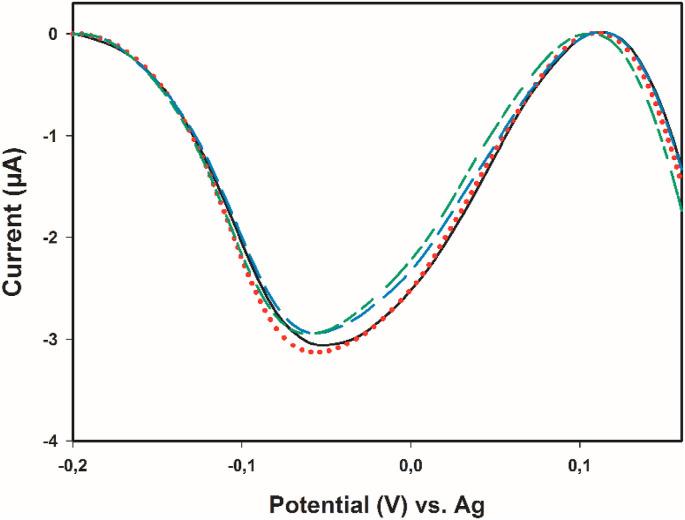
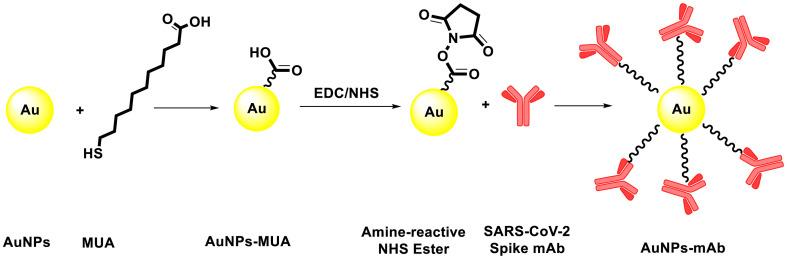
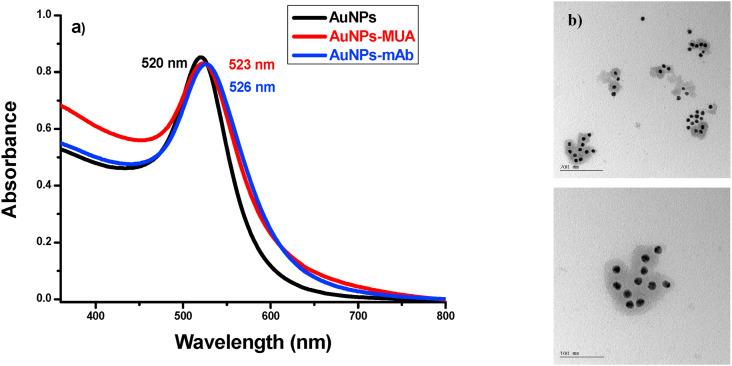
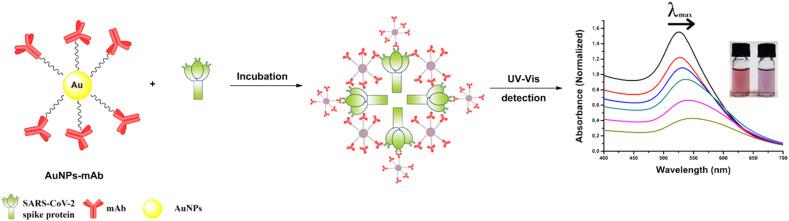
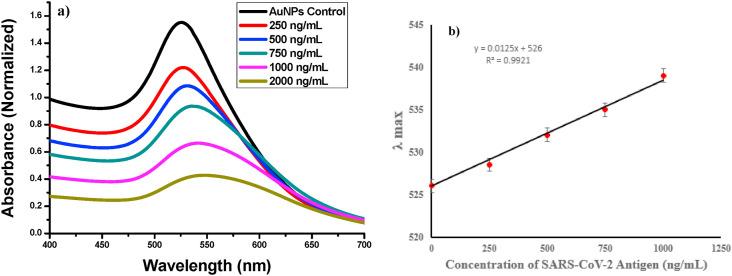
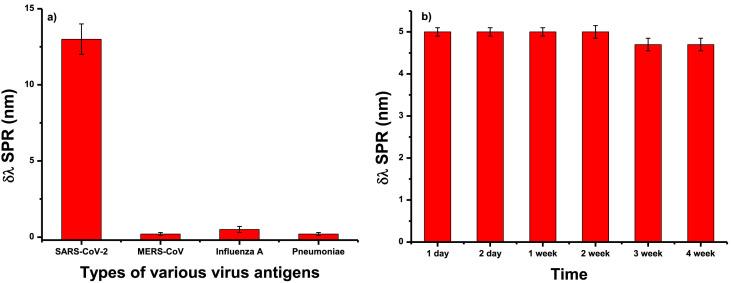
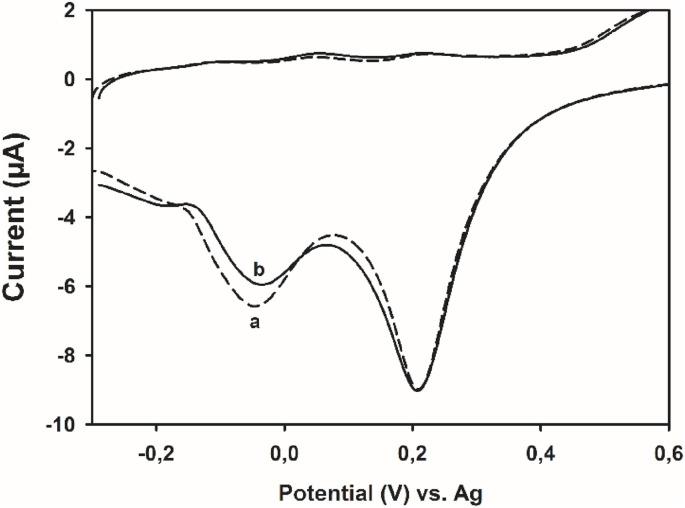
Since emerging in China in December 2019, COVID-19 has spread globally, wreaked havoc for public health and economies worldwide and, given the high infectivity and unexpectedly rapid spread of the virus responsible-that is, severe acute respiratory syndrome coronavirus 2 (SARS-CoV-2)-urged the World Health Organization to declare it a pandemic. In response, reducing the virus's adverse effects requires developing methods of early diagnosis that are reliable, are inexpensive and offer rapid response. As demonstrated in this article, the colorimetric and electrochemical detection of SARS-CoV-2 spike antigen with gold nanoparticle-based biosensors may be one such method. In the presence of the SARS-CoV-2 spike antigen, gold nanoparticles aggregated rapidly and irreversibly due to antibody-antigen interaction and consequently changed in colour from red to purple, as easily observable with the naked eye or UV-Vis spectrometry by way of spectral redshifting with a detection limit of 48 ng/mL. Moreover, electrochemical detection was achieved by dropping developed probe solution onto the commercially available and disposable screen-printed gold electrode without requiring any electrode preparation and modification. The method identified 1 pg/mL of the SARS-CoV-2 spike antigen and showed a linear response to the SARS-CoV-2 spike antigen ranging from 1 pg/mL to 10 ng/mL. Both methods were highly specific to detecting the SARS-CoV-2 spike antigen but not other antigens, including influenza A (i.e. H1N1), MERS-CoV and Streptococcus pneumoniae, even at high concentrations.
自 2019 年 12 月在中国出现以来,COVID-19 已在全球范围内传播,对全球公共卫生和经济造成严重破坏。由于负责的病毒(即严重急性呼吸系统综合症冠状病毒 2(SARS-CoV-2))具有很高的传染性和出人意料的快速传播速度,世界卫生组织敦促将其宣布为大流行。作为回应,减少病毒的不良影响需要开发可靠、廉价且快速响应的早期诊断方法。正如本文所证明的那样,使用基于金纳米粒子的生物传感器对 SARS-CoV-2 刺突抗原进行比色和电化学检测可能就是这样一种方法。在 SARS-CoV-2 刺突抗原存在的情况下,由于抗体-抗原相互作用,金纳米粒子迅速且不可逆地聚集,并且颜色从红色变为紫色,肉眼或通过紫外可见光谱法很容易观察到光谱红移,检测限为 48ng/mL。此外,通过将开发的探针溶液滴到市售且一次性的丝网印刷金电极上,无需进行任何电极制备和修饰即可实现电化学检测。该方法可识别 1pg/mL 的 SARS-CoV-2 刺突抗原,并且对 SARS-CoV-2 刺突抗原表现出线性响应,范围从 1pg/mL 到 10ng/mL。这两种方法都高度特异性地检测 SARS-CoV-2 刺突抗原,但不检测其他抗原,包括流感 A(即 H1N1)、MERS-CoV 和肺炎链球菌,即使在高浓度下也是如此。



 Zotero 插件