
通过裸鼠细胞片移植建立高效且一致的原位骨肉瘤模型用于药物测试
Efficient and Consistent Orthotopic Osteosarcoma Model by Cell Sheet Transplantation in the Nude Mice for Drug Testing.
作者信息
Wu Hongwei, He Zhengxi, Li Xianan, Xu Xuezheng, Zhong Wu, Bu Jie, Huang Gang
机构信息
Department of Orthopedics, Hunan Cancer Hospital and The Affiliated Cancer Hospital of Xiangya School of Medicine, Central South University, Changsha, China.
Department of Oncology, Xiangya Hospital, Central South University, Changsha, China.
出版信息
Front Bioeng Biotechnol. 2021 Sep 24;9:690409. doi: 10.3389/fbioe.2021.690409. eCollection 2021.
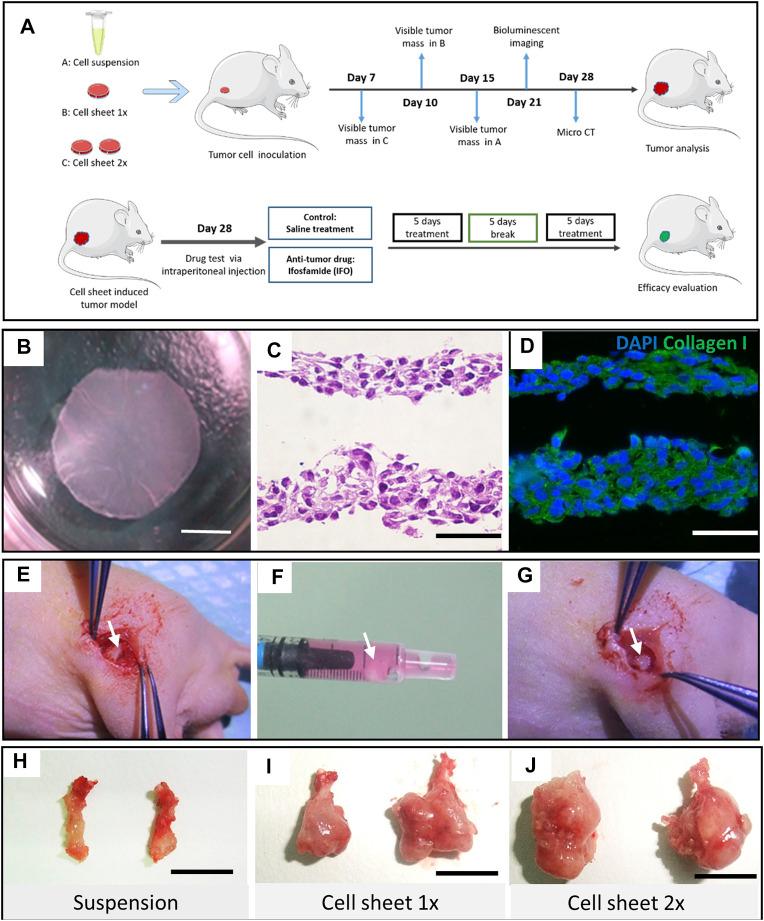
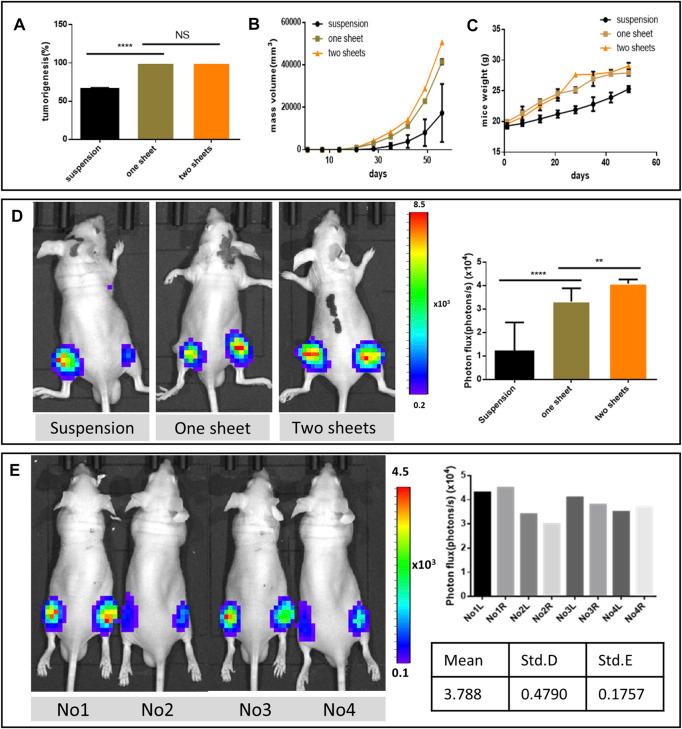
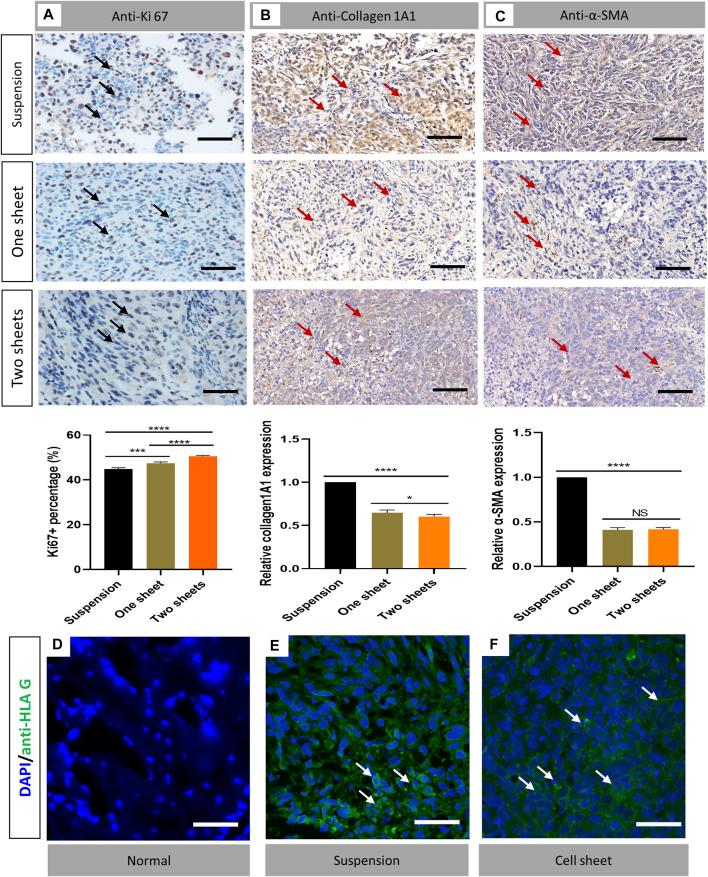
Osteosarcoma is a big challenge on clinical treatment. The breakthrough associated with osteosarcoma in basic research and translational research depends on the reliable establishment of an animal model, whereby mice are frequently used. However, a traditional animal modeling technique like tumor cell suspension injection causes batch dynamics and large mice consumption. Here, we suggested a novel approach in establishing an orthotropic osteosarcoma model in nude mice rapidly by cell sheet culture and transplantation. Our findings demonstrated that the 143b osteosarcoma cell sheet orthotopically implanted into the nude mice could form a visible mass within 10 days, whereas it took over 15 days for a similar amount of cell suspension injection to form a visible tumor mass. Living animal imaging results showed that a tumor formation rate was 100% in the cell sheet implantation group, while it was 67% in the cell suspension injection group. The formed tumor masses were highly consistent in both growth rate and tumor size. Massive bone destruction and soft tissue mass formation were observed from the micro CT analysis, suggesting the presence of osteosarcoma. The histopathological analysis demonstrated that the orthotropic osteosarcoma model mimicked the tumor bone growth, bone destruction, and the lung metastasis. These findings imply that such a cell sheet technology could be an appropriate approach to rapidly establish a sustainable orthotropic osteosarcoma model for tumor research and reduce mice consumption.
骨肉瘤是临床治疗中的一大挑战。骨肉瘤在基础研究和转化研究方面的突破依赖于可靠地建立动物模型,其中小鼠被频繁使用。然而,像肿瘤细胞悬液注射这样的传统动物建模技术会导致批次差异且消耗大量小鼠。在此,我们提出了一种通过细胞片层培养和移植在裸鼠中快速建立原位骨肉瘤模型的新方法。我们的研究结果表明,将143b骨肉瘤细胞片原位植入裸鼠体内可在10天内形成可见肿块,而注射等量细胞悬液则需要超过15天才能形成可见肿瘤肿块。活体动物成像结果显示,细胞片植入组的肿瘤形成率为100%,而细胞悬液注射组为67%。所形成的肿瘤肿块在生长速率和肿瘤大小方面高度一致。显微CT分析观察到大量骨质破坏和软组织肿块形成,提示骨肉瘤的存在。组织病理学分析表明,原位骨肉瘤模型模拟了肿瘤骨生长、骨质破坏和肺转移。这些发现意味着这种细胞片技术可能是一种快速建立可持续原位骨肉瘤模型用于肿瘤研究并减少小鼠消耗的合适方法。

 Zotero 插件