
健康成年人长时间吸入空气中氢气的安全性。
Safety of Prolonged Inhalation of Hydrogen Gas in Air in Healthy Adults.
作者信息
Cole Alexis R, Sperotto Francesca, DiNardo James A, Carlisle Stephanie, Rivkin Michael J, Sleeper Lynn A, Kheir John N
机构信息
Department of Cardiology, Boston Children's Hospital, Boston, MA.
Department of Pediatrics, Harvard Medical School, Boston, MA.
出版信息
Crit Care Explor. 2021 Oct 8;3(10):e543. doi: 10.1097/CCE.0000000000000543. eCollection 2021 Oct.
UNLABELLED
Ischemia-reperfusion injury is common in critically ill patients, and directed therapies are lacking. Inhaled hydrogen gas diminishes ischemia-reperfusion injury in models of shock, stroke, and cardiac arrest. The purpose of this study was to investigate the safety of inhaled hydrogen gas at doses required for a clinical efficacy study.
DESIGN
Prospective, single-arm study.
SETTING
Tertiary care hospital.
PATIENTS/SUBJECTS: Eight healthy adult participants.
INTERVENTIONS
Subjects underwent hospitalized exposure to 2.4% hydrogen gas in medical air via high-flow nasal cannula (15 L/min) for 24 ( = 2), 48 ( = 2), or 72 ( = 4) hours.
MEASUREMENTS AND MAIN RESULTS
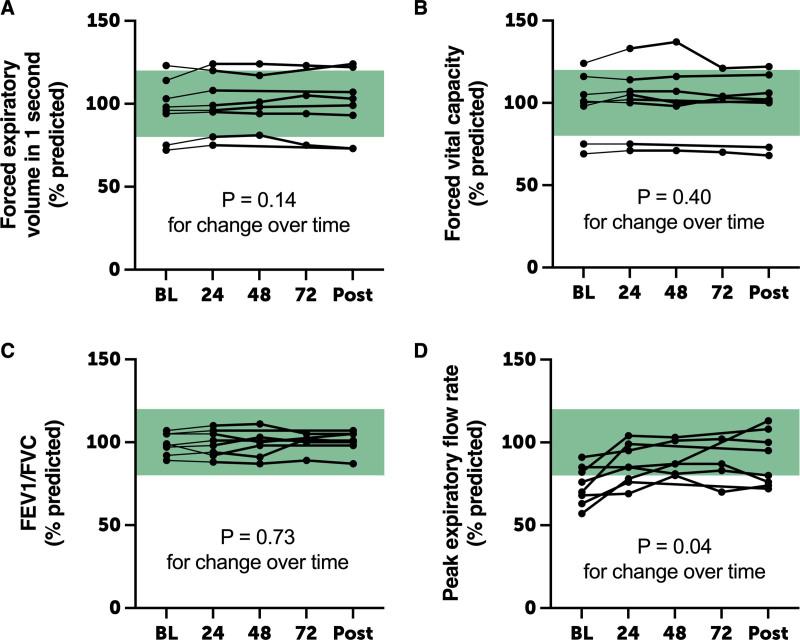
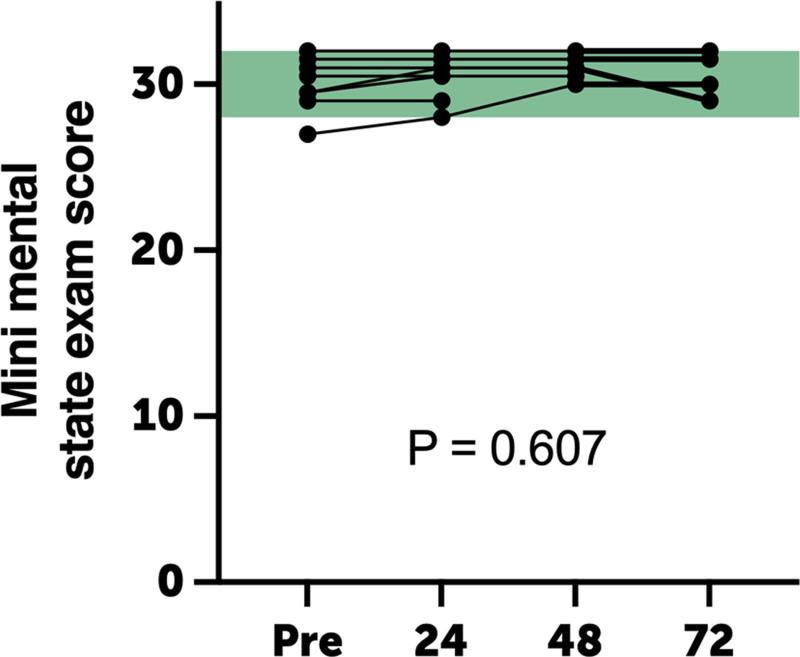
Endpoints included vital signs, patient- and nurse-reported signs and symptoms (stratified according to clinical significance), pulmonary function testing, 12-lead electrocardiogram, mini-mental state examinations, neurologic examination, and serologic testing prior to and following exposure. All adverse events were verified by two clinicians external to the study team and an external Data and Safety Monitoring Board. All eight participants (18-30 yr; 50% female; 62% non-Caucasian) completed the study without early termination. No clinically significant adverse events occurred in any patient. Compared with baseline measures, there were no clinically significant changes over time in vital signs, pulmonary function testing results, Mini-Mental State Examination scores, neurologic examination findings, electrocardiogram measurements, or serologic tests for hematologic (except for clinically insignificant increases in hematocrit and platelet counts), renal, hepatic, pancreatic, or cardiac injury associated with hydrogen gas inhalation.
CONCLUSIONS
Inhalation of 2.4% hydrogen gas does not appear to cause clinically significant adverse effects in healthy adults. Although these data suggest that inhaled hydrogen gas may be well tolerated, future studies need to be powered to further evaluate safety. These data will be foundational to future interventional studies of inhaled hydrogen gas in injury states, including following cardiac arrest.
未标注
缺血再灌注损伤在重症患者中很常见,且缺乏针对性治疗。吸入氢气可减轻休克、中风和心脏骤停模型中的缺血再灌注损伤。本研究的目的是调查在临床疗效研究所需剂量下吸入氢气的安全性。
设计
前瞻性单臂研究。
地点
三级医疗中心。
患者/受试者:8名健康成年参与者。
干预措施
受试者通过高流量鼻导管(15升/分钟)在医用空气中接受2.4%氢气治疗24(=2)、48(=2)或72(=4)小时的住院治疗。
测量指标和主要结果
终点指标包括生命体征、患者和护士报告的体征和症状(根据临床意义分层)、肺功能测试、12导联心电图、简易精神状态检查、神经学检查以及暴露前后的血清学检测。所有不良事件均由研究团队以外的两名临床医生和一个外部数据与安全监测委员会进行核实。所有8名参与者(年龄18 - 30岁;50%为女性;62%为非白种人)均完成研究,无提前终止情况。所有患者均未发生具有临床意义的不良事件。与基线测量值相比,生命体征、肺功能测试结果、简易精神状态检查分数、神经学检查结果、心电图测量值或血液学(除血细胞比容和血小板计数出现无临床意义的增加外)、肾脏、肝脏、胰腺或心脏损伤相关的血清学检测结果,在吸入氢气后随时间推移均未出现具有临床意义的变化。
结论
吸入2.4%氢气似乎不会对健康成年人造成具有临床意义的不良反应。尽管这些数据表明吸入氢气可能耐受性良好,但未来研究仍需有足够的样本量以进一步评估安全性。这些数据将为未来在损伤状态下(包括心脏骤停后)吸入氢气的干预性研究奠定基础。

 Zotero 插件