
靶向 RBD 的两种鼠源抗体中和 SARS-CoV-2 的结构机制。
Structural mechanism of SARS-CoV-2 neutralization by two murine antibodies targeting the RBD.
机构信息
Department of Pathology & Immunology, Washington University School of Medicine, St. Louis, MO, USA.
Department of Pathology & Immunology, Washington University School of Medicine, St. Louis, MO, USA; Department of Medicine, Washington University School of Medicine, St. Louis, MO, USA.
出版信息
Cell Rep. 2021 Oct 26;37(4):109881. doi: 10.1016/j.celrep.2021.109881. Epub 2021 Oct 8.
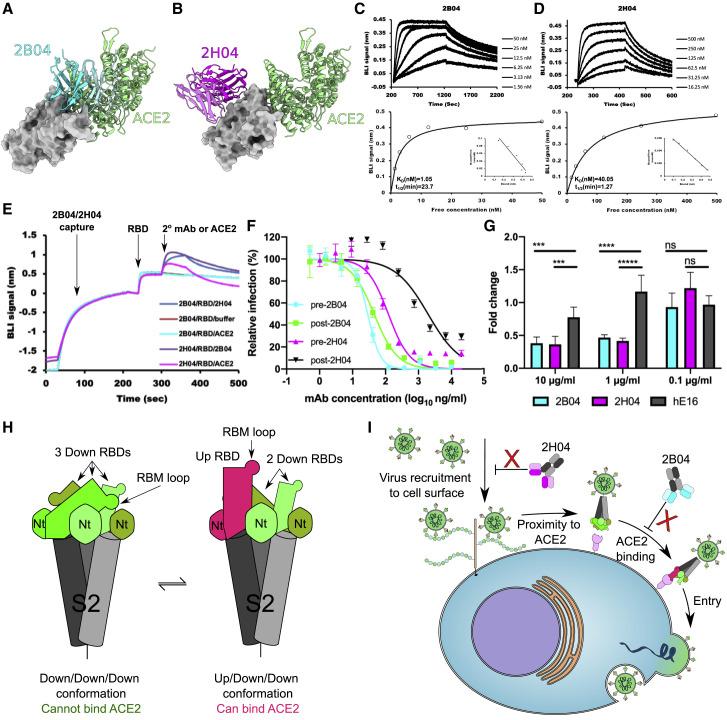
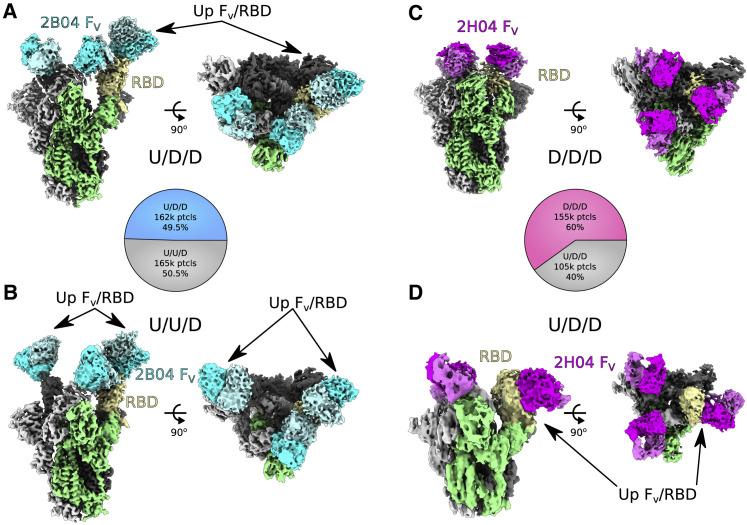
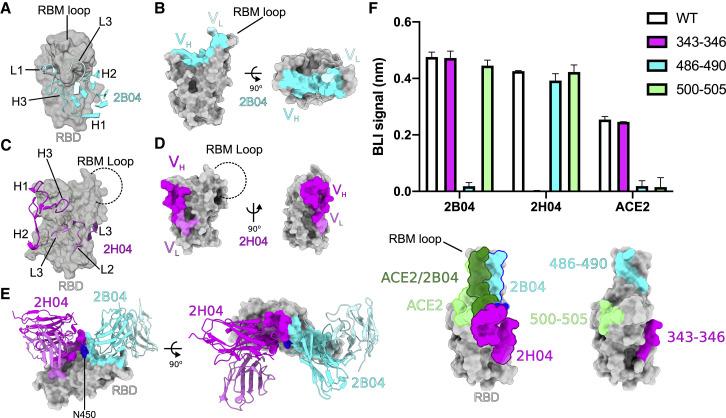
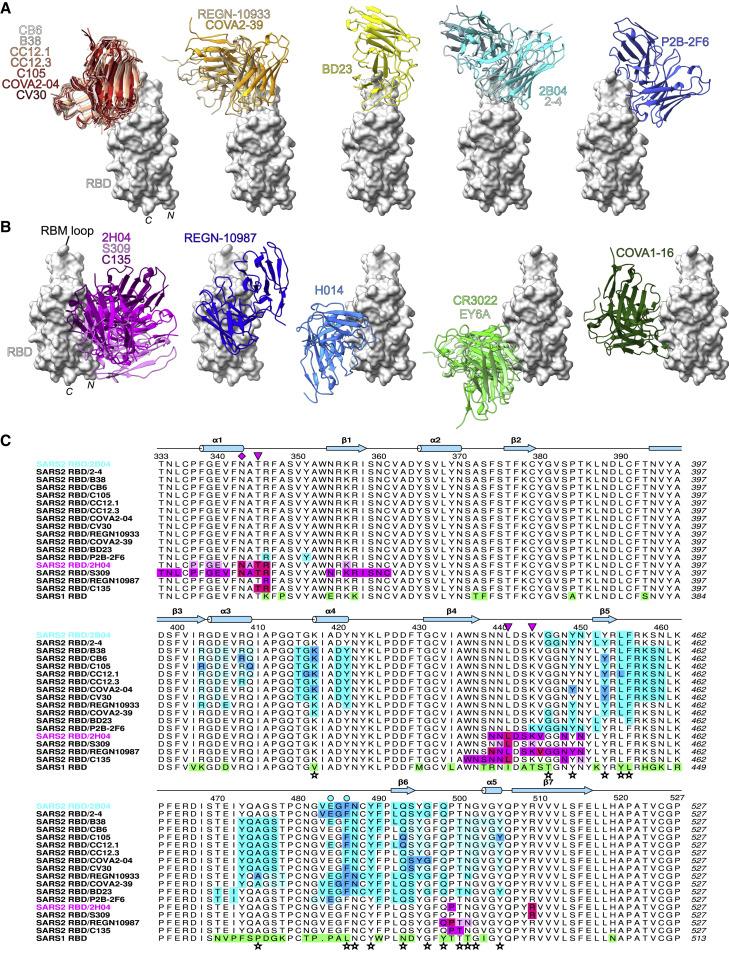
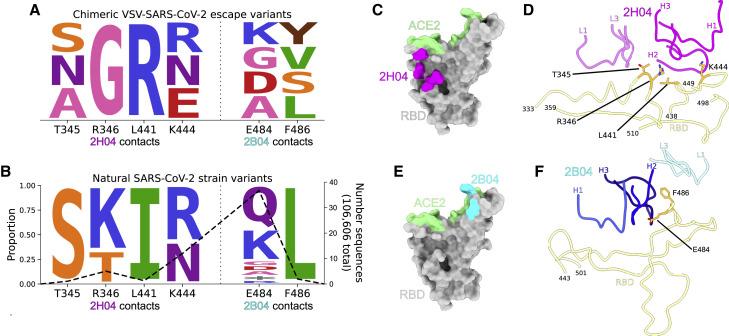
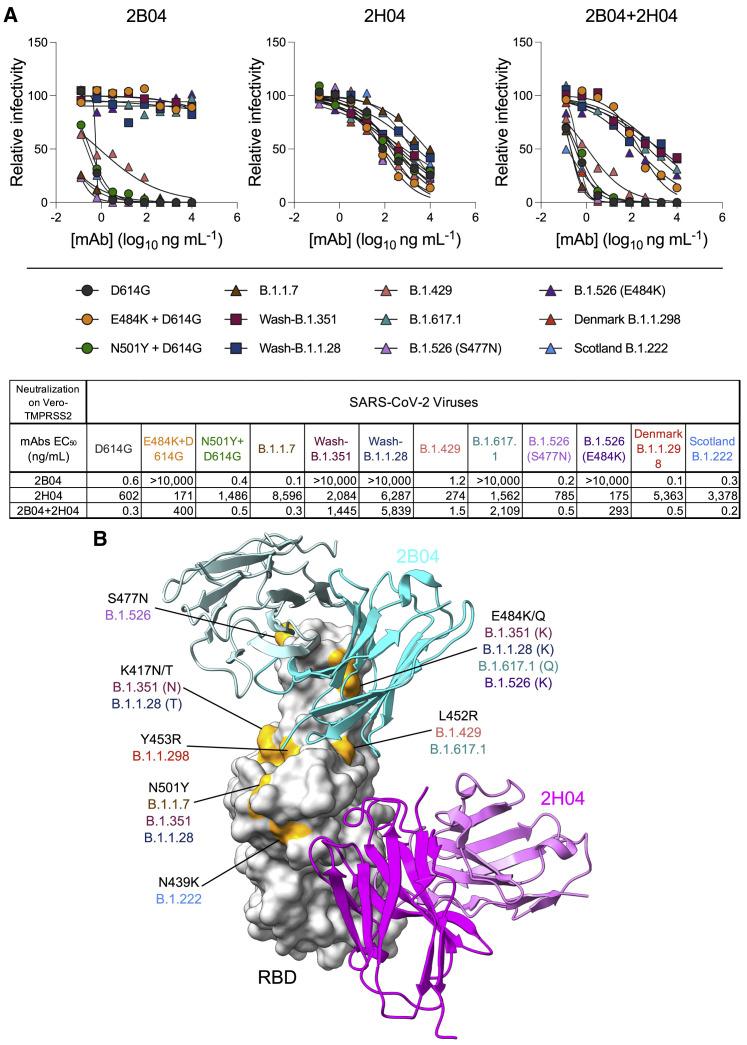
The severe acute respiratory syndrome coronavirus 2 (SARS-CoV-2) pandemic has necessitated the rapid development of antibody-based therapies and vaccines as countermeasures. Here, we use cryoelectron microscopy (cryo-EM) to characterize two protective anti-SARS-CoV-2 murine monoclonal antibodies (mAbs) in complex with the spike protein, revealing similarities between epitopes targeted by human and murine B cells. The more neutralizing mAb, 2B04, binds the receptor-binding motif (RBM) of the receptor-binding domain (RBD) and competes with angiotensin-converting enzyme 2 (ACE2). By contrast, 2H04 binds adjacent to the RBM and does not compete for ACE2 binding. Naturally occurring sequence variants of SARS-CoV-2 and corresponding neutralization escape variants selected in vitro map to our structurally defined epitopes, suggesting that SARS-CoV-2 might evade therapeutic antibodies with a limited set of mutations, underscoring the importance of combination mAb therapeutics. Finally, we show that 2B04 neutralizes SARS-CoV-2 infection by preventing ACE2 engagement, whereas 2H04 reduces host cell attachment without directly disrupting ACE2-RBM interactions, providing distinct inhibitory mechanisms used by RBD-specific mAbs.
严重急性呼吸综合征冠状病毒 2 (SARS-CoV-2) 大流行促使人们迅速开发基于抗体的疗法和疫苗作为对策。在这里,我们使用冷冻电子显微镜 (cryo-EM) 来描绘两种与刺突蛋白复合的保护性抗 SARS-CoV-2 鼠单克隆抗体 (mAb),揭示了人类和鼠 B 细胞靶向的表位之间的相似性。更具中和能力的 mAb 2B04 结合受体结合域 (RBD) 的受体结合基序 (RBM),并与血管紧张素转化酶 2 (ACE2) 竞争。相比之下,2H04 结合 RBM 附近,不与 ACE2 结合竞争。SARS-CoV-2 的天然序列变体和体外选择的相应中和逃逸变体映射到我们结构定义的表位,这表明 SARS-CoV-2 可能通过有限的突变逃避治疗性抗体,突出了组合 mAb 治疗的重要性。最后,我们表明 2B04 通过阻止 ACE2 结合来中和 SARS-CoV-2 感染,而 2H04 减少宿主细胞附着而不直接破坏 ACE2-RBM 相互作用,为 RBD 特异性 mAb 提供了不同的抑制机制。

 Zotero 插件