
微塑料对卤虫生长及肠道微生物群组成的影响
Influence of Microplastics on the Growth and the Intestinal Microbiota Composition of Brine Shrimp.
作者信息
Li Hongyu, Chen Hongwei, Wang Jiao, Li Jiayao, Liu Sitong, Tu Jianbo, Chen Yanzhen, Zong Yanping, Zhang Pingping, Wang Zhiyun, Liu Xianhua
机构信息
School of Environmental Science and Engineering, Tianjin University, Tianjin, China.
Tianjin Marine Environment Monitoring Center Station of State Oceanic Administration, Tianjin, China.
出版信息
Front Microbiol. 2021 Sep 29;12:717272. doi: 10.3389/fmicb.2021.717272. eCollection 2021.
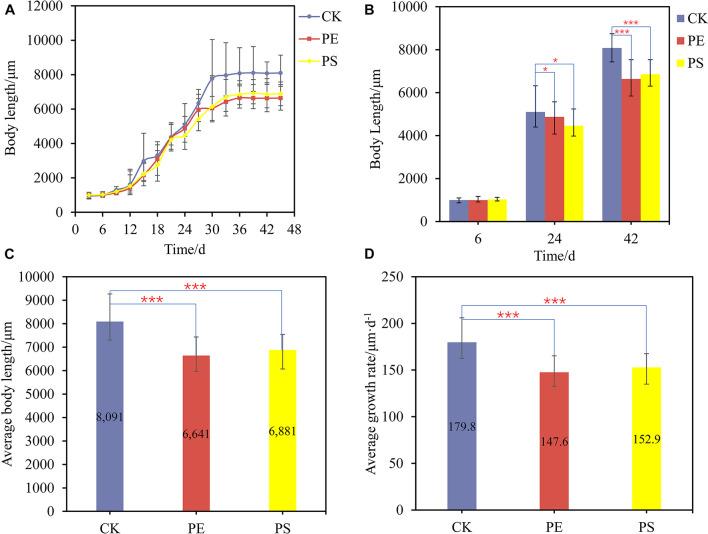
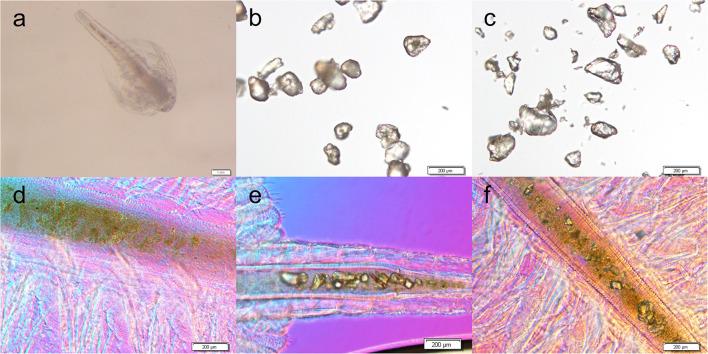
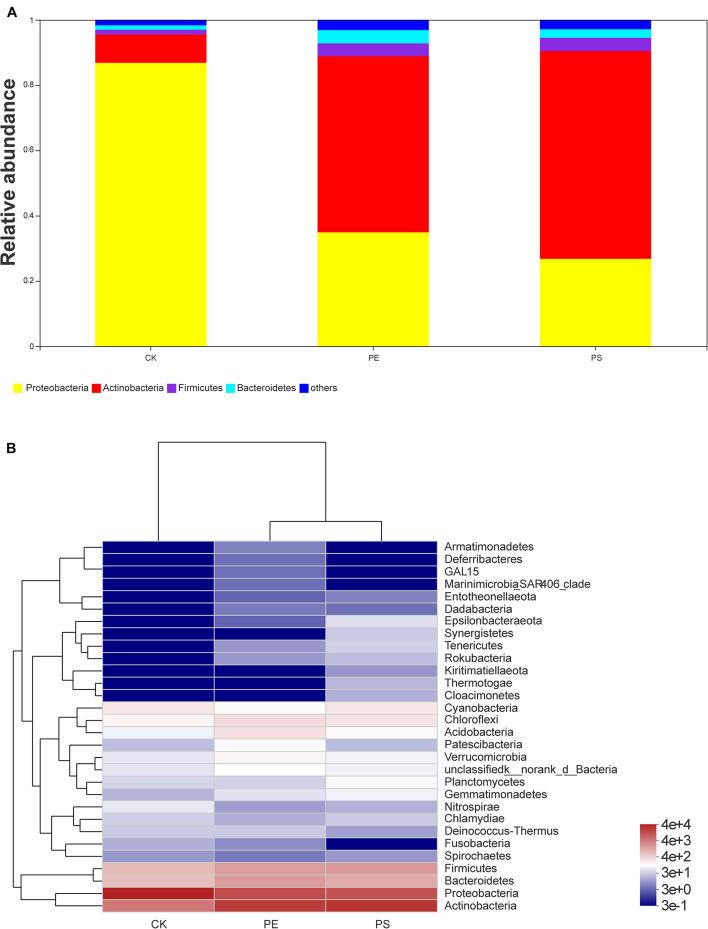
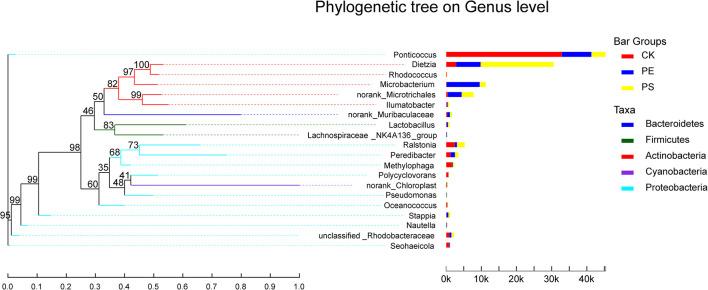
Microplastics (MPs) are ubiquitous in the aquatic environment and can be frequently ingested by zooplankton, leading to various effects. Brine shrimp () has an important role in the energy flow through trophic levels in different seawater systems. In this work, the influence of polyethylene (PE) and polystyrene (PS) MPs on the growth of brine shrimp and corresponding changes of gut microbiota were investigated. Our results showed that the MPs remarkably reduced the growth rate of brine shrimp, and the two types of MPs have different impacts. The average body length of brine shrimps was reduced by 17.92 and 14.95% in the PE group and PS group, respectively. MPs are mainly found in the intestine, and their exposure evidently affects the gut microbiota. By using 16S rRNA gene high-throughput sequencing, 32 phyla of bacteria were detected in the intestine, and the microbiome consisted mainly of Proteobacteria, Firmicutes, and Actinobacteria. MPs' exposure significantly increased the gut microbial diversity. For the PE group, the proportion of Actinobacteria and Bacteroidetes increased by 45.26 and 2.73%, respectively. For the PS group, it was 54.95 and 1.27%, respectively. According to the analysis on genus level, the proportions of , , , and decreased by 46.38, 1.24, 1.07, and 2.66%, respectively, for the PE group and 57.87, 1.43, 0.88, and 2.24%, respectively, for the PS group. In contrast, the proportions of , , and increased by 1.12, 23.27, and 11.59%, respectively, for the PE group, and 1.09, 3.79, and 42.96%, respectively, for the PS group. These experimental results demonstrated that the ingestion of MPs by brine shrimp can alter the composition of the gut microbiota and lead to a slow growth rate. This study provides preliminary data support for understanding the biotoxicity of MPs to invertebrate zooplankton and is conducive to the further risk assessment of MP exposure.
微塑料(MPs)在水生环境中无处不在,浮游动物经常会摄入微塑料,从而产生各种影响。卤虫()在不同海水系统的营养级能量流动中起着重要作用。在这项研究中,研究了聚乙烯(PE)和聚苯乙烯(PS)微塑料对卤虫生长的影响以及肠道微生物群的相应变化。我们的结果表明,微塑料显著降低了卤虫的生长速率,并且这两种微塑料有不同的影响。在PE组和PS组中,卤虫的平均体长分别降低了17.92%和14.95%。微塑料主要存在于肠道中,它们的暴露明显影响肠道微生物群。通过16S rRNA基因高通量测序,在肠道中检测到32个细菌门,微生物群落主要由变形菌门、厚壁菌门和放线菌门组成。微塑料的暴露显著增加了肠道微生物多样性。对于PE组,放线菌门和拟杆菌门的比例分别增加了45.26%和2.73%。对于PS组,分别为54.95%和1.27%。根据属水平分析,PE组中、、、的比例分别下降了46.38%、1.24%、1.07%和2.66%,PS组分别下降了57.87%、1.43%、0.88%和2.24%。相比之下,PE组中、、的比例分别增加了1.12%、23.27%和11.59%,PS组分别增加了1.09%、3.79%和42.96%。这些实验结果表明,卤虫摄入微塑料会改变肠道微生物群的组成并导致生长速率减慢。本研究为了解微塑料对无脊椎浮游动物的生物毒性提供了初步数据支持,有利于微塑料暴露的进一步风险评估。


 Zotero 插件