
分子流行病学研究埃塞俄比亚南部肺结核患者分离的结核分枝杆菌菌株。
Molecular Epidemiology of Mycobacterium tuberculosis strains isolated from pulmonary tuberculosis patients in south Ethiopia.
机构信息
College of Medicine and Health Sciences, Hawassa University, Hawassa, Ethiopia.
Armauer Hansen Research Institute, Addis Ababa, Ethiopia.
出版信息
J Infect Dev Ctries. 2021 Sep 30;15(9):1299-1307. doi: 10.3855/jidc.14742.
INTRODUCTION
Understanding the epidemiology of tuberculosis is limited by lack of genotyping data. We sought to characterize the drug susceptibility testing patterns and genetic diversity of M. tuberculosis isolates in southern Ethiopia.
METHODOLOGY
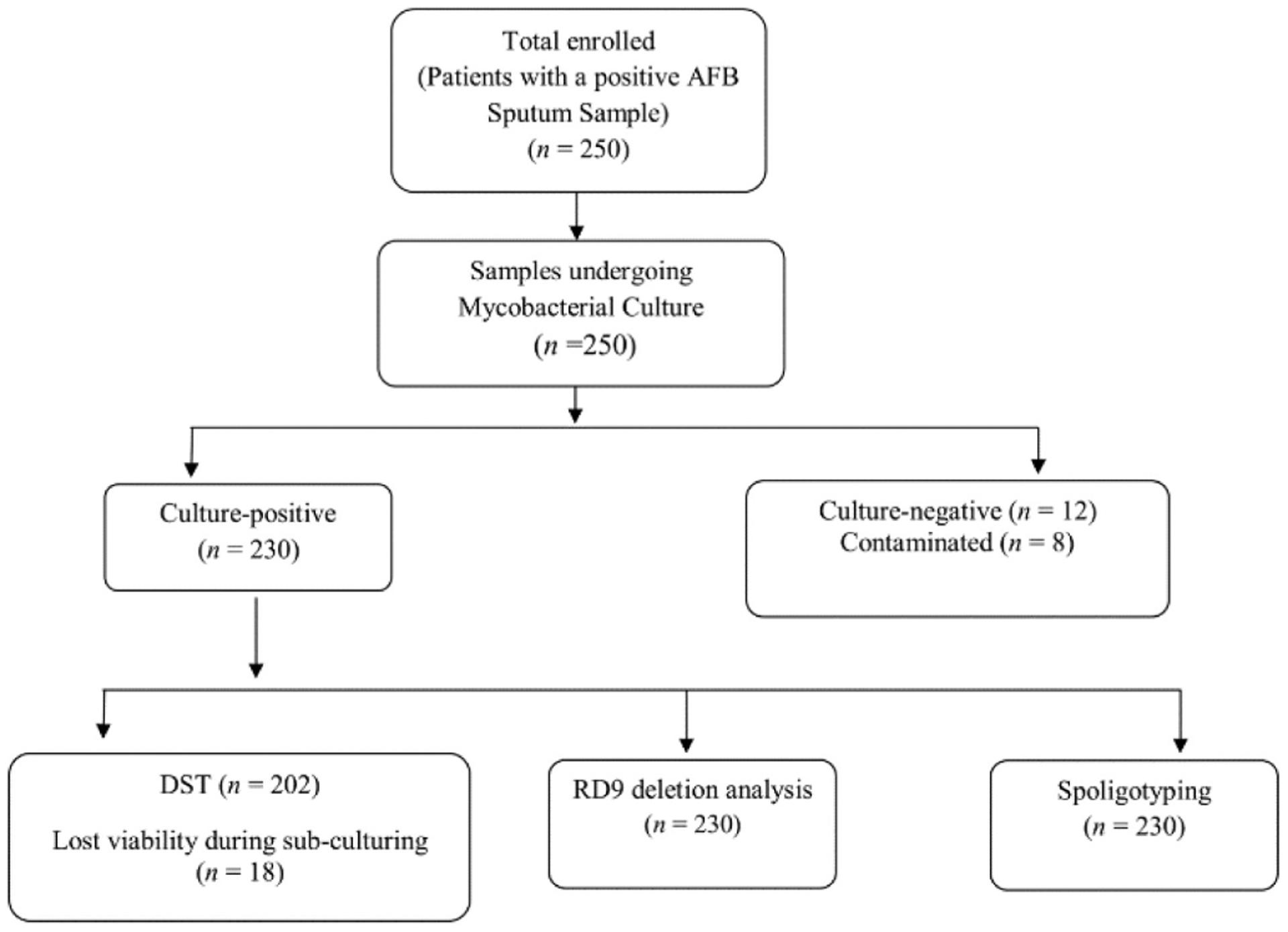
A cross-sectional study was conducted among newly diagnosed sputum smear positive patients with tuberculosis visiting nine health facilities in southern Ethiopia from June 2015 to May 2016. Three consecutive sputum samples (spot-morning-spot) per patient were examined using acid-fast bacilli smear microscopy with all smear positive specimens having acid-fast bacilli cultures performed. M. tuberculosis isolates had drug susceptibility testing performed using indirect proportion method and were genotyped with RD9 deletion analysis and spoligotyping. Mapping of strain was made using geographic information system.
RESULTS
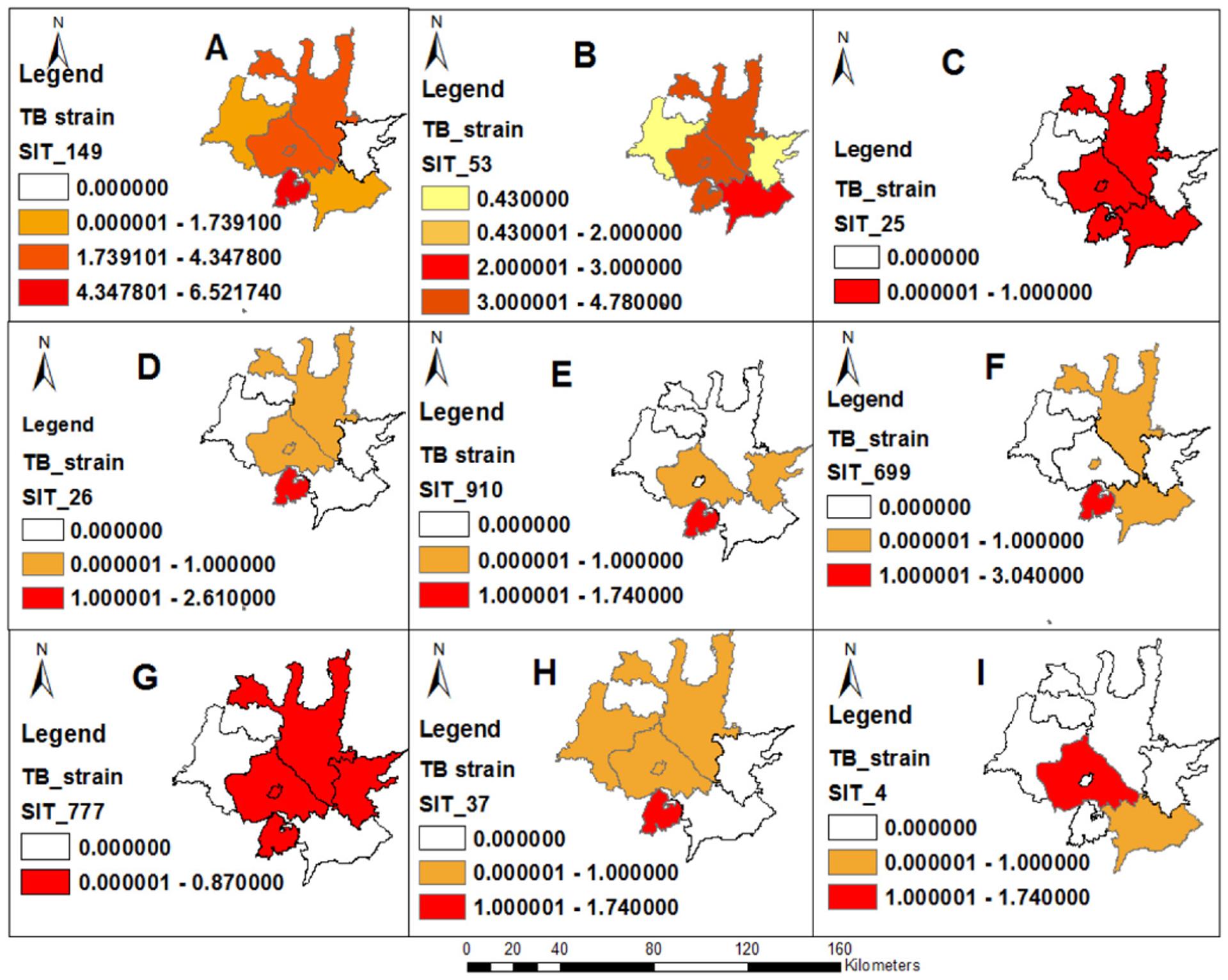
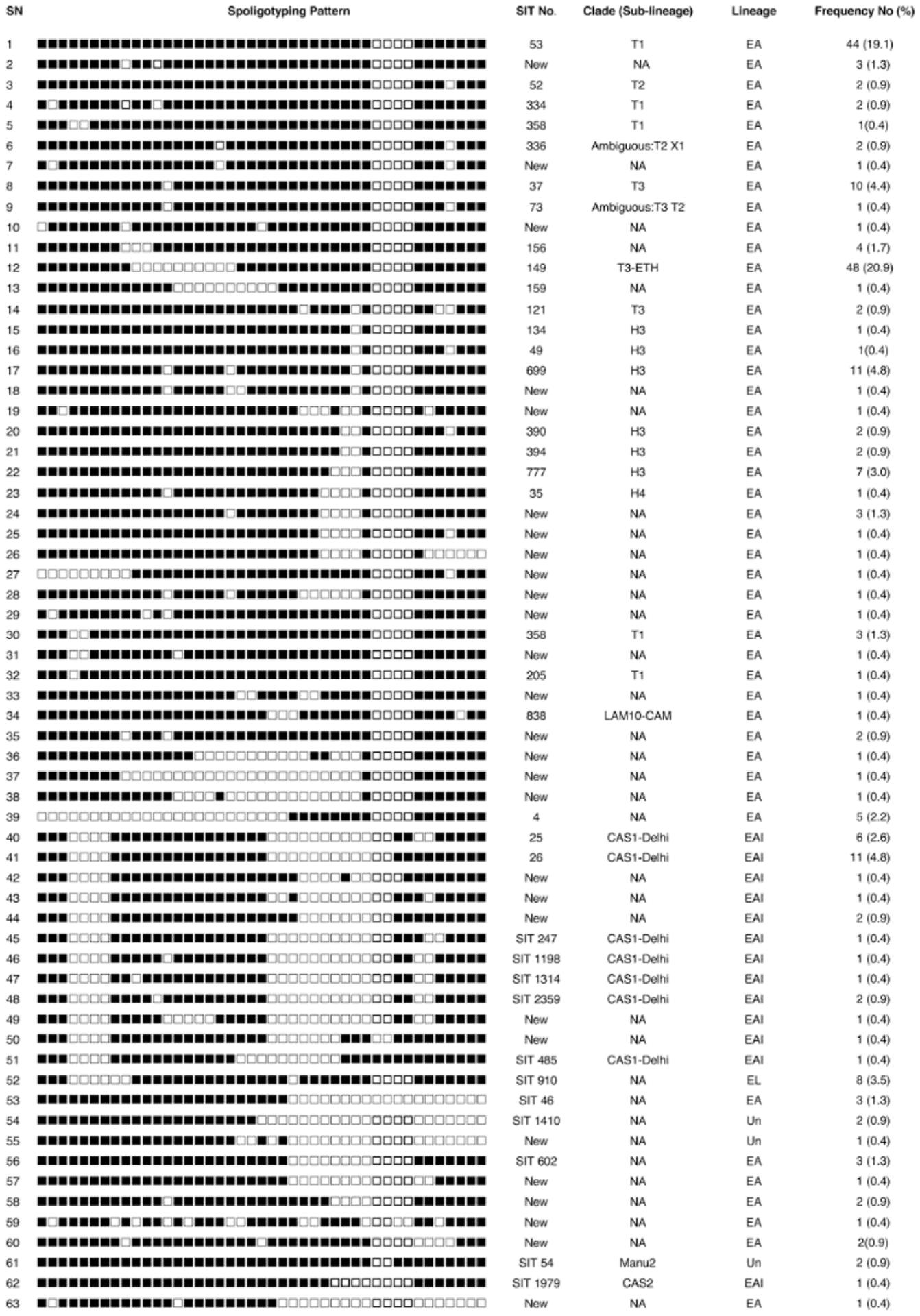
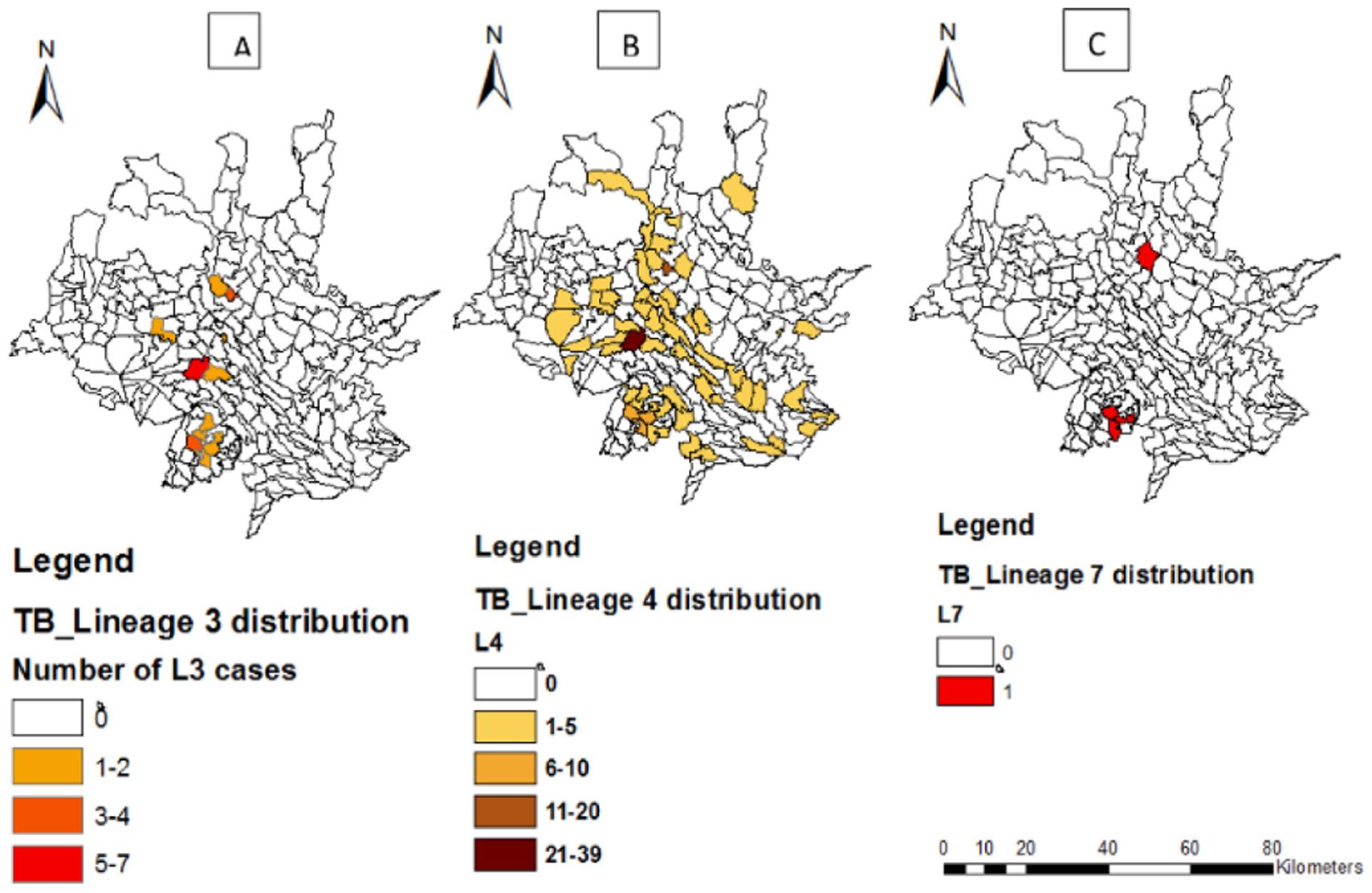
Among 250 newly diagnosed patients with tuberculosis, 4% were HIV co-infected. All 230 isolates tested were M. tuberculosis strains belonging to three lineages: Euro-American, 187 (81%), East-African-Indian, 31 (14%), and Lineage 7 (Ethiopian lineage), 8 (4%); categorized into 63 different spoligotype patterns, of which 85% fell into 28 clusters. M. tuberculosis strains were clustered by geographic localities. The dominant spoligotypes were SIT149 (21%) and SIT53 (19%). Drug susceptibility testing found that 14% of isolates tested were resistant to > 1 first line anti- tuberculosis drugs and 11% to INH. SIT 149 was dominant among drug resistant isolates.
CONCLUSIONS
The study revealed several clusters and drug resistant strains of M. tuberculosis in the study area, suggesting recent transmission including of drug resistant tuberculosis. Wider monitoring of drug susceptibility testing and geospatial analysis of transmission trends is required to control tuberculosis in southern Ethiopia.
简介
由于缺乏基因分型数据,对结核病的流行病学的了解受到限制。我们试图描述埃塞俄比亚南部结核分枝杆菌分离株的药物敏感性测试模式和遗传多样性。
方法
2015 年 6 月至 2016 年 5 月,在埃塞俄比亚南部的 9 家卫生机构,对新诊断为痰涂片阳性的肺结核患者进行了一项横断面研究。对每位患者的 3 份连续痰液样本(点-晨-点)进行了检查,使用抗酸杆菌涂片显微镜检查,所有涂片阳性标本均进行了抗酸杆菌培养。使用间接比例法对结核分枝杆菌分离株进行药物敏感性测试,并进行 RD9 缺失分析和 spoligotyping 基因分型。使用地理信息系统进行菌株定位。
结果
在 250 例新诊断的肺结核患者中,有 4%合并 HIV 感染。所有 230 株分离株均为结核分枝杆菌株,属于三个谱系:欧亚谱系 187 株(81%)、东非-印度谱系 31 株(14%)和谱系 7(埃塞俄比亚谱系)8 株(4%);分为 63 种不同的 spoligotype 模式,其中 85%属于 28 个聚类。结核分枝杆菌菌株根据地理位置聚类。主要 spoligotype 为 SIT149(21%)和 SIT53(19%)。药物敏感性测试发现,14%的分离株对>1 种一线抗结核药物耐药,11%对 INH 耐药。SIT149 是耐药分离株中的优势株。
结论
本研究揭示了研究区域内存在多个结核分枝杆菌簇和耐药菌株,表明存在近期传播,包括耐药结核。需要更广泛地监测药物敏感性测试,并对传播趋势进行地理空间分析,以控制埃塞俄比亚南部的结核病。

 Zotero 插件