
鉴定尿细胞外囊泡中的piRNA靶点用于前列腺癌的诊断
Identification of piRNA Targets in Urinary Extracellular Vesicles for the Diagnosis of Prostate Cancer.
作者信息
Peng Qiang, Chiu Peter Ka-Fung, Wong Christine Yim-Ping, Cheng Carol Ka-Lo, Teoh Jeremy Yuen-Chun, Ng Chi-Fai
机构信息
SH Ho Urology Centre, Department of Surgery, The Chinese University of Hong Kong, Hong Kong, China.
出版信息
Diagnostics (Basel). 2021 Oct 3;11(10):1828. doi: 10.3390/diagnostics11101828.
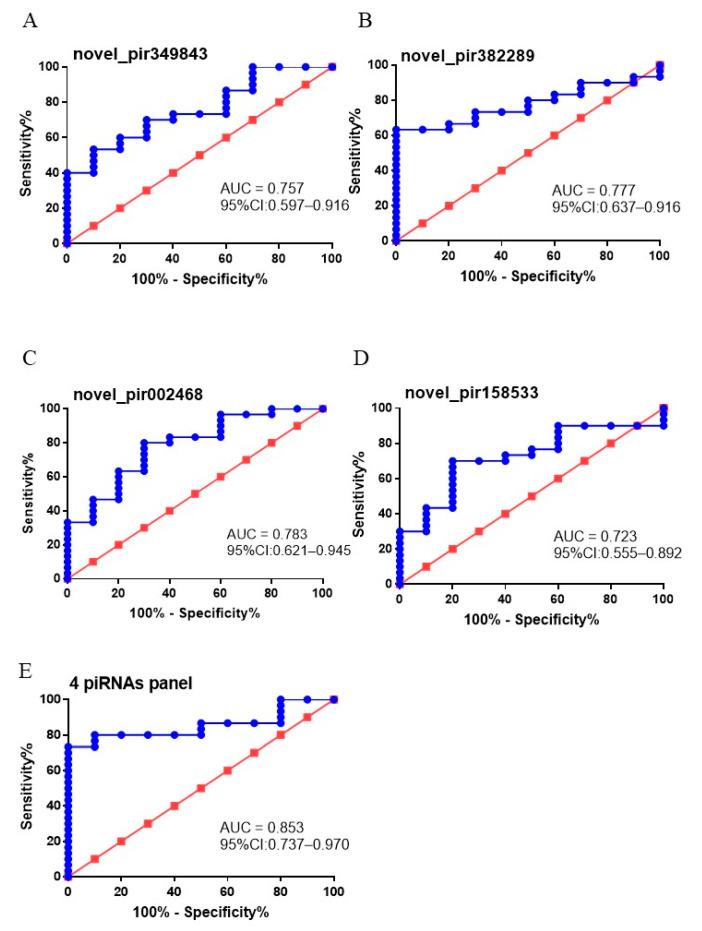
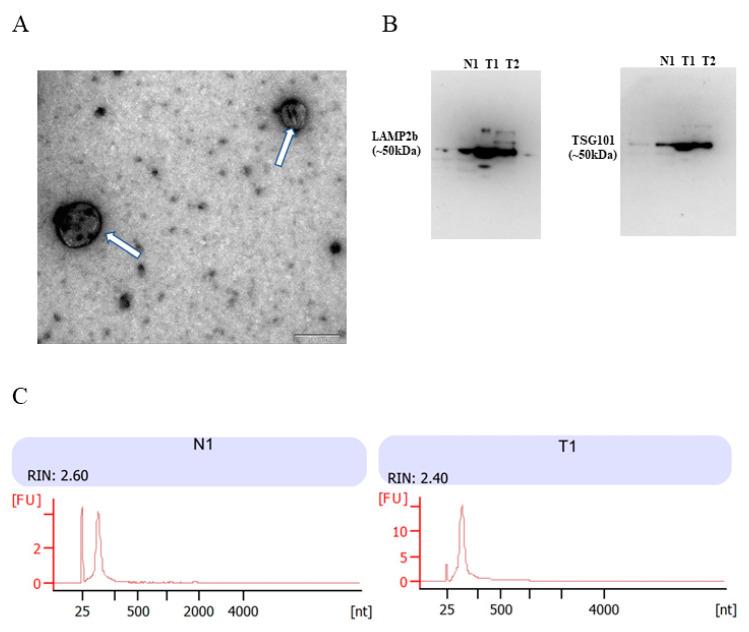
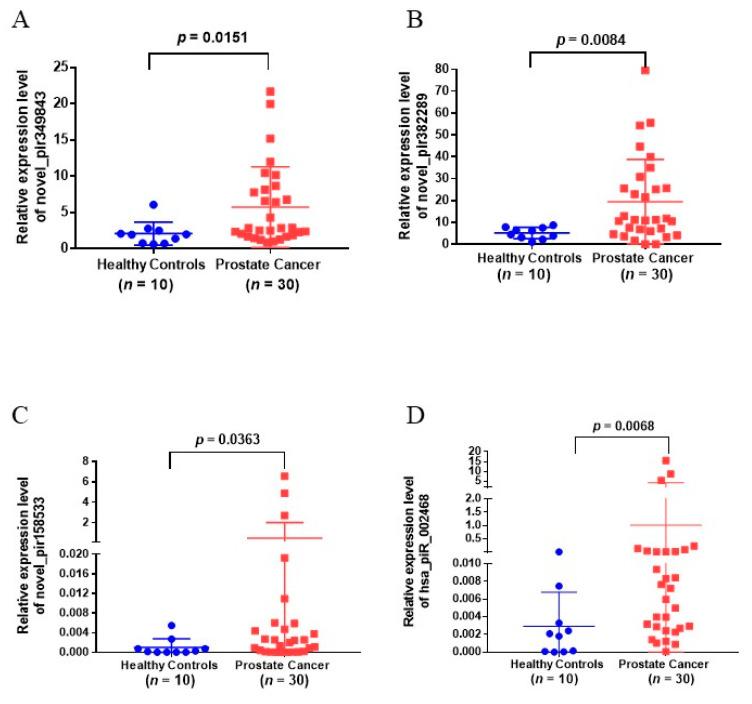
Emerging studies demonstrate that PIWI-interacting RNAs (piRNAs) are associated with various human cancers. This study aimed to evaluate the urinary extracellular vesicles (EVs) piRNAs as non-invasive biomarkers for prostate cancer (PCa) diagnosis. RNA was extracted from urinary EVs from five PCa patients and five healthy controls (HC), and the piRNAs were analyzed by small RNA sequencing. Dysregulated piRNAs were identified and then validated in another 30 PCa patients and 10 HC by reverse-transcription polymerase chain reaction (RT-qPCR). The expressions of novel_pir349843, novel_pir382289, novel_pir158533, and hsa_piR_002468 in urinary EVs were significantly increased in the PCa group compared with the HC group. The area under the curve (AUC) of novel_pir158533, novel_pir349843, novel_pir382289, hsa_piR_002468, and the combination of the four piRNA in PCa diagnosis was 0.723, 0.757, 0.777, 0.783, and 0.853, respectively. After the RNAhybrid program analysis, all four piRNAs had multiple potential binding sites with key mRNAs in PTEN/PI3K/Akt, Wnt/beta-catenin, or androgen receptor pathway, which are critical in PCa development and progression. In conclusion, our findings indicate that specific piRNAs in urinary EVs may serve as non-invasive diagnostic biomarkers for PCa.
新兴研究表明,PIWI相互作用RNA(piRNA)与多种人类癌症相关。本研究旨在评估尿细胞外囊泡(EV)中的piRNA作为前列腺癌(PCa)诊断的非侵入性生物标志物。从5例PCa患者和5例健康对照(HC)的尿EV中提取RNA,并通过小RNA测序分析piRNA。鉴定出失调的piRNA,然后通过逆转录聚合酶链反应(RT-qPCR)在另外30例PCa患者和10例HC中进行验证。与HC组相比,PCa组尿EV中新型_pir349843、新型_pir382289、新型_pir158533和hsa_piR_002468的表达显著增加。新型_pir158533、新型_pir349843、新型_pir382289、hsa_piR_002468以及这四种piRNA组合在PCa诊断中的曲线下面积(AUC)分别为0.723、0.757、0.777、0.783和0.853。经RNAhybrid程序分析,所有四种piRNA在PTEN/PI3K/Akt、Wnt/β-连环蛋白或雄激素受体途径中与关键mRNA有多个潜在结合位点,这些途径在PCa的发生和发展中至关重要。总之,我们的研究结果表明,尿EV中的特定piRNA可能作为PCa的非侵入性诊断生物标志物。
 Zotero 插件