
居住在人口密集地区的野生欧洲刺猬( Erinaceus europaeus )对超广谱β-内酰胺类抗生素耐药 。
Extended-Spectrum β-Lactam Resistant and in Wild European Hedgehogs () Living in Populated Areas.
作者信息
Garcias Biel, Aguirre Laia, Seminati Chiara, Reyes Nerea, Allepuz Alberto, Obón Elena, Molina-Lopez Rafael A, Darwich Laila
机构信息
Departament de Sanitat i Anatomia Animal, Universitat Autònoma de Barcelona (UAB), 08193 Cerdanyola del Vallès, Spain.
IRTA, Centre de Recerca en Sanitat Animal (CReSA, IRTA-UAB), Campus de la Universitat Autònoma de Barcelona, 08193 Cerdanyola del Vallès, Spain.
出版信息
Animals (Basel). 2021 Sep 28;11(10):2837. doi: 10.3390/ani11102837.
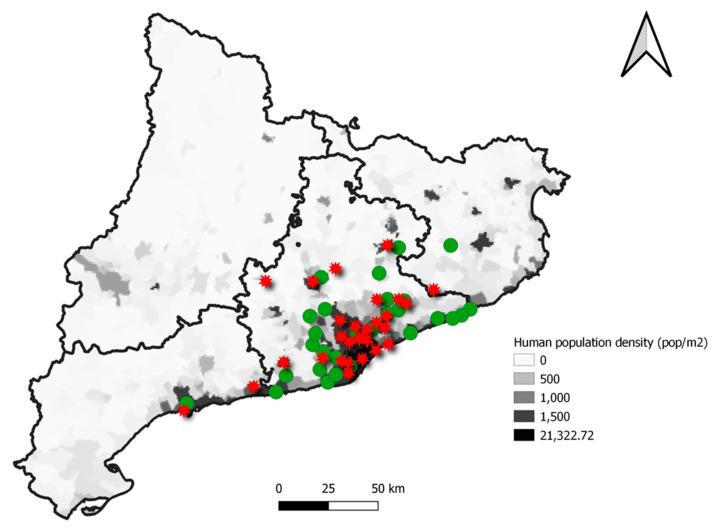
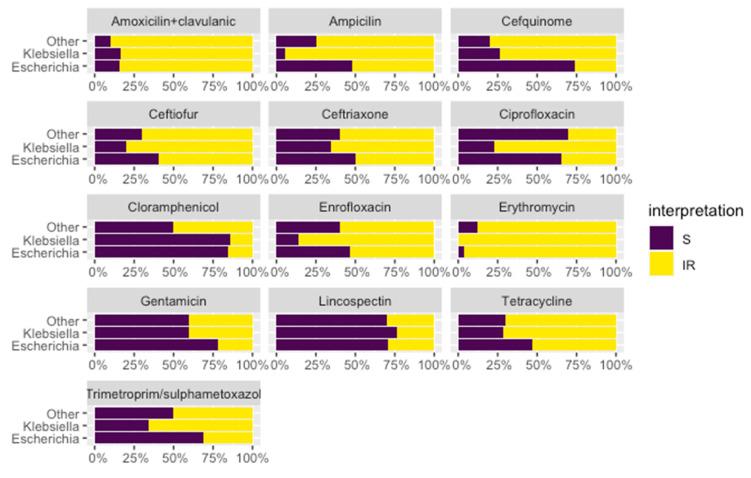
Wildlife has been suggested to be a good sentinel of environmental health because of its close interaction with human populations, domestic animals, and natural ecosystems. The alarming emergence of antimicrobial resistance (AMR) in human and veterinary medicine has activated/triggered the awareness of monitoring the levels of AMR pollution in wildlife. European hedgehogs () are common wild species habiting urban areas in Europe. However, there are few studies conducted in hedgehogs as reservoirs of AMR bacteria or genes. The aim of this study was to assess the occurrence and distribution of ESBL, AmpC, and carbapenem-resistant enterobacteria and AMR genes in wild European hedgehogs in Catalonia, a densely populated region of NE Spain. A total of 115 hedgehogs admitted at the Wildlife Rehabilitation Center of Torreferrussa were studied. To our knowledge, this is the first description of β-lactam resistant enterobacteria in wild hedgehogs. Interestingly, 36.8% (42/114) of the animals were detected as carriers of β-lactamase/carbapenemase resistance genes. spp. (59.6%), and specifically (84.6%), were the bacteria with the highest proportion of resistance genes, followed by (34.6%) and (5.8%). The most frequently detected genetic variants were CTX-M-15 (19.3%), SHV-28 (10.5%), CMY-1 (9.7%), CMY-2 (8.8%), and OXA-48 (1.7%). In addition, 52% (27/52) of the isolates presented a multidrug resistance (MDR) phenotype and 31% had an extended drug resistance (XDR) profile. No clustering of animals with AMR genes within the study region was shown in the spatial analysis, nor differences in the proportion of positive animals among regions, were detected. The results of this study suggest that wild European hedgehogs could be good sentinels of AMR environmental pollution, especially in areas with a high human population density, because they either inhabit and/or feed in an anthropogenic environment. In conclusion, it is crucial to raise awareness of the strong interconnection between habitats and compartments, and therefore this implies that AMR issues must be tackled under the One Health approach.
由于野生动物与人类、家畜和自然生态系统有着密切互动,因此被认为是环境健康的良好哨兵。人类医学和兽医学中令人担忧的抗菌药物耐药性(AMR)的出现,引发了对监测野生动物中AMR污染水平的关注。欧洲刺猬是栖息在欧洲城市地区的常见野生动物物种。然而,针对刺猬作为AMR细菌或基因宿主的研究很少。本研究的目的是评估西班牙东北部人口密集地区加泰罗尼亚野生欧洲刺猬中ESBL、AmpC和耐碳青霉烯肠杆菌以及AMR基因的发生情况和分布。对Torreferrussa野生动物康复中心收治的115只刺猬进行了研究。据我们所知,这是首次对野生刺猬中β-内酰胺耐药肠杆菌的描述。有趣的是,36.8%(42/114)的动物被检测为β-内酰胺酶/碳青霉烯酶耐药基因的携带者。肺炎克雷伯菌(59.6%),尤其是产酸克雷伯菌(84.6%),是耐药基因比例最高的细菌,其次是大肠埃希菌(34.6%)和奇异变形杆菌(5.8%)。最常检测到的基因变体是CTX-M-15(19.3%)、SHV-28(10.5%)、CMY-1(9.7%)、CMY-2(8.8%)和OXA-48(1.7%)。此外,52%(27/52)的分离株呈现多重耐药(MDR)表型,31%具有广泛耐药(XDR)特征。空间分析未显示研究区域内携带AMR基因的动物聚集情况,也未检测到不同区域阳性动物比例的差异。本研究结果表明,野生欧洲刺猬可能是AMR环境污染的良好哨兵,尤其是在人口密度高的地区,因为它们要么栖息在人为环境中,要么在人为环境中觅食。总之,提高对栖息地和生态区之间紧密联系的认识至关重要,因此这意味着必须在“同一健康”方法下解决AMR问题。


 Zotero 插件