
β2-肾上腺素能受体药物与帕金森病风险的关联:一项荟萃分析。
Association between β2-Adrenoreceptor Medications and Risk of Parkinson's Disease: A Meta-Analysis.
机构信息
Department of Neurology, Yunlin Christian Hospital, Yunlin 648106, Taiwan.
Department of Neurology, Changhua Christian Hospital, Changhua 50006, Taiwan.
出版信息
Medicina (Kaunas). 2021 Sep 24;57(10):1006. doi: 10.3390/medicina57101006.
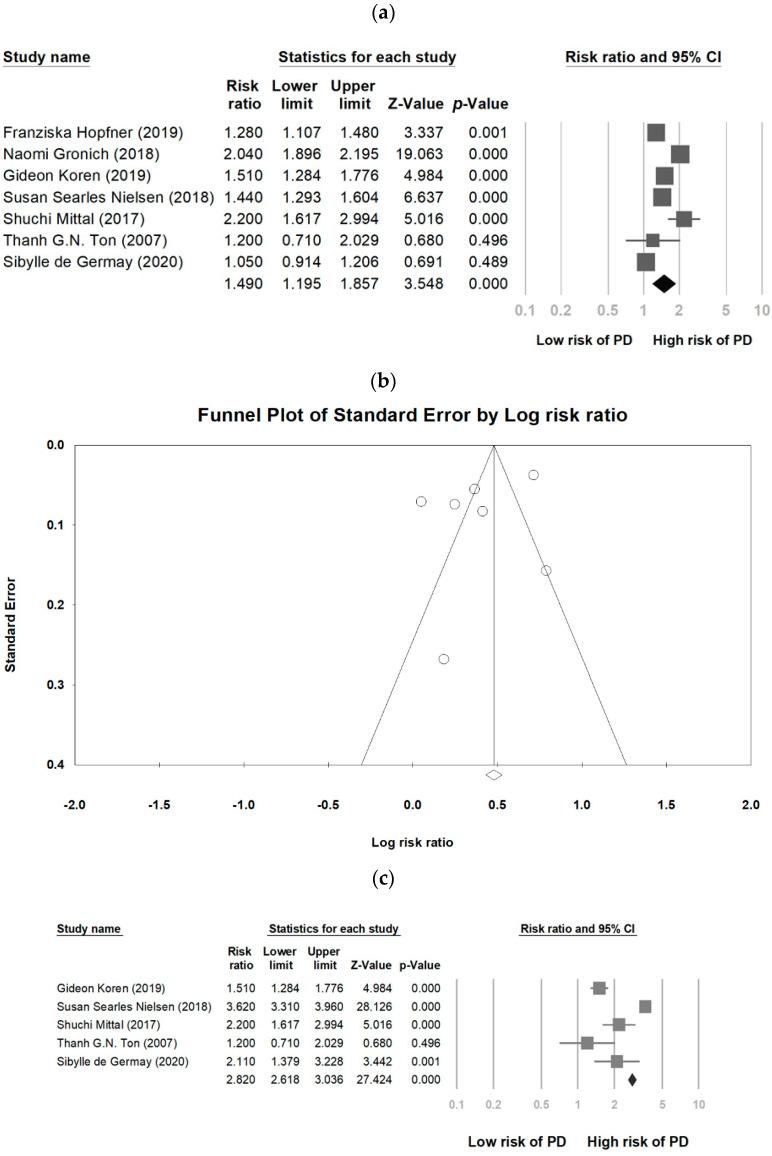
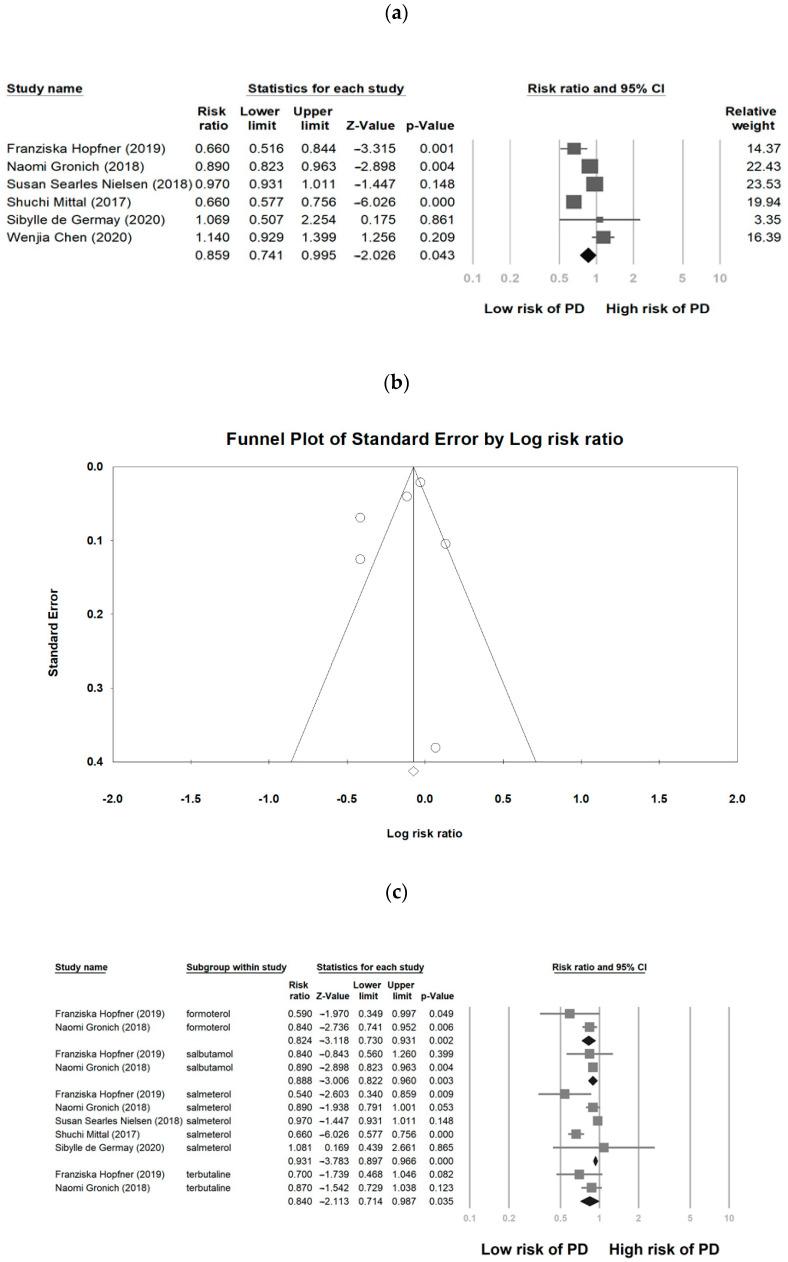
: Parkinson's disease (PD) is a progressive neurological disorder characterized by an accumulation of Lewy bodies and degeneration of dopaminergic neurons in the substantia nigra. The treatment options currently available are only partly effective and fail to restore the lost dopaminergic neurons or slow the progression. β2-adrenoceptors (β2AR) are widely expressed in various human tissues and organs, regulate many important metabolic functions, and are targeted for treatment of various diseases. Studies have reported a link between chronic use of the β2AR antagonist propranolol and an increased risk of PD, and chronic use of β2AR agonists has been associated with a decreased risk of PD. We conducted a meta-analysis on the association between both β2AR agonist level and β2AR antagonist level and the risk of PD. : A comprehensive electronic search was conducted on the databases of PubMed, ScienceDirect, ProQuest, Cochrane Library, and ClinicalKey from the start of each database until 30 June 2021. The objective was to identify prospective cohort and case-control studies that have reported on the association between β-adrenoceptor agonist level, antagonist level, and PD risk. : A meta-analysis of the data extracted from eight studies revealed that β2AR agonist use was associated with reduced PD risk (RR = 0.859, 95% confidence interval [CI] 0.741-0.995. = 0.043). Compared with the control group, β2AR antagonist use was associated with an increased risk of PD (RR = 1.490, 95% CI, 1.195 to 1.857. < 0.005). Propranolol, a type of β2AR antagonist, was related to an increased risk of PD (RR = 2.820, 95% CI, 2.618 to 3.036. < 0.005). : In this meta-analysis, β2AR agonists were associated with a decreased risk of PD, and β2AR antagonists were related with an increased risk of PD. However, further studies with larger sample sizes and an evaluation of the long-term effects of varying dosages of medications are needed.
帕金森病(PD)是一种进行性神经障碍,其特征是路易体的积累和黑质中多巴胺能神经元的退化。目前可用的治疗选择仅部分有效,无法恢复丢失的多巴胺能神经元或减缓进展。β2-肾上腺素能受体(β2AR)广泛存在于各种人体组织和器官中,调节许多重要的代谢功能,并被用于治疗各种疾病。研究报告称,慢性使用β2AR 拮抗剂普萘洛尔与 PD 风险增加之间存在关联,而慢性使用β2AR 激动剂与 PD 风险降低有关。我们对β2AR 激动剂水平和β2AR 拮抗剂水平与 PD 风险之间的关联进行了荟萃分析。
我们对 PubMed、ScienceDirect、ProQuest、Cochrane Library 和 ClinicalKey 数据库进行了全面的电子检索,从每个数据库的开始到 2021 年 6 月 30 日。目的是确定报告β-肾上腺素能受体激动剂水平、拮抗剂水平与 PD 风险之间关联的前瞻性队列研究和病例对照研究。
对八项研究中提取的数据进行的荟萃分析表明,β2AR 激动剂的使用与 PD 风险降低相关(RR = 0.859,95%置信区间 [CI] 0.741-0.995,P = 0.043)。与对照组相比,β2AR 拮抗剂的使用与 PD 风险增加相关(RR = 1.490,95%CI,1.195 至 1.857,P < 0.005)。普萘洛尔,一种β2AR 拮抗剂,与 PD 风险增加相关(RR = 2.820,95%CI,2.618 至 3.036,P < 0.005)。
在这项荟萃分析中,β2AR 激动剂与 PD 风险降低相关,β2AR 拮抗剂与 PD 风险增加相关。然而,需要进一步开展具有更大样本量的研究,并评估不同剂量药物的长期效果。

 Zotero 插件