
肠道微生物群相关的细胞和分子机制在非酒精性脂肪性肝病进展中的作用。
Gut Microbiota-Related Cellular and Molecular Mechanisms in the Progression of Nonalcoholic Fatty Liver Disease.
机构信息
Institute for Liver and Digestive Diseases, Hallym University, Chuncheon 24253, Korea.
出版信息
Cells. 2021 Oct 2;10(10):2634. doi: 10.3390/cells10102634.
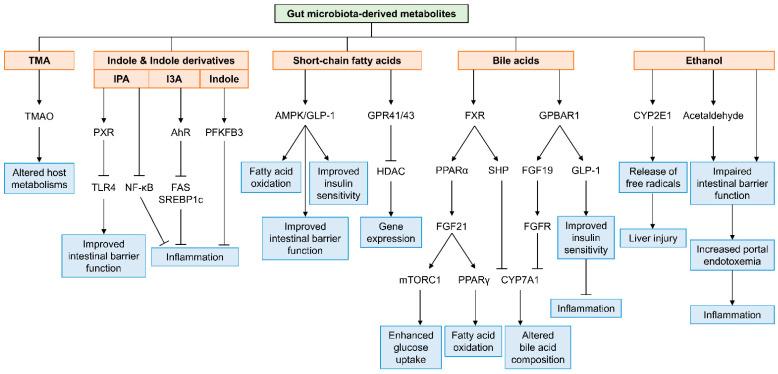
Nonalcoholic fatty liver disease (NAFLD) is one of the most common and increasing liver diseases worldwide. NAFLD is a term that involves a variety of conditions such as fatty liver, steatohepatitis, or fibrosis. Gut microbiota and its products have been extensively studied because of a close relation between NAFLD and microbiota in pathogenesis. In the progression of NAFLD, various microbiota-related molecular and cellular mechanisms, including dysbiosis, leaky bowel, endotoxin, bile acids enterohepatic circulation, metabolites, or alcohol-producing microbiota, are involved. Currently, diagnosis and treatment techniques using these mechanisms are being developed. In this review, we will introduce the microbiota-related mechanisms in the progression of NAFLD and future directions will be discussed.
非酒精性脂肪性肝病(NAFLD)是全球最常见且发病率不断上升的肝脏疾病之一。NAFLD 是一个涉及多种疾病的术语,如脂肪肝、脂肪性肝炎或纤维化。由于 NAFLD 与微生物群在发病机制上有密切关系,因此肠道微生物群及其产物已被广泛研究。在 NAFLD 的进展过程中,涉及多种与微生物群相关的分子和细胞机制,包括菌群失调、肠漏、内毒素、胆汁酸肠肝循环、代谢物或产酒精微生物群。目前正在开发利用这些机制的诊断和治疗技术。在这篇综述中,我们将介绍 NAFLD 进展过程中的与微生物群相关的机制,并讨论未来的方向。
 Zotero 插件