
外泌体长链非编码 RNA SOX2-OT 通过 miR-181b-5p/SCD1 信号通路促进卵巢癌恶性进展。
Exosome long non-coding RNA SOX2-OT contributes to ovarian cancer malignant progression by miR-181b-5p/SCD1 signaling.
机构信息
Department of Obstetrics, People's Hospital of Rizhao, Rizhao, China.
Department of Health Emergency Office, Rizhao Center for Disease Control and Prevention, Rizhao, China.
出版信息
Aging (Albany NY). 2021 Oct 24;13(20):23726-23738. doi: 10.18632/aging.203645.
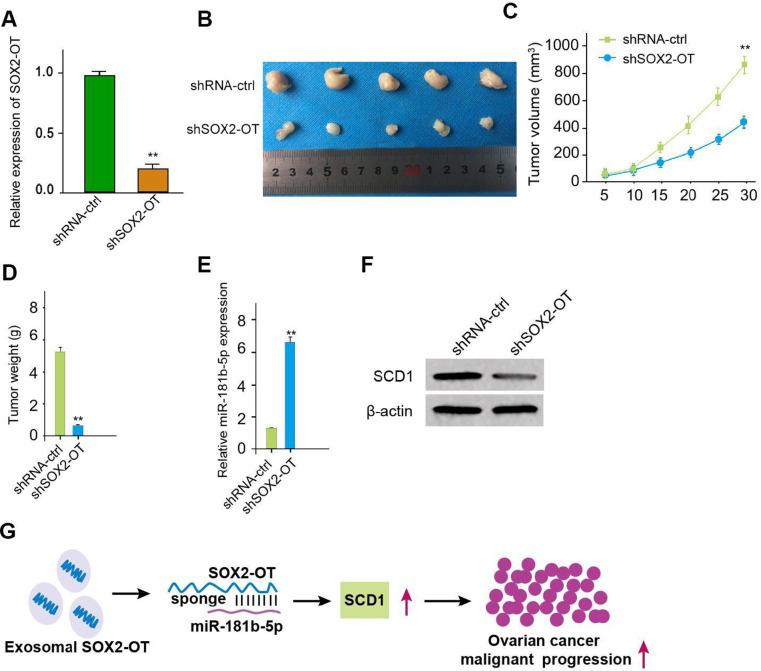
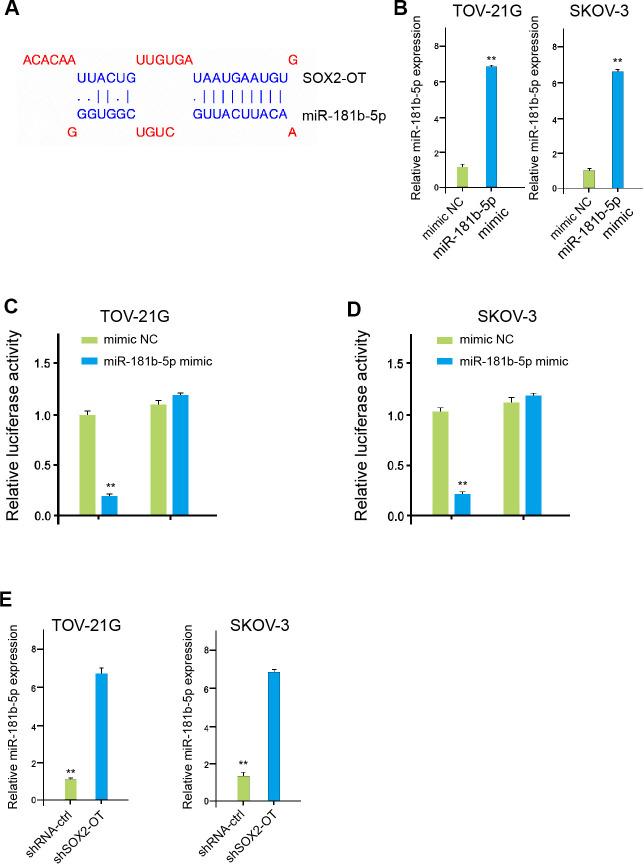
Ovarian cancer is a common gynecologic cancer with increased mortality and morbidity. Exosome-delivered long non-coding RNAs have been well found in cancer development. However, the function of exosomal SOX2-OT in ovarian cancer development is still unreported. In the present study, we were interested in the investigation of the effect of exosomal SOX2-OT during ovarian cancer pathogenesis. Significantly, we revealed that the SOX2-OT expression levels were up-regulated in the ovarian cancer patients' plasma exosomes. The depletion of exosomal SOX2-OT inhibited migration, invasion, and proliferation and induced apoptosis in ovarian cancer cells. In mechanical exploration, SOX2-OT could sponge miR-181b-5p, and miR-181b-5p was able to target SCD1 in the ovarian cancer cells. The SCD1 overexpression and miR-181b-5p inhibitor could reverse exosomal SOX2-OT-mediated ovarian cancer progression. Functionally, the depletion of exosomal SOX2-OT significantly reduced tumor growth of ovarian cancer cells . In summary, we concluded that exosomal SOX2-OT enhanced ovarian cancer malignant phenotypes by miR-181b-5p/SCD1 axis. Our finding presents novel insights into the mechanism by which exosomal lncRNA SOX2-OT promotes ovarian cancer progression. SOX2-OT, miR-181b-5p, and SCD1 may serve as potential targets for the treatment of ovarian cancer.
卵巢癌是一种常见的妇科癌症,死亡率和发病率都有所增加。外泌体携带的长非编码 RNA 已被广泛发现与癌症的发生发展有关。然而,外泌体 SOX2-OT 在卵巢癌发展中的作用尚不清楚。在本研究中,我们对研究外泌体 SOX2-OT 在卵巢癌发病机制中的作用很感兴趣。研究结果表明,卵巢癌患者血浆外泌体中的 SOX2-OT 表达水平上调。外泌体 SOX2-OT 的耗竭抑制了卵巢癌细胞的迁移、侵袭和增殖,并诱导其凋亡。在机制探索中,我们发现 SOX2-OT 可以海绵吸附 miR-181b-5p,而 miR-181b-5p 能够靶向卵巢癌细胞中的 SCD1。SCD1 的过表达和 miR-181b-5p 抑制剂可以逆转外泌体 SOX2-OT 介导的卵巢癌细胞进展。功能上,外泌体 SOX2-OT 的耗竭显著降低了卵巢癌细胞的肿瘤生长。综上所述,我们得出结论,外泌体 SOX2-OT 通过 miR-181b-5p/SCD1 轴增强了卵巢癌的恶性表型。我们的发现为外泌体 lncRNA SOX2-OT 促进卵巢癌进展的机制提供了新的见解。SOX2-OT、miR-181b-5p 和 SCD1 可能成为治疗卵巢癌的潜在靶点。




 Zotero 插件