
血管生成中部分和可逆的内皮-间充质转化的调控
Regulation of Partial and Reversible Endothelial-to-Mesenchymal Transition in Angiogenesis.
作者信息
Fang Jennifer S, Hultgren Nan W, Hughes Christopher C W
机构信息
Department of Molecular Biology and Biochemistry, University of California, Irvine, Irvine, CA, United States.
Department of Ophthalmology, Stein Eye Institute, David Geffen School of Medicine at University of California, Los Angeles, Los Angeles, CA, United States.
出版信息
Front Cell Dev Biol. 2021 Oct 7;9:702021. doi: 10.3389/fcell.2021.702021. eCollection 2021.
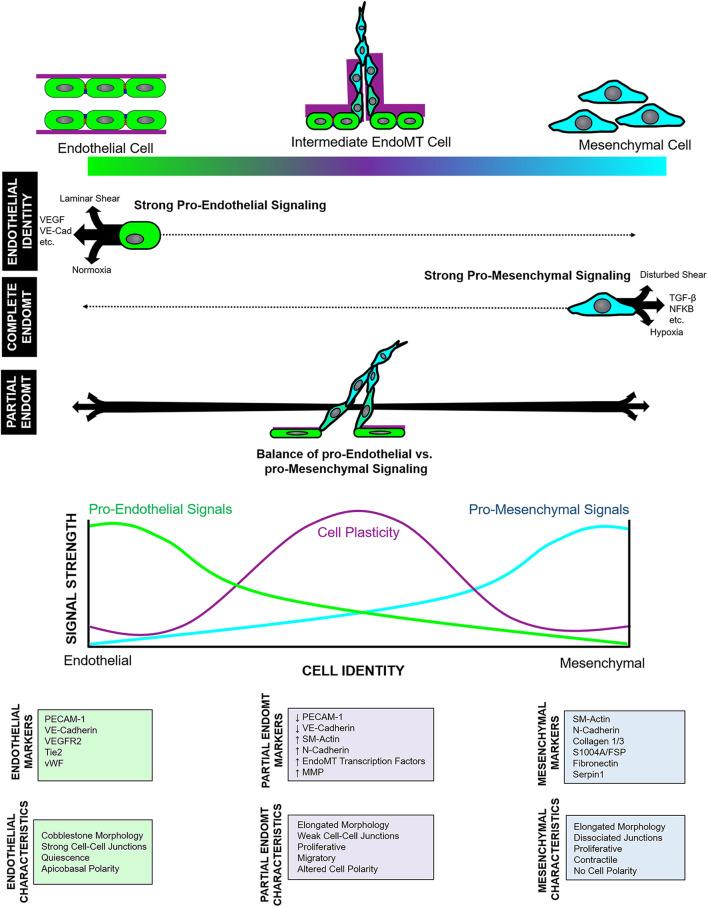
During development and in several diseases, endothelial cells (EC) can undergo complete endothelial-to-mesenchymal transition (EndoMT or EndMT) to generate endothelial-derived mesenchymal cells. Emerging evidence suggests that ECs can also undergo a partial EndoMT to generate cells with intermediate endothelial- and mesenchymal-character. This partial EndoMT event is transient, reversible, and supports both developmental and pathological angiogenesis. Here, we discuss possible regulatory mechanisms that may control the EndoMT program to dictate whether cells undergo complete or partial mesenchymal transition, and we further consider how these pathways might be targeted therapeutically in cancer.
在发育过程以及几种疾病中,内皮细胞(EC)可经历完全的内皮-间充质转化(EndoMT),以产生内皮来源的间充质细胞。新出现的证据表明,内皮细胞也可经历部分EndoMT,以产生具有内皮和间充质中间特征的细胞。这种部分EndoMT事件是短暂的、可逆的,并支持发育性和病理性血管生成。在此,我们讨论了可能控制EndoMT程序以决定细胞是经历完全还是部分间充质转化的调控机制,并且我们进一步思考了这些途径在癌症治疗中如何成为靶点。
 Zotero 插件