
K18.1 将 T 细胞受体信号转化为胸腺调节性 T 细胞的发育。
K18.1 translates T cell receptor signals into thymic regulatory T cell development.
机构信息
Department of Neurology, Medical Faculty, Heinrich-Heine-University, Düsseldorf, Germany.
Department of Neurology with Institute of Translational Neurology, University of Münster, Münster, Germany.
出版信息
Cell Res. 2022 Jan;32(1):72-88. doi: 10.1038/s41422-021-00580-z. Epub 2021 Oct 26.
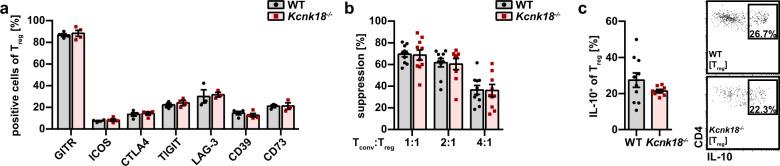
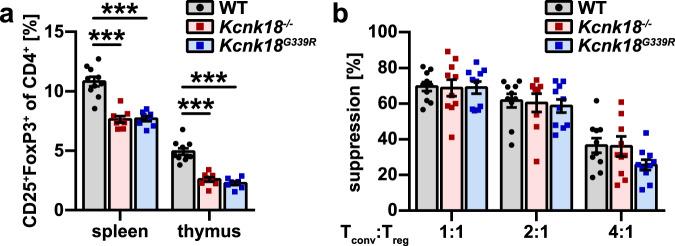
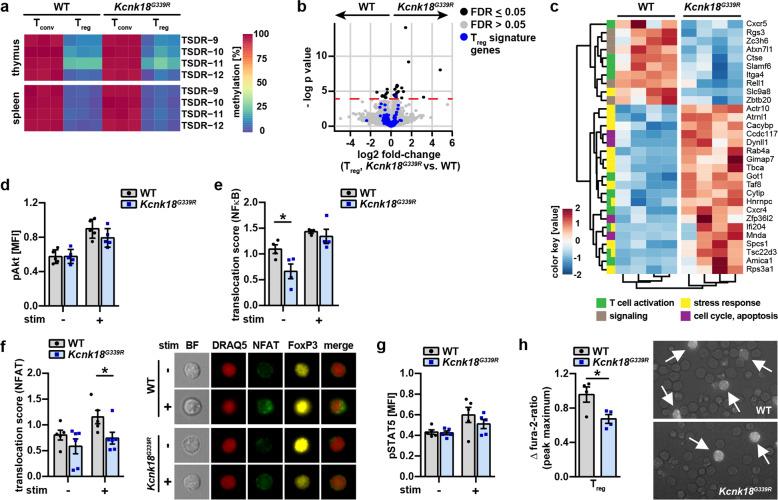
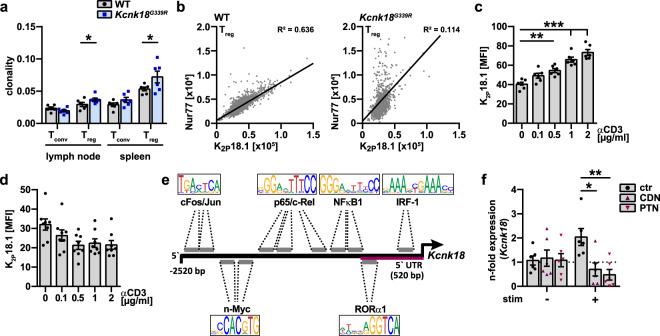
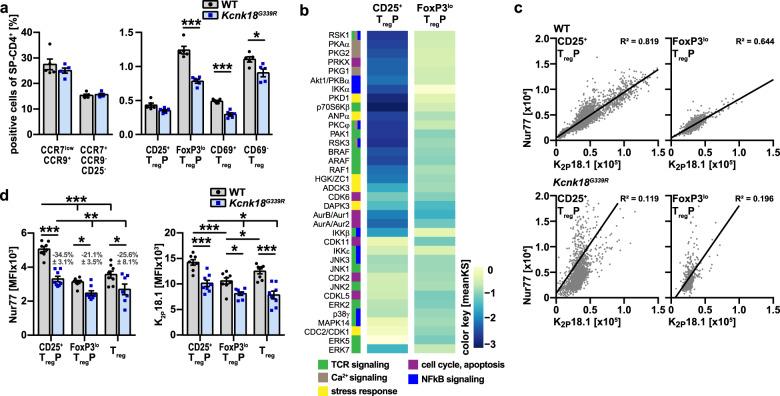
It remains largely unclear how thymocytes translate relative differences in T cell receptor (TCR) signal strength into distinct developmental programs that drive the cell fate decisions towards conventional (Tconv) or regulatory T cells (Treg). Following TCR activation, intracellular calcium (Ca) is the most important second messenger, for which the potassium channel K18.1 is a relevant regulator. Here, we identify K18.1 as a central translator of the TCR signal into the thymus-derived Treg (tTreg) selection process. TCR signal was coupled to NF-κB-mediated K18.1 upregulation in tTreg progenitors. K18.1 provided the driving force for sustained Ca influx that facilitated NF-κB- and NFAT-dependent expression of FoxP3, the master transcription factor for Treg development and function. Loss of K18.1 ion-current function induced a mild lymphoproliferative phenotype in mice, with reduced Treg numbers that led to aggravated experimental autoimmune encephalomyelitis, while a gain-of-function mutation in K18.1 resulted in increased Treg numbers in mice. Our findings in human thymus, recent thymic emigrants and multiple sclerosis patients with a dominant-negative missense K18.1 variant that is associated with poor clinical outcomes indicate that K18.1 also plays a role in human Treg development. Pharmacological modulation of K18.1 specifically modulated Treg numbers in vitro and in vivo. Finally, we identified nitroxoline as a K18.1 activator that led to rapid and reversible Treg increase in patients with urinary tract infections. Conclusively, our findings reveal how K18.1 translates TCR signals into thymic T cell fate decisions and Treg development, and provide a basis for the therapeutic utilization of Treg in several human disorders.
T 细胞受体 (TCR) 信号强度的相对差异如何转化为不同的发育程序,从而推动细胞命运决定朝向常规 (Tconv) 或调节性 T 细胞 (Treg),这在很大程度上仍不清楚。TCR 激活后,细胞内钙 (Ca) 是最重要的第二信使,钾通道 K18.1 是其相关调节剂。在这里,我们确定 K18.1 是 TCR 信号向胸腺衍生的 Treg (tTreg) 选择过程的核心转换器。TCR 信号与 NF-κB 介导的 K18.1 上调在 tTreg 祖细胞中偶联。K18.1 为持续的 Ca 内流提供驱动力,促进 NF-κB 和 NFAT 依赖性 FoxP3 的表达,FoxP3 是 Treg 发育和功能的主转录因子。K18.1 离子电流功能的丧失在小鼠中引起轻度的淋巴增生表型,Treg 数量减少导致实验性自身免疫性脑脊髓炎加重,而 K18.1 的功能获得性突变导致小鼠中 Treg 数量增加。我们在人类胸腺、近期胸腺迁出细胞和多发性硬化症患者中的发现,这些患者携带与不良临床结局相关的显性负义错义 K18.1 变体,表明 K18.1 也在人类 Treg 发育中发挥作用。K18.1 的药理学调节特异性调节体外和体内 Treg 数量。最后,我们鉴定出硝甲噁唑啉是一种 K18.1 激活剂,可导致尿路感染患者 Treg 的快速和可逆增加。总之,我们的研究结果揭示了 K18.1 如何将 TCR 信号转化为胸腺 T 细胞命运决定和 Treg 发育,并为几种人类疾病中 Treg 的治疗利用提供了基础。




 Zotero 插件