
祖先序列重建指出了使禽流感病毒在猪中传播的适应性。
Ancestral sequence reconstruction pinpoints adaptations that enable avian influenza virus transmission in pigs.
机构信息
School of Public Health, Li Ka Shing Faculty of Medicine, The University of Hong Kong, Hong Kong Special Administrative Region, China.
Department of Infectious Diseases, St. Jude Children's Research Hospital, Memphis, TN, USA.
出版信息
Nat Microbiol. 2021 Nov;6(11):1455-1465. doi: 10.1038/s41564-021-00976-y. Epub 2021 Oct 26.
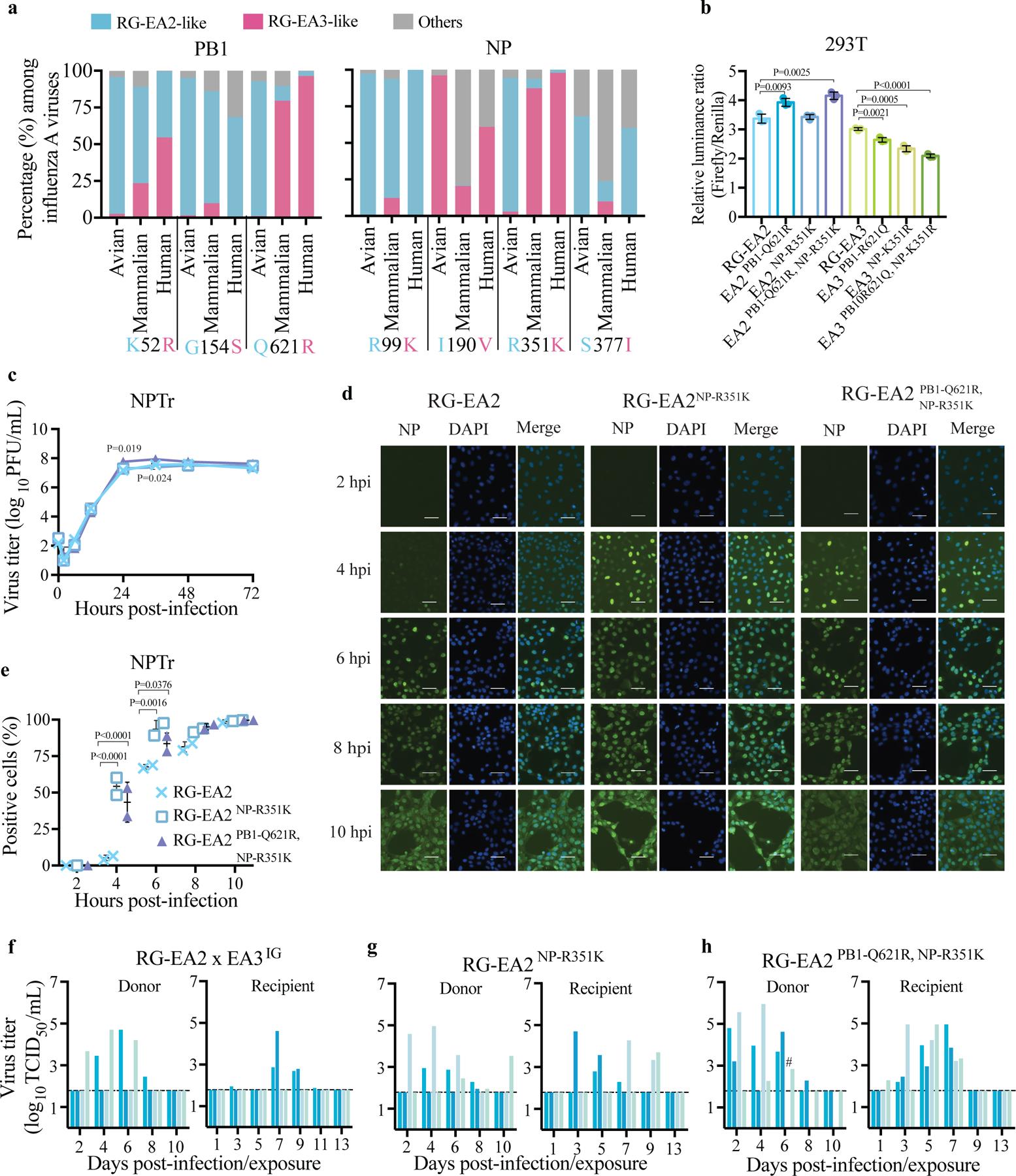
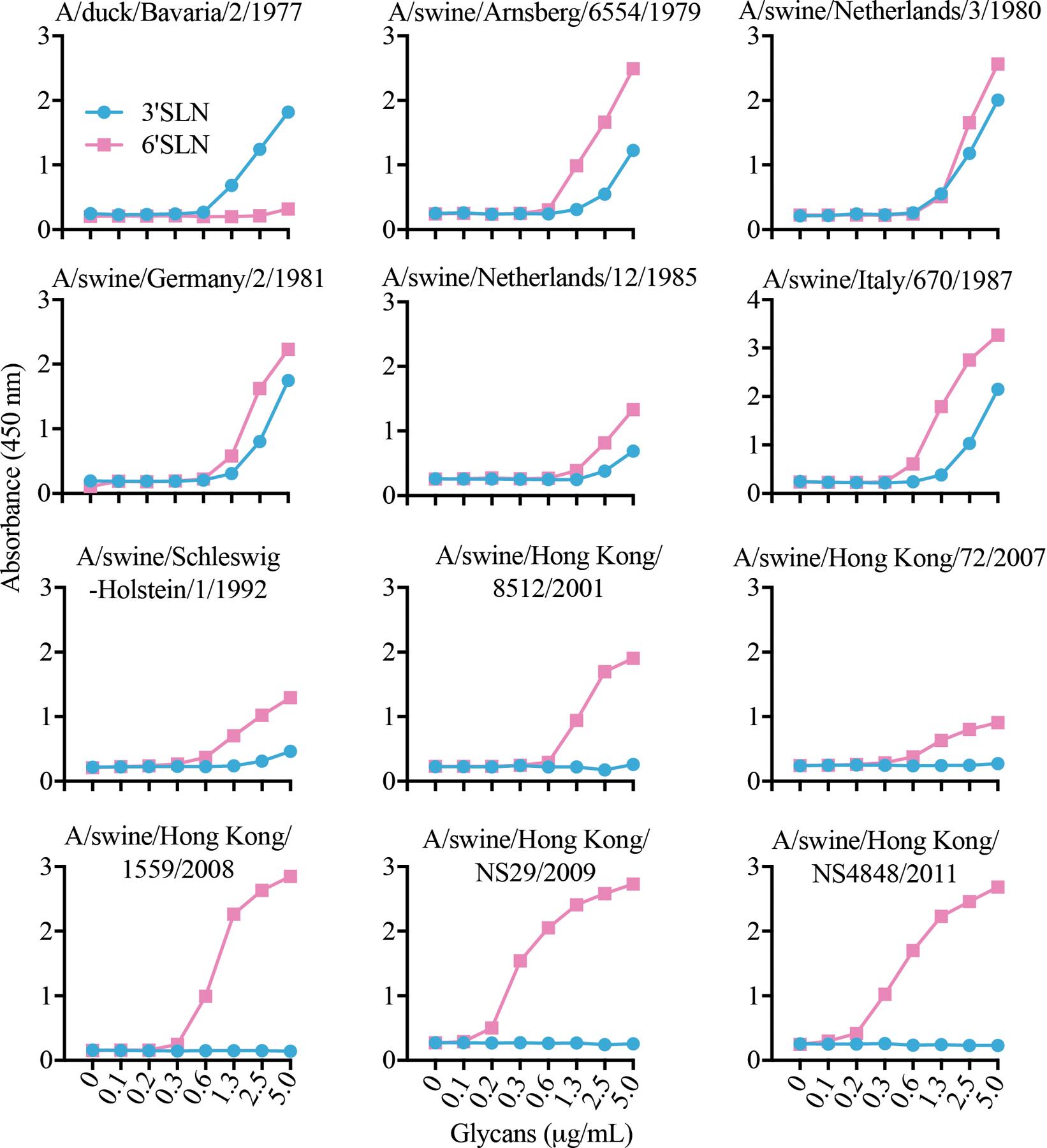
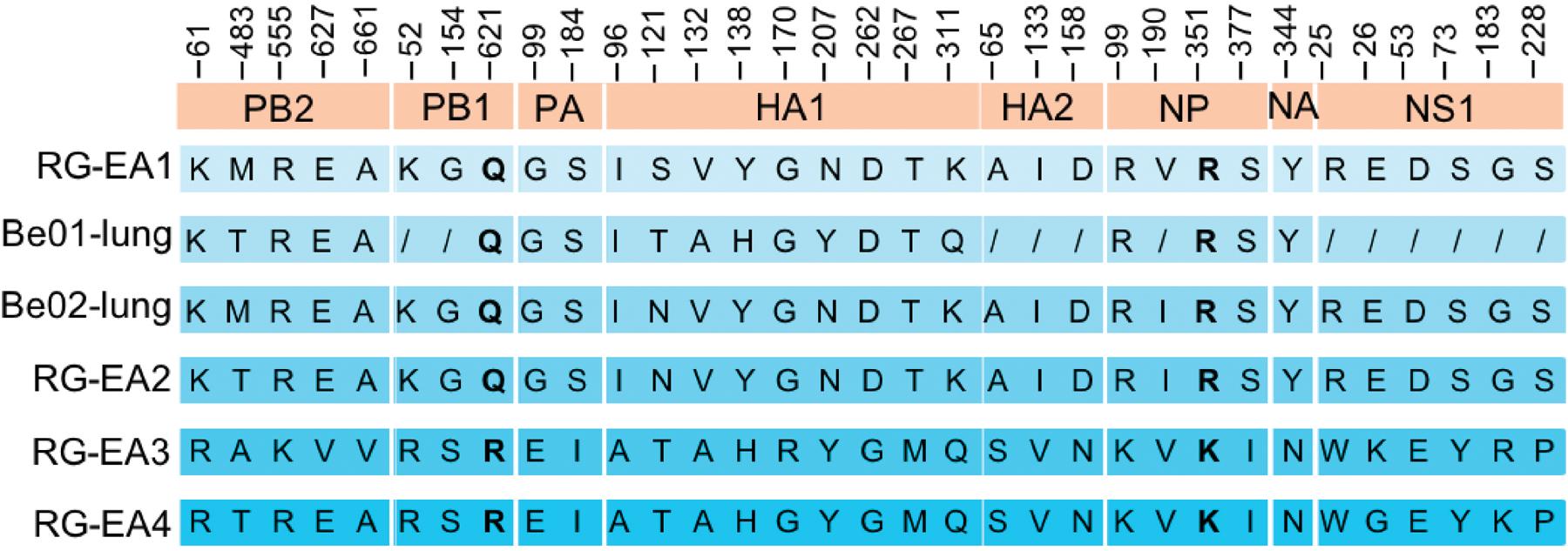
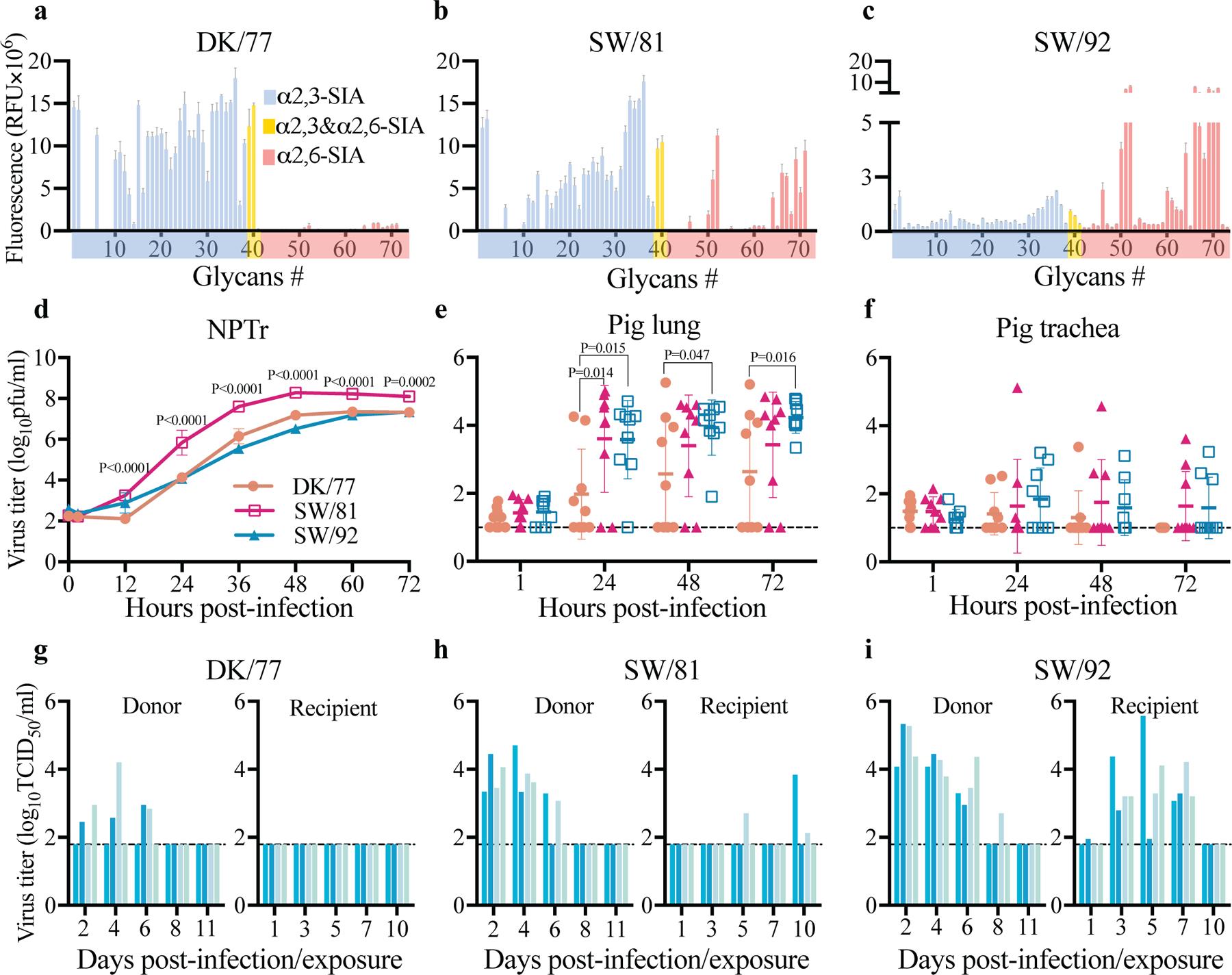
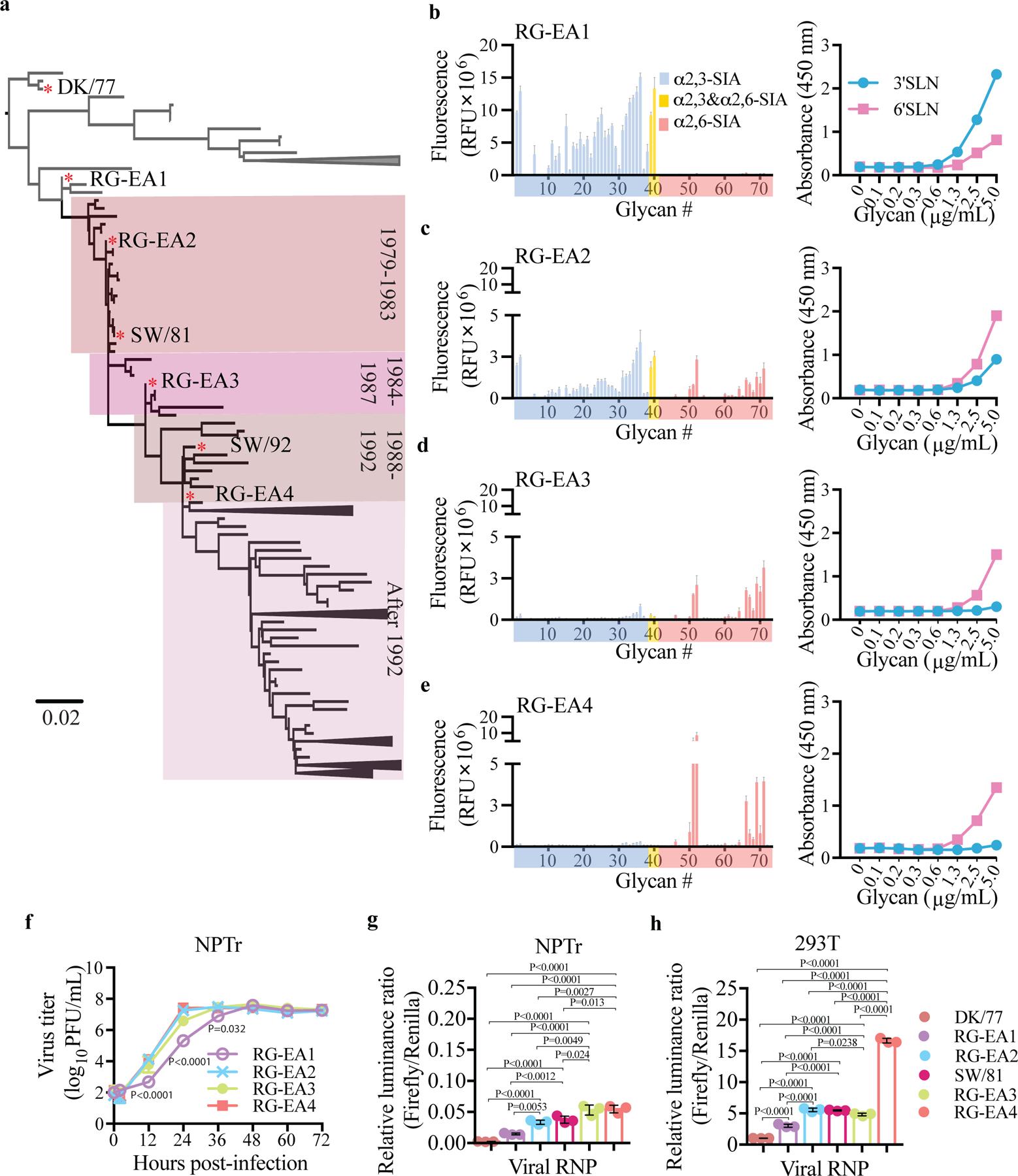
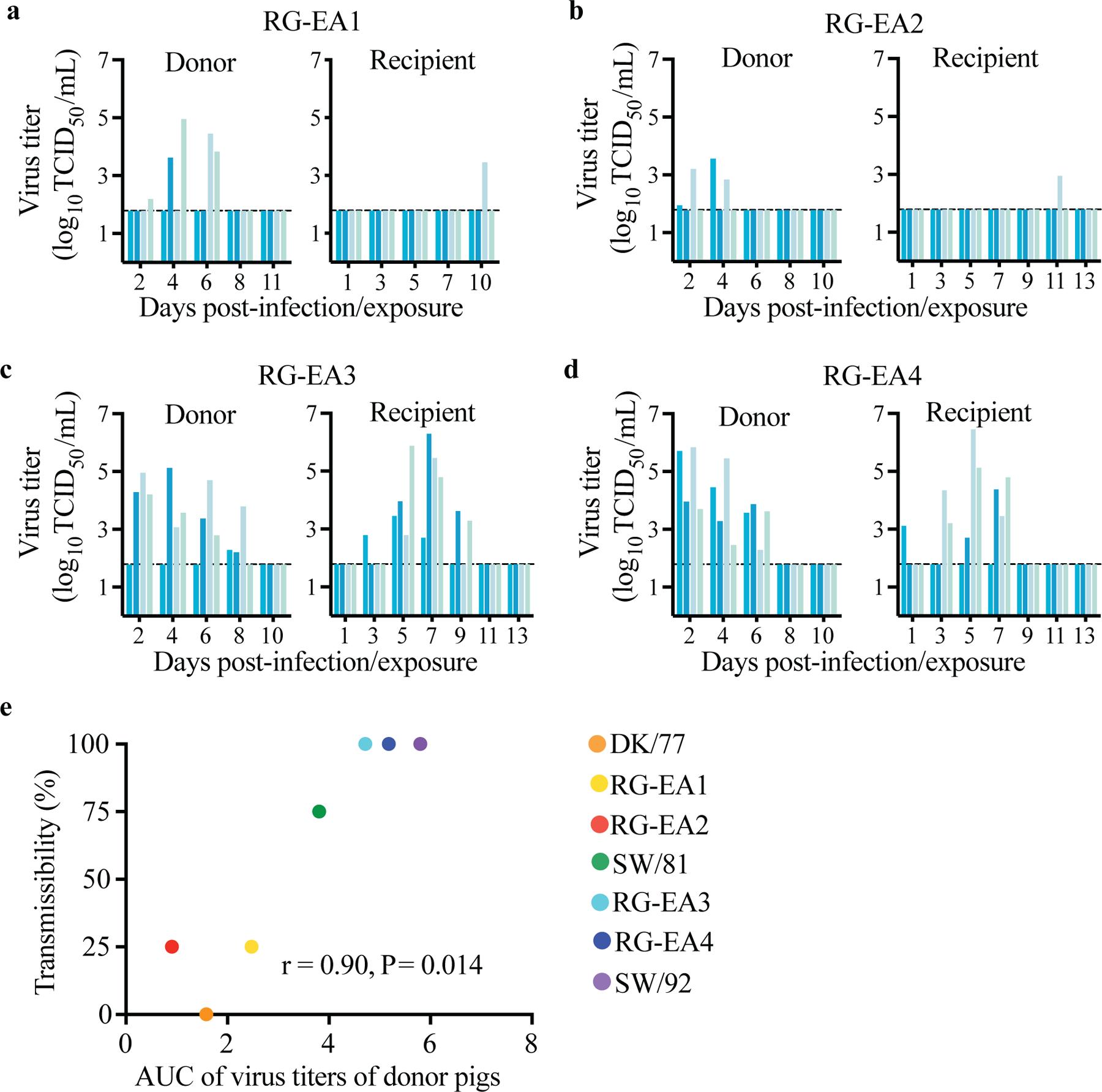
Understanding the evolutionary adaptations that enable avian influenza viruses to transmit in mammalian hosts could allow better detection of zoonotic viruses with pandemic potential. We applied ancestral sequence reconstruction to gain viruses representing different adaptive stages of the European avian-like (EA) H1N1 swine influenza virus as it transitioned from avian to swine hosts since 1979. Ancestral viruses representing the avian-like precursor virus and EA swine influenza viruses from 1979-1983, 1984-1987 and 1988-1992 were reconstructed and characterized. Glycan-binding analyses showed stepwise changes in the haemagglutinin receptor-binding specificity of the EA swine influenza viruses-that is, from recognition of both α2,3- and α2,6-linked sialosides to recognition of α2,6-linked sialosides only; however, efficient transmission in piglets was enabled by adaptive changes in the viral polymerase protein and nucleoprotein, which have been fixed since 1983. PB1-Q621R and NP-R351K increased viral replication and transmission in piglets when introduced into the 1979-1983 ancestral virus that lacked efficient transmissibility. The stepwise adaptation of an avian influenza virus to a mammalian host suggests that there may be opportunities to intervene and prevent interspecies jumps through strategic coordination of surveillance and risk assessment activities.
了解使禽流感病毒能够在哺乳动物宿主中传播的进化适应机制,可以更好地发现具有大流行潜力的人畜共患病毒。我们应用祖先序列重建技术,获得了自 1979 年以来欧洲类禽流感(EA)H1N1 猪流感病毒从禽类宿主向猪类宿主转变过程中不同适应阶段的病毒。重建并分析了代表类似禽类前体病毒和 1979-1983 年、1984-1987 年和 1988-1992 年 EA 猪流感病毒的祖先病毒。糖结合分析表明,EA 猪流感病毒的血凝素受体结合特异性发生了逐步变化,即从识别α2,3-和α2,6 连接的唾液酸到仅识别α2,6 连接的唾液酸;然而,自 1983 年以来,病毒聚合酶蛋白和核蛋白的适应性变化使病毒在仔猪中得以有效传播。当将 PB1-Q621R 和 NP-R351K 引入缺乏有效传播能力的 1979-1983 年祖先病毒时,它们增加了病毒在仔猪中的复制和传播能力。禽流感病毒向哺乳动物宿主的逐步适应表明,通过战略协调监测和风险评估活动,可能有机会进行干预并防止种间跳跃。


 Zotero 插件